
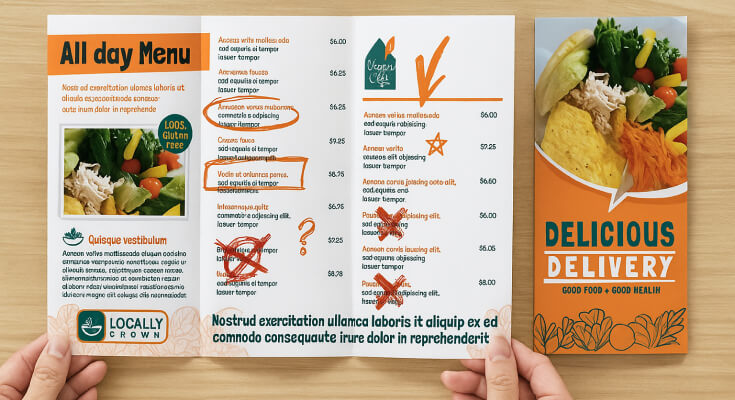
Restaurant owners spend countless hours perfecting their recipes, but did you know they invest just as much effort into designing their menus? Furthermore, the psychology of menu design plays a crucial role in influencing what you order and how much you spend.
In fact, restaurants use sophisticated psychological techniques that can increase their profits by up to 20% through strategic menu psychology alone.
This comprehensive guide will reveal the hidden secrets behind effective menu design and show you exactly how restaurants manipulate your dining decisions.
What Is Restaurant Menu Psychology and Its Importance?
Restaurant menu psychology refers to the strategic application of psychological principles in menu design to influence customer behavior and increase sales. Furthermore, this powerful marketing technique combines elements of behavioral economics, cognitive psychology, and visual design to create menus that guide customers toward specific purchasing decisions.
The Science Behind Menu Psychology
The human brain processes visual information within milliseconds. Therefore, restaurant owners and menu designers leverage this quick decision-making process to their advantage. Additionally, our dining choices are influenced by numerous psychological factors, including:
- Cognitive biases that affect how we perceive value
- Visual hierarchy that directs our attention to specific items
- Emotional triggers that create a desire for certain dishes
- Social proof that validates our choices
- Scarcity effects that create urgency
Consequently, understanding these psychological principles allows restaurants to create menus that not only inform but also persuade customers to make profitable choices.
How Do Restaurants Use Menu Psychology to Guide Your Eyes?
All essential elements for restaurant menus work together to create a roadmap for your eyes. Moreover, understanding these visual psychology principles reveals how restaurants direct your attention to their most profitable dishes.
Furthermore, the science of visual perception in menu design has evolved into a sophisticated discipline that combines behavioral psychology and menu design ideas and principles.
1. The Golden Triangle Effect in Menu Layout
Most customers scan menus in a predictable pattern called the “golden triangle.” Specifically, your eyes typically start at the middle of the menu, then move to the top right corner, and finally settle on the top left. Consequently, smart restaurants place their highest-margin items in these prime real estate locations.
Additionally, this scanning pattern explains why you often notice certain dishes before others, even when they’re not necessarily the best options available.
Understanding Eye Movement Patterns:
Research using eye-tracking technology reveals that customers follow consistent visual pathways when reading menus. Moreover, these patterns remain remarkably similar across different cultures and age groups. Specifically, the scanning process typically follows these stages:
- Initial Attention Phase: Customers spend the first 3-5 seconds getting an overall impression of the menu layout and identifying major sections.
- Focused Scanning Phase: Eyes move systematically through menu sections, spending more time on items that stand out visually.
- Decision Confirmation Phase: Customers return to previously noticed items for final comparison before making their selection.
Furthermore, understanding these phases allows restaurants to strategically place high-profit items where they’ll receive maximum attention during each scanning stage. Keep in mind that the shape and size of the menu also influence behavior.
2. Strategic Use of White Space and Visual Breaks
Effective menu design uses white space to create visual breathing room around important items. Furthermore, this technique makes featured dishes appear more premium and draws additional attention to high-profit menu items.
Similarly, restaurants use visual breaks like borders, boxes, or different background colors to highlight signature dishes. As a result, these items seem more special and justify higher prices in customers’ minds.
The Psychology of White Space:
White space, also called negative space, serves multiple psychological functions in menu design. Moreover, adequate white space reduces cognitive load and makes information processing easier for customers. Specifically, white space:
- Creates a visual hierarchy that guides attention naturally
- Reduces feelings of overwhelm when faced with many options
- Suggests premium quality and sophisticated design
- Improves readability and comprehension speed
- Makes individual items appear more important and exclusive
3. The Psychology of Menu Sections
How restaurants make a menu and organize sections significantly impacts customer choices. Moreover, the order and naming of categories can influence spending patterns:
- Appetizers First: Starting with appetizers increases the likelihood of customers ordering additional items, thereby increasing overall order value.
- Entree Placement: The most profitable entrees should appear in the visual sweet spots of each section.
- Dessert Positioning: Separate dessert menus increase dessert sales by creating a dedicated decision-making moment.
Limited Choice Architecture
Paradoxically, too many options can overwhelm customers and reduce sales. Therefore, successful restaurants typically offer:
- 5-7 appetizers per section
- 8-12 entrees per category
- 3-5 dessert options
Furthermore, this limited choice architecture reduces decision fatigue and speeds up the ordering process.
4. Typography and Font Psychology in Menu Design
Font choices significantly impact how customers perceive menu items and prices. For example, elegant serif fonts suggest sophistication and quality, while bold sans-serif fonts convey modernity and efficiency.
Moreover, restaurants carefully select font sizes to create emphasis and hierarchy. Larger fonts naturally draw more attention, so high-margin items often feature bigger, bolder text than lower-profit options.
Font Personality and Brand Alignment
Different typefaces communicate specific personality traits that influence customer perceptions about food quality and dining experience. Furthermore, successful restaurants align their typography choices with their overall brand positioning.
- Serif Fonts (Times New Roman, Georgia): Convey tradition, reliability, and classic quality. Moreover, these fonts work well for upscale establishments and comfort food restaurants that want to emphasize heritage and craftsmanship.
- Sans-Serif Fonts (Helvetica, Arial): Suggest modernity, cleanliness, and efficiency. Additionally, these fonts appeal to younger demographics and work well for fast-casual and contemporary dining concepts.
- Script Fonts (Brush Script, Lucida Handwriting): Imply personal touch, artisanal quality, and uniqueness. However, restaurants must use script fonts sparingly since they can reduce readability when overused.
- Decorative Fonts: Create strong personality impressions but require careful application to maintain menu functionality and readability.
5. Color Psychology in Visual Menu Design
Color choices profoundly impact customer emotions, appetite, and purchasing decisions. Furthermore, restaurants use sophisticated color psychology techniques to create desired moods and guide customer behavior toward profitable menu items.
Appetite-Stimulating Color Science
Certain colors trigger physiological responses that increase hunger and make food appear more appealing. Moreover, these color effects operate at both conscious and subconscious levels, making them powerful tools for menu optimization.
Different colors communicate specific messages about restaurant quality and dining experience. For example:
- Red: Creates urgency, stimulates appetite, and suggests bold flavors
- Green: Implies freshness, health, and natural ingredients
- Gold/Yellow: Conveys luxury, premium quality, and indulgence
- Blue: Suggests trust, reliability, and calm dining experiences
- Black: Indicates sophistication, elegance, and upscale dining
We’ve covered more details about the best fonts and color scheme for menu designs, and how it affects sales.
6. Image and Photography Psychology
Visual imagery on menus significantly influences customer expectations and ordering decisions. Furthermore, high-quality food photography can increase item sales by up to 30%, making it a crucial component of visual menu psychology.
Strategic Photo Placement and Selection:
Restaurants carefully select which items to photograph and where to place images for maximum psychological impact. Moreover, not every menu item benefits from photography, so strategic selection becomes essential.
- High-Margin Item Focus: Restaurants typically photograph their most profitable dishes to increase sales of these premium items.
- Signature Dish Emphasis: Unique menu items that differentiate the restaurant from competitors often receive prominent photo treatment.
- Appetite Appeal: Items that photograph well and trigger strong visual appetite responses get priority placement with high-quality images.
- Brand Consistency: Photo styling must align with overall restaurant branding to maintain cohesive customer experiences.
7. Playing with Portion size
Restaurants often use smart psychology when it comes to portion sizes—and it works! Many people naturally assume that smaller portions cost less, even if the price is similar to larger ones. This is known as the “delusion of thrift”—basically, we feel like we’re being smart with money when we pick the smaller option.
You can helpfully use this trick by offering different portion sizes on your menu, like “small,” “regular,” and “large.” Not only does this give your customers more choice, but it also makes them feel like they’re in control of what they spend.
For example:
- A guest watching their diet may go for a small portion.
- A hungry diner or someone sharing might pick the large.
- And the medium? That’s usually the most popular—it feels like the “safe” middle-ground.
This approach is a win-win: guests feel good about their decision, and you boost sales by offering flexible choices. If you’re curious to see real examples of menu designs that use these psychology principles, explore our library of customizable menu templates. Each one is thoughtfully designed and easy to tailor to your specific needs.
What Pricing Psychology Tricks Do Restaurants Use?
Pricing psychology represents one of the most powerful aspects of menu design. Additionally, how restaurants present prices can dramatically influence your spending decisions without you even realizing it.
The Power of Price Anchoring Techniques
Restaurants strategically place expensive “anchor” items on their menus to make other dishes seem reasonably priced. For instance, a $45 steak makes a $28 salmon dish appear like a good value, even though the salmon might be overpriced compared to similar restaurants.
Furthermore, this anchoring effect works because your brain uses the first price you see as a reference point for evaluating all other options. Consequently, restaurants often feature their most expensive items prominently to set high price expectations.
Removing Dollar Signs and Decimal Points
Many upscale restaurants eliminate dollar signs and decimal points from their prices. Instead of writing “$24.95,” they simply list “24” or “twenty-four.” This technique reduces the psychological pain of spending money and makes prices feel less significant.
Moreover, research shows that removing currency symbols can increase spending by up to 8%. Therefore, this simple change represents an easy way for restaurants to boost their average order values.
Strategic Menu Price Positioning
Where prices appear on menus also influences customer behavior. Specifically, restaurants often:
- Place prices at the end of item descriptions rather than in separate columns
- Use smaller fonts for prices compared to dish names
- Align prices inconsistently to make comparison shopping more difficult
- Group items by price ranges to encourage upselling
How to Create an Effective Menu Engineering?
Understanding Menu Item Performance:
Professional menu engineers use a four-square model to categorize menu items based on popularity and profitability:
Stars (High Profit + High Popularity): These are your best-performing items. Therefore, restaurants should:
- Feature them prominently
- Use eye-catching descriptions
- Consider raising prices gradually
- Protect recipes and preparation methods
Plowhorses (Low Profit + High Popularity): Popular but unprofitable items require strategic attention:
- Reduce portion sizes slightly
- Find ways to lower ingredient costs
- Reposition on menu to less prominent spots
- Consider repricing or reformulating
Puzzles (High Profit + Low Popularity): These items have potential but need marketing support:
- Improve descriptions and presentation
- Relocate to prime menu positions
- Train staff to upsell these items
- Consider recipe modifications to increase appeal
Dogs (Low Profit + Low Popularity): These items should typically be eliminated unless they serve a specific purpose:
- Remove from the menu entirely
- Keep only if they’re loss leaders or family-friendly options
- Don’t promote or feature prominently
What is The Future of Restaurant Menu Psychology?
Emerging Trends and Technologies
The restaurant industry continues to evolve, bringing new opportunities for menu psychology:
- Artificial Intelligence: AI can analyze customer data to predict preferences and optimize menu layouts in real-time.
- Personalization: Designing digital menus could customize recommendations based on previous orders, dietary restrictions, or spending patterns.
- Voice Ordering: As voice technology improves, menu psychology will need to adapt to audio-only experiences.
- Augmented Reality: AR could overlay additional information, reviews, or visual enhancements onto physical menus.
Sustainability and Ethical Considerations
Modern consumers increasingly value sustainability and ethical practices:
- Transparent sourcing information appeals to conscious consumers
- Environmental impact messaging can influence choices
- Local supplier partnerships create community connections
- Waste reduction initiatives resonate with eco-friendly diners
Therefore, future menu psychology will likely incorporate these values more prominently.
How to Implement Menu Psychology in Your Restaurant?
Phase 1: Analysis (Weeks 1-2)
- Analyze current menu performance and customer behavior
- Identify high-profit and low-profit items
- Survey customers about menu preferences and pain points
- Review competitor menu strategies
Phase 2: Design (Weeks 3-4)
- Follow the menu layout and design ideas, and apply principles
- Rewrite item descriptions using sensory and emotional language
- Optimize pricing strategy and remove psychological barriers
- Create a visual hierarchy that guides attention to profitable items
Phase 3: Training (Week 5)
- Train staff on new menu features and upselling techniques
- Provide talking points for high-profit items
- Practice handling customer questions about menu changes
- Establish systems for gathering customer feedback
Phase 4: Launch and Monitor (Weeks 6-8)
- Launch a new menu with staff support and customer education
- Monitor key performance indicators daily
- Gather customer feedback through surveys and observation
- Make minor adjustments based on initial results
Phase 5: Optimization (Ongoing)
- Continuously analyze performance data
- Test new psychological techniques and design elements
- Adapt to seasonal changes and customer preferences
- Stay current with industry trends and best practices
Budget Considerations
Menu psychology implementation can be cost-effective:
Low-Cost Changes:
- Rewriting item descriptions
- Adjusting menu layout and visual hierarchy
- Staff training on upselling techniques
- Minor price optimizations
Medium-Cost Investments:
- Professional menu design and printing
- High-quality food photography
- Point-of-sale system upgrades
- Customer feedback systems
High-Cost Transformations:
- Complete restaurant rebranding
- Digital menu systems and technology
- Comprehensive staff retraining programs
- Advanced analytics and testing tools
Moreover, most menu psychology improvements have quick payback periods, often recovering costs within 30-60 days.
What Are the Common Menu Psychology Mistakes to Avoid?
Many restaurants unknowingly make mistakes that can hurt sales, confuse customers, or lead to a poor dining experience. Avoiding these common menu psychology mistakes can make a big difference in both customer satisfaction and your bottom line. You can also try a restaurant menu maker that will save your time and reduce the chances of making a mistake while designing a restaurant menu.
1. Overloading the Menu with Too Many Choices
One of the biggest mistakes restaurants make is offering too many options. When a customer is faced with a long list of dishes, it can lead to something called “choice overload.” This makes decision-making stressful and overwhelming, which can lead to indecision, or worse, choosing the cheapest item just to get it over with.
- Makes your menu hard to scan quickly
- Slows down ordering
- Increases the chance of customer regret
2. Not Highlighting High-Profit Items Clearly
Your high-margin or most profitable dishes should be the stars of your menu. But many restaurants fail to spotlight them effectively. If these dishes blend in with everything else, they’re easy to miss.
- Missed opportunities for higher revenue
- Customers may go for less profitable items
3. Using Confusing or Cluttered Layouts
Menus that are cluttered, unorganized, or too busy can be hard to read. If your customer has to search too long to find what they want, they may get frustrated and choose something quickly, or not at all.
Why it hurts:
- Creates a poor first impression
- Hurts customer satisfaction
- Reduces order confidence
4. Putting Currency Symbols Next to Prices
Believe it or not, placing the currency sign (like ₹, $, €) next to menu prices can make them feel more expensive. This triggers customers to focus on cost instead of taste or experience.
- Makes guests more price-conscious
- Can lead to lower average order value
5. Ignoring the Power of Descriptive Language
Some menus just list the name of the dish and the ingredients. That’s okay, but it misses a big opportunity. Writing sensory descriptions for a menu can trigger cravings and make dishes more appealing.
- Makes your food sound boring
- Reduces the emotional connection with the dish
6. Missing the Opportunity to Upsell
Many menus don’t take advantage of smart upselling techniques like combo deals, add-ons, or premium upgrades. This is a lost opportunity to increase the average bill.
- Missed revenue potential
- Less value delivered to the customer
7. No Emotional Connection or Storytelling
Purely informational menus can feel cold. People connect more deeply with stories, especially when they relate to tradition, local ingredients, or the chef’s inspiration.
- Reduces brand personality
- Doesn’t build trust or interest
Frequently Asked Questions
1. How does menu design actually influence what customers order?
Menu design works by guiding your eye to specific items and making certain dishes feel more appealing or valuable. Restaurants use visual tricks like highlighting boxes, different fonts, and strategic placement to draw attention to high-profit items. When a dish is placed in the top-right corner of a menu or surrounded by white space, your brain naturally notices it first.
2. What is “menu engineering,” and why do restaurants use it?
Menu engineering is the science of strategically organizing menu items to maximize profits. Restaurants analyze which dishes are both popular and profitable, then use design techniques to promote these “star” items. They might place profitable dishes in prime visual spots, use appealing descriptions, or group expensive items together to make mid-priced options seem reasonable. It’s essentially using psychology and data to nudge customers toward ordering what the restaurant wants to sell most.
3. Where do people’s eyes go first when they look at a menu?
Most people scan menus in a predictable pattern. Studies show that diners typically look at the center of the menu first, then move to the top-right corner, followed by the top-left. The bottom sections get the least attention. This is why restaurants place their most profitable items in these “golden zones.” However, this pattern can change based on menu layout – single-page menus create different eye movements than multi-page booklets or vertical designs.
4. How do colors on menus affect our appetite and choices?
Colors trigger emotional and physical responses that influence eating behavior. Red and orange are considered “appetite stimulants” because they increase energy and create urgency – that’s why many fast-food chains use these colors. Green suggests freshness and health, making it perfect for salads and organic options. Blue, on the other hand, can suppress appetite because it’s rarely found in natural foods.
5. What psychological tricks do restaurants use with their descriptions?
Menu descriptions tap into emotions and sensory experiences rather than just listing ingredients. Words like “grandmother’s recipe,” “slow-roasted,” “farm-fresh,” and “handcrafted” create emotional connections and justify higher prices. Descriptive language that appeals to your senses – like “crispy,” “tender,” “aromatic,” or “rich” – makes you imagine the eating experience before you order. Restaurants also use “nostalgic” language to trigger positive memories and make dishes feel special and worth the extra cost.
6. Do these psychological techniques actually work on everyone?
While menu psychology techniques are based on general human behavior patterns, they don’t work equally on all customers. Factors like age, cultural background, dining experience, and personal preferences influence how people respond to menu design. Younger diners might be more influenced by visual elements and social media-worthy presentations, while older customers might focus more on descriptions and value.
Conclusion
Restaurant menu design psychology represents a sophisticated blend of behavioral science, visual design, and business strategy. Moreover, understanding these psychological principles helps explain why certain restaurants consistently outperform their competitors in sales and customer satisfaction.
Throughout this comprehensive guide, we’ve explored how restaurants use visual psychology, pricing strategies, placement techniques, color psychology, persuasive language, and digital innovations to influence customer behavior. Additionally, we’ve examined how restaurants can measure the effectiveness of these psychological techniques and prepare for future industry trends.
The most successful restaurants understand that effective menu design goes far beyond simply listing available dishes and prices. Instead, they recognize that every design element serves a specific psychological purpose in guiding customer decisions toward profitable outcomes.