
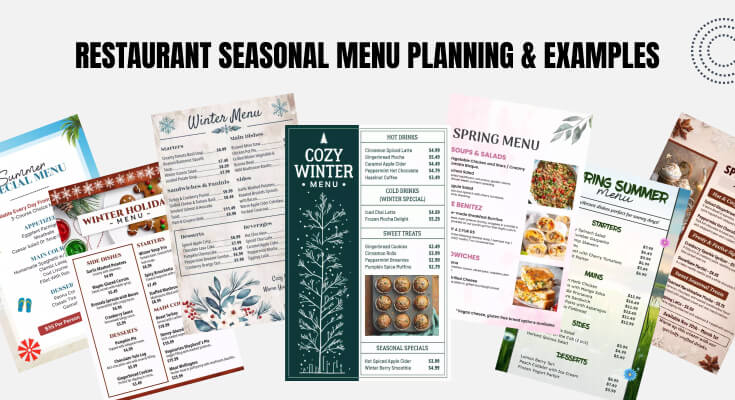
Restaurant seasonal menu planning is essential for restaurant owners seeking to maximize profitability while consistently delivering exceptional dining experiences throughout the year.
Seasonal menu planning isn’t just a trend; it’s a proven business strategy that can reduce food costs by up to 30% while increasing customer satisfaction and repeat visits. By aligning your menu with seasonal ingredients, local harvests, and customer expectations, you create a dynamic dining experience that keeps guests coming back for more.
What Is Restaurant Seasonal Menu Planning?
Restaurant seasonal menu planning involves strategically designing and updating your menu offerings based on ingredient availability, weather patterns, and seasonal customer preferences. Additionally, this approach considers local harvest cycles, cultural celebrations, and changing dietary needs throughout the year.
Most importantly, seasonal menu planning goes beyond simply swapping ingredients. Instead, it creates a comprehensive strategy that aligns your entire operation with natural cycles and consumer expectations. Consequently, restaurants using this approach often see improved profit margins, reduced food waste, and increased customer satisfaction.
Core Elements of Seasonal Menu Planning
Effective seasonal menu planning incorporates several key components:
- Ingredient sourcing strategy – Working with local farms and suppliers to secure the best seasonal produce
- Menu rotation schedule – Planning specific timeframes for introducing new dishes and retiring others
- Cost analysis framework – Understanding how seasonal pricing affects your profit margins
- Customer preference tracking – Monitoring which seasonal items perform best with your audience
- Staff training programs – Ensuring your team understands new ingredients and preparation methods
Find out more about what essential elements a restaurant menu should include and how to make it stand out.
Why Does Seasonal Menu Planning Matter for Restaurant Success?
The restaurant industry faces increasing pressure to differentiate while maintaining profitability. Therefore, seasonal menu planning offers multiple advantages that directly impact your bottom line and customer satisfaction.
1. Financial Benefits
First and foremost, seasonal ingredients typically cost less when they’re in peak season. For example, tomatoes cost significantly less in summer than in winter, while root vegetables become more affordable during fall months. Subsequently, this natural pricing cycle allows smart restaurateurs to maintain consistent profit margins despite fluctuating food costs.
Additionally, seasonal menus create urgency among customers. When diners know certain dishes are only available for limited periods, they’re more likely to visit frequently and order higher-priced specialty items. As a result, average check sizes often increase during seasonal menu launches.
2. Operational Advantages
Seasonal menu planning also streamlines kitchen operations in several ways. Initially, working with peak-season ingredients means better quality and longer shelf life, reducing waste and improving dish consistency. Furthermore, seasonal planning allows you to negotiate better contracts with suppliers who appreciate predictable ordering patterns.
Similarly, seasonal menus provide natural opportunities for staff development. Chefs can experiment with new techniques while servers learn about seasonal ingredients, creating a more knowledgeable and engaged team.
3. Marketing and Customer Engagement
From a marketing perspective, seasonal menus generate natural content for social media and promotional campaigns. Customers eagerly anticipate seasonal announcements, creating built-in marketing momentum. Moreover, seasonal themes align perfectly with holidays and local events, providing additional promotional opportunities.
How to Develop a Restaurant Seasonal Menu Strategy?
Creating a seasonal menu strategy is one of the smartest ways to boost your restaurant’s freshness, creativity, and profit. When done right, a seasonal menu keeps your offerings exciting, uses ingredients at their peak, and helps connect your restaurant with the time of year your customers are experiencing.
1. Analyze Your Market and Customer Base
Start by understanding your local market conditions and customer preferences. Research which ingredients are available locally throughout the year and identify reliable suppliers for each season. Furthermore, analyze your sales data to determine which menu items perform best during different seasons.
Simultaneously, survey your customers about their seasonal preferences. Many diners have strong associations between certain foods and seasons, which can guide your menu development process.
2. Know the Benefits of a Seasonal Menu
Before planning, understand why it matters. Here are the key advantages:
- Cost Savings: In-season ingredients are more abundant and usually cheaper. This helps control your food cost.
- Better Quality and Flavor: Fresh, seasonal ingredients are naturally more flavorful. Your dishes will taste better without needing complex prep or extra seasoning.
- Customer Excitement: Regular customers love seeing new options. Seasonal changes keep them coming back to try something new.
- Stronger Branding: Seasonal menus show you’re thoughtful, fresh, and in touch with food trends. This strengthens your restaurant’s image.
3. Start with Local Seasonal Ingredient Research
Your first step is to know what’s in season locally. Every region is different. Here’s how to begin: Talk to local farmers or suppliers. They know which fruits, vegetables, meats, and seafood are at peak freshness.
Use seasonal produce calendars. These are available online for your country or region. Track ingredient availability across seasons. Build a simple calendar showing what’s fresh when.
Pro Tip: Focus on 10–15 core seasonal ingredients to inspire your menu. Don’t just look for popular ingredients. Explore unique local produce that can make your seasonal menu stand out from the crowd.
4. Create Menu Development Framework
Establish a systematic approach to menu development that balances creativity with operational efficiency. Start by identifying core menu items that remain constant year-round, then build seasonal variations around these staples.
Additionally, develop signature seasonal dishes that become anticipated annual features. These items create customer loyalty and generate excitement around menu changes.
Think of it as your recipe for building the menu itself. A good framework ensures that your seasonal menu is not only creative and fresh but also practical, profitable, and aligned with your restaurant’s goals.
5. Plan Implementation Timeline
Once your seasonal menu ideas are ready, it’s important to create a clear implementation timeline to ensure everything is launched smoothly and on time. This timeline should outline when to begin planning, testing, training, designing, and promoting the seasonal menu.
Create a detailed timeline for each seasonal transition, including:
- Menu development and testing (6-8 weeks before launch)
- Supplier negotiations and ingredient sourcing (4-6 weeks before)
- Staff training and preparation (2-3 weeks before)
- Marketing and promotion planning (3-4 weeks before)
- Soft launch and adjustments (1 week before full launch)
6. Set Clear Goals for Your Seasonal Menu
Before launching your seasonal menu, it’s essential to set clear and measurable goals so you can track its success and make improvements for future seasons. These goals should align with your restaurant’s broader business objectives, such as increasing sales, improving customer satisfaction, reducing food waste, or testing new dishes for long-term use. For example, you might aim to boost average order value by introducing high-margin seasonal specials or attract more foot traffic during a slow season with a limited-time offer.
- Increasing average order value
- Promoting a signature seasonal dish
- Reducing food waste by using seasonal produce
- Attracting holiday or seasonal traffic
7. Design Seasonal Menu Sections or Inserts
You don’t need to redo your whole menu. Try these options:
- Add a “Seasonal Specials” section.
- Use a separate insert or tabletop card.
- Create a limited-time offer (LTO) with seasonal dishes.
Make sure the new items stand out, are easy to read, and match your restaurant’s style. If you’re sure about how to make a restaurant menu that adapts to seasonal changes and lowers your cost, here are some examples of menu layout designs that help you organize the menu perfectly for every change.
8. Collect Feedback and Analyze Performance
After launching your seasonal menu, track how it performs:
- Which dishes sold the most?
- Were there any slow movers?
- Did customers leave positive feedback?
- Did it impact food cost or prep time?
Use this data to adjust next season’s menu. You’ll get better with each cycle.
You can collect feedback through:
- Table talk with guests
- Quick QR surveys on receipts
- Online reviews and social comments
Creating a seasonal menu is a part of restaurant menu design and marketing trends. Also, it is a powerful way to keep your restaurant fresh, profitable, and connected to your guests’ changing tastes throughout the year.
What are the Best Examples of Seasonal Menus?
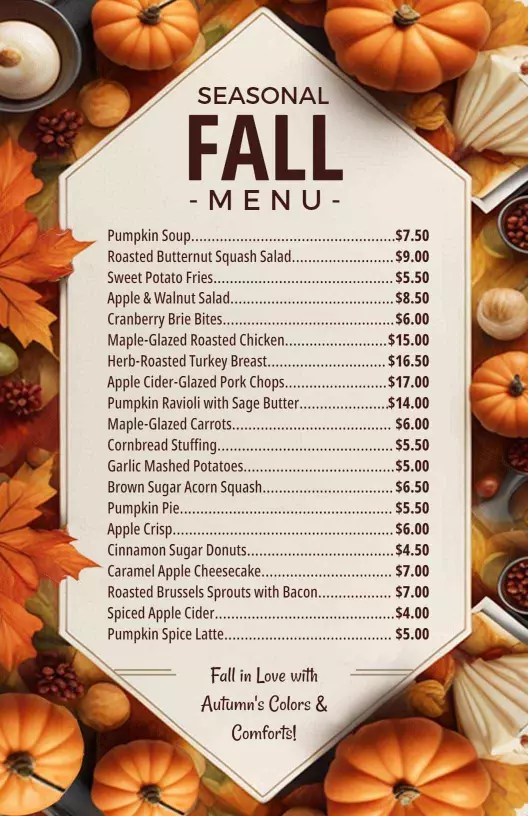
If you want to get inspiration and examples to design a seasonal menu for your restaurant, here are some menu templates and examples that you can easily customize using a free menu maker, and maximize your profitability in seasons.


When Should You Implement Seasonal Menu Changes?
Timing plays a crucial role in successful seasonal menu planning. Generally, restaurants should align menu changes with natural seasons while considering local climate patterns and customer expectations.
Traditional Seasonal Schedule
Spring Menu (March-May)
- Focus on fresh greens, early vegetables, and lighter preparations
- Incorporate Easter and Mother’s Day themes
- Emphasize renewal and freshness in marketing
Summer Menu (June-August)
- Highlight peak produce like tomatoes, stone fruits, and herbs
- Include grilling and cold preparations
- Capitalize on vacation and outdoor dining trends
Fall Menu (September-November)
- Feature hearty vegetables, apples, and warming spices
- Incorporate harvest themes and comfort foods
- Align with back-to-school and holiday preparation periods
Winter Menu (December-February)
- Emphasize rich, warming dishes and preserved ingredients
- Include holiday specialties and comfort foods
- Focus on indoor dining experiences and celebration menus
Flexible Timing Strategies
However, successful restaurants often adapt this schedule to their specific circumstances. For instance, coastal restaurants might extend summer menus into early fall to capitalize on extended warm weather. Similarly, ski resort restaurants might begin winter menus earlier to match their peak season.
Additionally, consider implementing micro-seasons or monthly features within broader seasonal frameworks. This approach keeps menus feeling fresh while maintaining operational efficiency.
What are the Essential Components of Seasonal Menu Planning?
Successful seasonal menu planning requires attention to multiple interconnected elements. Each component contributes to the overall success of your seasonal strategy.
1. Ingredient Sourcing and Procurement
Effective ingredient sourcing forms the foundation of seasonal menu planning. Research local growing seasons and identify which ingredients reach peak quality and affordability during each period. Additionally, develop relationships with multiple suppliers to ensure consistent availability.
Create detailed ingredient calendars that show when specific items become available, reach peak quality, and start declining. This information helps you plan menu transitions and avoid ingredients that might compromise dish quality.
2. Menu Engineering and Pricing
Apply menu engineering principles to seasonal items by analyzing popularity and profitability. Price seasonal dishes to reflect ingredient costs while maintaining appropriate margins. However, remember that customers often accept higher prices for unique seasonal offerings.
Furthermore, consider the psychological aspects of menu pricing. Limited-time items can command premium prices, especially when positioned as special experiences rather than regular menu items.
3. Kitchen Operations and Workflow
Seasonal menu changes impact kitchen operations significantly. Therefore, plan workflow adjustments to accommodate new preparation methods and ingredient handling requirements. Train kitchen staff on new techniques and ensure adequate equipment for seasonal dishes.
Additionally, consider storage requirements for seasonal ingredients. Some items require specific temperature or humidity conditions, which might necessitate equipment upgrades or storage modifications.
What are the Common Challenges and Solutions in Seasonal Menu Planning?
1. Ingredient Availability Can Be Unpredictable
One of the biggest issues in seasonal planning is that ingredient availability may change unexpectedly. A crop might fail due to bad weather, or your supplier may run out of stock.
Solution:
- Build good relationships with multiple local suppliers or farmers. That way, if one source fails, you have backup options.
- Create flexible recipes that allow easy ingredient substitutions. For example, if spinach isn’t available, use kale or mustard leaves.
- Always have a “Plan B” for your key dishes in case a main ingredient becomes unavailable.
2. Staff May Not Be Trained for New Dishes
Introducing new menu items means your kitchen and service staff need to learn how to prepare, plate, and describe them. Without proper training, service can slow down, and mistakes can happen.
Solution:
- Conduct staff training sessions before the menu goes live.
- Let the team taste the dishes so they can confidently explain them to guests.
- Share printed or digital cheat sheets with dish descriptions, key ingredients, and allergen info.
- Encourage staff to ask questions and provide feedback before launch day.
3. Overcomplicating the Menu
Some restaurants try to change too many items at once or introduce dishes that are too complex to prepare. This can confuse customers and overwhelm the kitchen.
Solution:
- Keep it simple. Add just a few seasonal items rather than redoing the whole menu.
- Focus on dishes that are easy to prepare, use minimal ingredients, and still feel fresh and seasonal.
- Maintain a balance between new and popular existing dishes to ensure consistency.
4. Pricing Seasonal Dishes Can Be Tricky
Seasonal ingredients may fluctuate in price depending on demand and supply. If you’re not careful, you might price a dish too low and lose money, or too high and scare away customers.
- Monitor ingredient prices regularly and update costs as needed before launching the menu.
- Use seasonal ingredients that are abundant and affordable.
- Choose dishes that allow for high-margin pricing, such as soups, salads, or cocktails using local fruits or herbs.
- Don’t forget to include labor and waste costs in your pricing formula.
5. Marketing the Seasonal Menu Gets Overlooked
You’ve created an amazing seasonal menu, but no one knows about it. If you don’t market it properly, you miss the opportunity to bring in new or repeat customers.
Solution:
- Start promoting your seasonal menu at least 1–2 weeks before launch.
- Use social media, email newsletters, in-house posters, and even influencer collaborations.
- Create a sense of urgency by promoting it as a “limited-time offer.”
- Update your Google listing, website, and online ordering platforms with new photos and dish names.
7. Proper Description and Details
It’s hard to write a description for dishes that reflect the meaning of the season. A well-written menu description not only explains what’s on the plate but also highlights the fresh, seasonal appeal of the ingredients. This helps customers understand what makes the dish special, encourages them to try something new, and sets clear expectations for taste and presentation.
For seasonal dishes, your descriptions should:
- Mention key seasonal ingredients, such as “roasted winter root vegetables” or “fresh summer berries.”
- Emphasize qualities like local, fresh, farm-picked, slow-roasted, or handcrafted, which connect the dish to the season.
- Use sensory language to describe textures and flavors, like “creamy”, “crispy”, “zesty”, or “warm and comforting.”
6. Inconsistent Customer Response
Not all customers may like your new seasonal dishes. Some may miss their regular favorites or feel unsure about trying something unfamiliar.
Solution:
- Keep popular or bestselling dishes on the menu year-round.
- Offer seasonal items as specials or add-ons instead of full replacements.
- Encourage your servers to recommend seasonal items and share stories about the ingredients or inspiration behind the dish.
- Collect feedback from customers and adjust your offerings based on what works.
Apart from that, there are many restaurant menu design mistakes you should avoid, even if you are designing a seasonal menu.
How to Measure Success in Seasonal Menu Planning?
Track specific metrics to evaluate your seasonal menu performance and identify areas for improvement. These measurements guide future seasonal planning decisions.
Financial Metrics
Monitor key financial indicators, including:
- Seasonal item profit margins compared to regular menu items
- Average check size during seasonal menu periods
- Food cost percentages for seasonal versus regular items
- Total revenue impact of seasonal menu changes
Operational Metrics
Track operational efficiency measures such as:
- Kitchen preparation times for seasonal dishes
- Staff training hours required for seasonal implementations
- Customer wait times during seasonal menu launches
- Food waste levels for seasonal ingredients
Customer Satisfaction Indicators
Measure customer response through:
- Customer feedback and reviews mentioning seasonal items
- Social media engagement on seasonal menu posts
- Repeat customer visits during seasonal periods
- Customer surveys about seasonal preferences
What are the Future Trends in Seasonal Menu Planning?
The restaurant industry continues evolving, and seasonal menu planning must adapt to emerging trends and customer expectations.
1. Sustainability Focus
Increasing consumer awareness about environmental impact drives demand for locally sourced, sustainable seasonal menus. Restaurants that emphasize their environmental responsibility through seasonal sourcing often attract environmentally conscious customers.
Additionally, zero-waste cooking techniques and nose-to-tail utilization become more important as sustainability concerns grow.
2. Health and Wellness Integration
Seasonal menu planning increasingly incorporates health and wellness trends. Customers seek nutritious options that align with seasonal eating patterns and support their health goals.
Furthermore, seasonal menus provide natural opportunities to highlight superfoods and functional ingredients that peak during specific seasons.
3. Technology Integration
Emerging technologies like artificial intelligence and predictive analytics help optimize seasonal menu planning. These tools analyze customer preferences, ingredient availability, and market trends to suggest optimal seasonal offerings.
Additionally, mobile apps and online ordering platforms make it easier to promote seasonal items and track customer preferences.
Frequently Asked Questions
1. Why should I plan a seasonal menu for my restaurant?
Planning a seasonal menu allows you to use ingredients that are fresher, more flavorful, and often more affordable. It keeps your offerings exciting for returning customers and encourages them to try something new. Plus, it shows your commitment to quality, sustainability, and keeping up with food trends.
2. How often should I change my seasonal menu?
Most restaurants update their seasonal menu four times a year, aligning with the natural seasons—spring, summer, fall, and winter. However, some restaurants make smaller changes monthly or bi-monthly, depending on the availability of ingredients and local events. It’s best to plan updates that your kitchen and staff can handle comfortably.
3. How do I choose the right seasonal ingredients?
Start by researching what’s in season locally in your area. Talk to your suppliers, visit farmers’ markets, and use seasonal produce calendars. Choose ingredients that are widely available, affordable, and can be used in multiple dishes to avoid waste. Focus on ingredients that enhance flavor and appeal to your customer base.
4. Do I need to change my entire menu every season?
No, you don’t need to change everything. A good approach is to keep your best-selling or signature items and add a few seasonal specials to complement them. This keeps your menu fresh and manageable. Customers like having familiar favorites alongside new, exciting options.
5. How do I price seasonal menu items properly?
To price seasonal dishes, first calculate the cost of ingredients per portion, including any prep and waste. Then, apply your desired food cost percentage (usually 25–35%) to set a profitable price. Be sure to monitor market prices, as seasonal ingredients can fluctuate. Also, consider perceived value — if a dish is visually appealing and unique, you can price it slightly higher.
6. What challenges might I face when planning a seasonal menu?
You might face challenges like inconsistent ingredient availability, rising costs, limited supplier options, staff needing extra training, or slow customer response. The best way to handle these is to plan, stay flexible with your ingredients, and involve your team early in the process.
Conclusion
Restaurant seasonal menu planning represents one of the most effective strategies for improving profitability, customer satisfaction, and operational efficiency. By aligning your menu with natural ingredient cycles and customer expectations, you create dining experiences that feel fresh, authentic, and compelling.
The key to success lies in systematic planning, strong supplier relationships, and consistent execution. Start by analyzing your local market and customer preferences, then gradually implement seasonal changes while monitoring results carefully.
Remember that seasonal menu planning is an ongoing process that improves with experience. Each seasonal transition provides valuable learning opportunities that inform future planning decisions. Moreover, the investment in seasonal menu planning pays dividends through increased customer loyalty, improved profit margins, and enhanced brand reputation.