
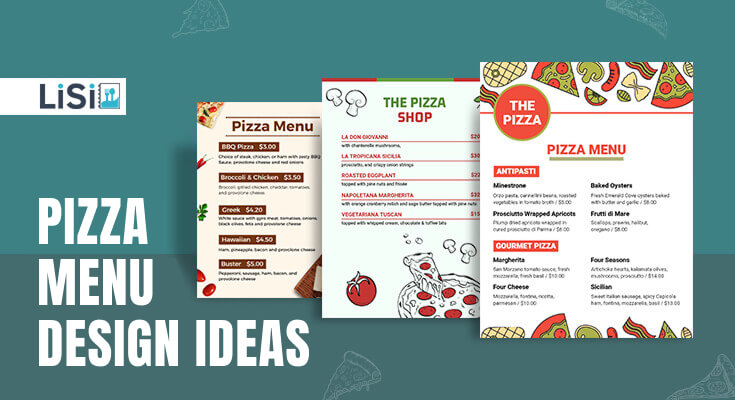
Running a pizza restaurant and searching for the best pizza menu design ideas that not just influence customer decisions and drive revenue, you’re at the right place. Studies show that well-designed restaurant menus can increase sales by up to 30% without changing a single ingredient.
Today’s competitive restaurant landscape demands menus that not only look appealing but also guide customers toward profitable choices. Whether you’re launching a new pizzeria or redesigning your existing menu, here you’ll find the best pizza menu design examples and practices to make it more appealing.
What Key Elements are Needed for Effective Pizza Menu Design?
Whether you’re a pizzeria owner, a food truck operator, or designing a digital pizza menu, focusing on key design elements helps you stand out and sell more.
Below are the most important elements to consider for an effective pizza menu design:
1. Clear Menu Structure
A well-organized layout helps customers find what they want quickly. A cluttered menu confuses, while a clear one builds trust and boosts orders.
- Group pizzas by category: Classics, Specialty Pizzas, Build Your Own, Vegan Pizzas
- Add subheadings to break sections
- Use columns or boxes for easy scanning
- Place high-profit or bestselling items at the top or center
2. Eye-Catching Pizza Names
Creative or unique names add personality to your menu and can spark curiosity.
Examples:
- Meat Lover’s Delight
- Spicy Inferno
- Margherita Magic
- Garden Feast
Make sure the names match your restaurant’s tone — fun, rustic, gourmet, or modern.
3. Appetizing Descriptions
Good descriptions help customers imagine the taste. Keep them short but flavorful.
Tips for writing great descriptions:
- Use sensory words: “crispy,” “melted,” “zesty,” “wood-fired”
- Mention key ingredients
- Highlight uniqueness or origin (“Neapolitan-style crust”)
For instance, pepperoni Burst – Classic tomato sauce, double mozzarella, and crispy pepperoni, finished with a dash of oregano.
4. High-Quality Images (But Not Too Many)
Photos sell food. A mouthwatering picture of a pizza can often trigger an impulse order.
Best Practices:
- Use only high-resolution, professional images
- Showcase bestsellers or signature pizzas
- Avoid overloading the menu with too many photos
- Place images near the relevant items
5. Menu Size and Format
The menu size and format depend on whether your menu is physical, digital, or both.
Options:
- Trifold or bifold menus for dine-in
- Single-page menus for takeout and quick service
- Digital QR code menus for contactless ordering
- Menu boards for pizza counters or food trucks
Also, a pizza menu can be considered a la carte menu style as each dishes are priced separately, allowing customers to choose and order items.
What are the Best Pizza Menu Design Examples and Ideas?
Wandering how a pizzeria can design an effective pizza menu? Here are some pizza menu design examples and ideas that you must look at.
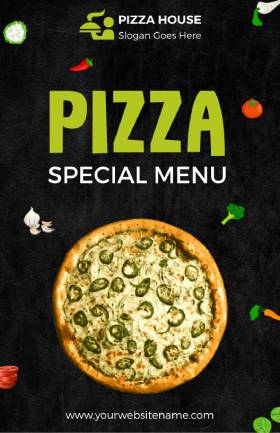

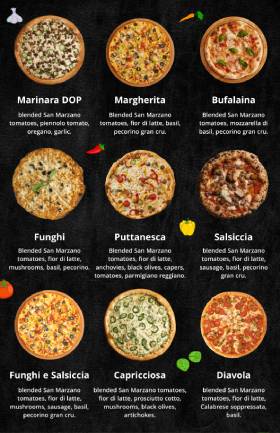
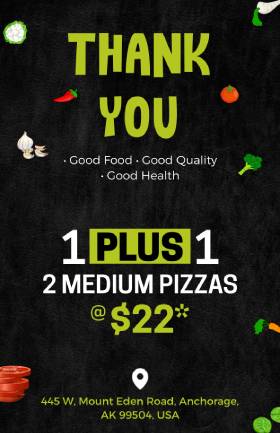
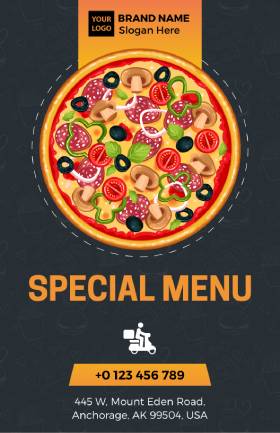
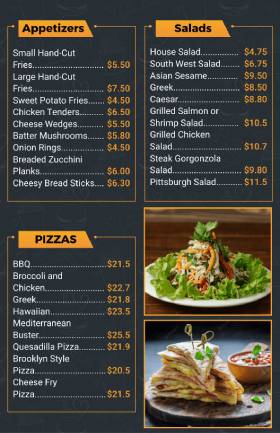
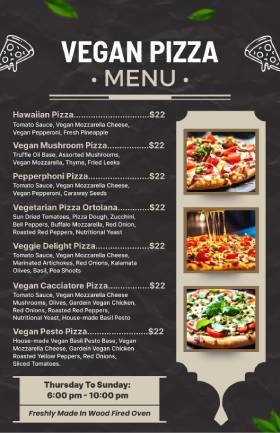
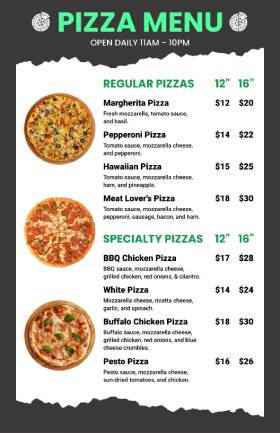
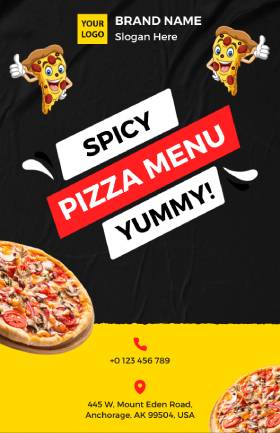
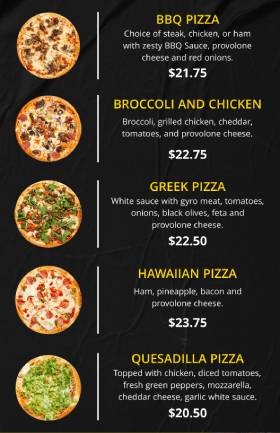
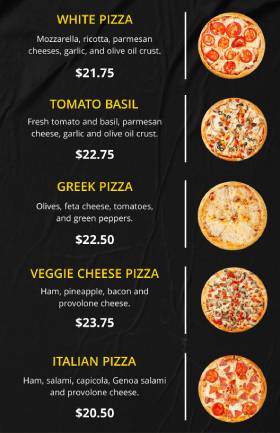
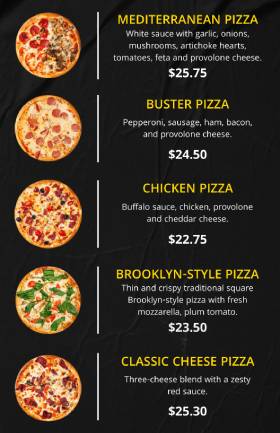
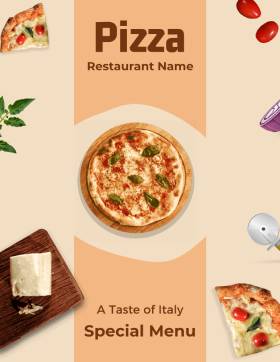
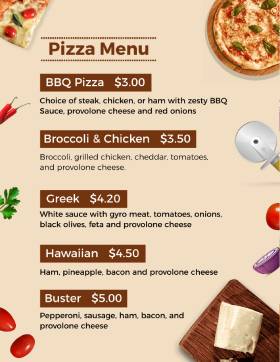
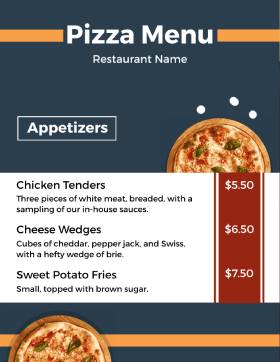
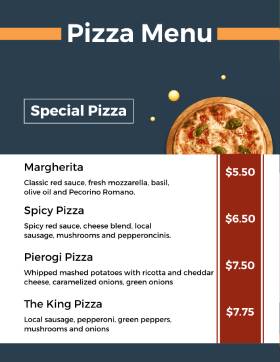
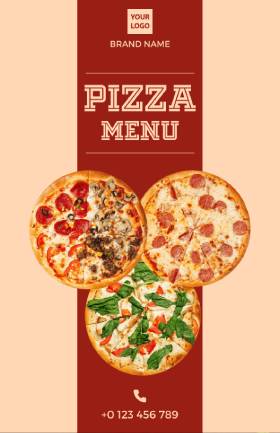
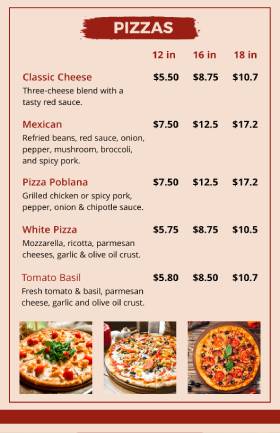
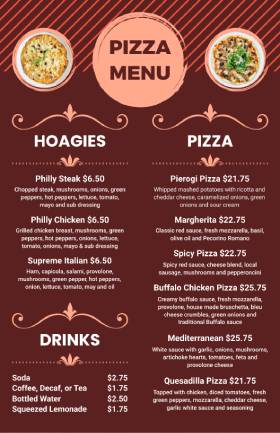
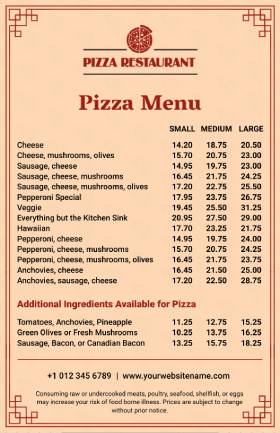
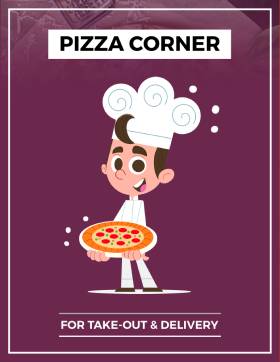
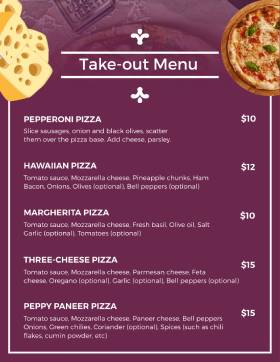
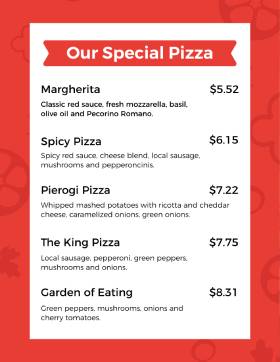
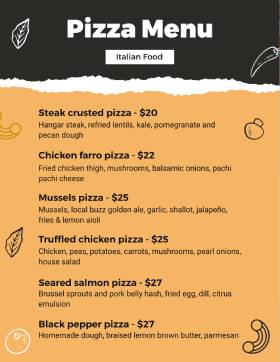
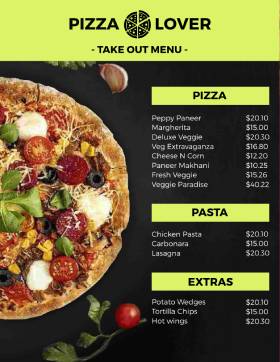
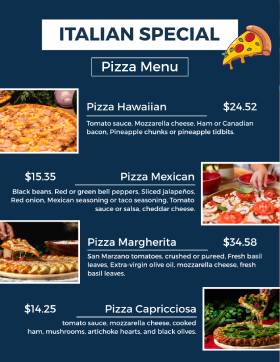
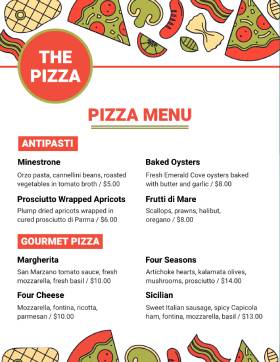
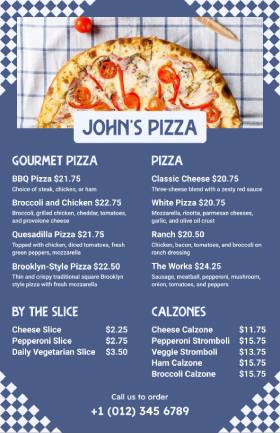
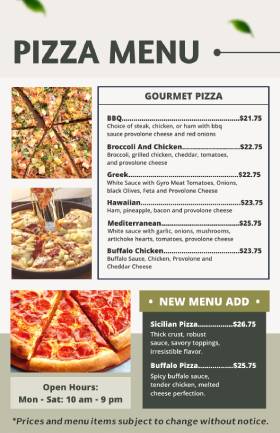
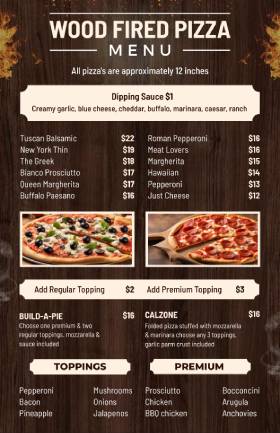
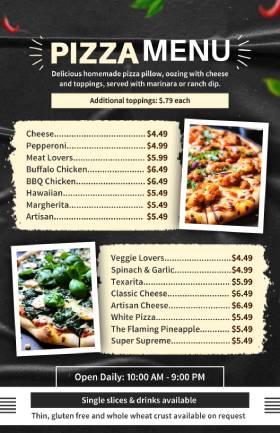
These were some creative pizza menu ideas that you can consider as inspiration, as they follow all menu design ideas or principles, description strategies, and include dietary information that makes the menu perfect for dinners.
What Makes a Pizza Menu Different from Restaurant Menus?
1. Built-In Customization
- Your way, every time. Most diners expect to tweak their pizza: choose size, crust style, sauce, cheese level, and toppings.
- The menu layout mirrors the workflow. Instead of fixed entrées, a pizza menu often has a “Build Your Own” section and clear add-on pricing so guests can assemble a pie step-by-step.
2. Size Options Matter
- Small, medium, large (and beyond). Pizza comes in shared rounds, squares, or slices, so size choices get prime real estate on the page.
- Price ladders. Each topping or specialty pie lists a trio (or more) of prices, one for every size. Most other restaurant dishes don’t need that extra column.
3. Combo & Bundle Emphasis
- Groups and families. Pizza is social food, so menus highlight meal deals: “2 Large Pizzas + Garlic Bread + 2 Drinks.”
- Upselling sides. Wings, dips, and desserts are paired right next to pizza listings to boost the average ticket—something you won’t see as prominently on a standard menu.
If you’re running a food truck business, and pizza is your best-selling item, you must check food truck menu templates to level up your design and make more sales.
4. Fewer Core Categories
- Laser-focused offerings. A pizza shop usually has just a handful of sections: Specialty Pizzas, Build Your Own, Sides, Drinks, maybe Desserts.
- Contrast with variety dining. Full-service restaurants juggle appetizers, soups, salads, mains, lunch specials, and more—making their menus longer and more segmented.
5. Delivery & Takeout-Friendly Design
- Quick scanning. Fonts are larger, item names are concise, and popular choices are highlighted with icons or bold borders so customers can order over the phone or online at a glance.
- Durable formats. Many pizza menus are printed as tri-fold flyers or single-page inserts meant to slip into delivery boxes—lighter and cheaper than the multi-page booklets used in sit-down spots.
6. Price Visibility & Transparency
- Add-on charges upfront. Extra cheese, gluten-free crust, or premium toppings list their fees clearly to avoid surprises.
- Few luxury dishes. Because pizzas already span a price range through sizes and toppings, there’s less need for separate high-end steaks or seafood entrees with premium price tags.
Many online menu builder tools in the market help you find your desired customizable menu templates and allow you to customize and save for printing.
How to Design a Pizza Menu that Increases Orders?
Strategically designed menu transforms a simple food list into a powerful sales tool. The way you present your pizza options, descriptions, and pricing directly influences customer choices and spending patterns.
Here are some key factors you need to consider while designing a pizza menu.
1. Menu Categories and Organization
Logical menu organization helps customers find what they want quickly while discovering new options along the way. Start with your signature or specialty pizzas to establish your unique value proposition immediately. Next, organize remaining pizzas by style, such as classic favorites, gourmet options, and build-your-own choices.
Additionally, consider grouping pizzas by dietary preferences or cooking methods. For example, create separate sections for:
- Vegetarian and vegan pizzas
- Gluten-free options
- Wood-fired specialties
- Deep-dish varieties
- Personal-sized pizzas
Furthermore, include complementary items like appetizers, salads, and desserts strategically throughout your menu. Rather than relegating these items to separate sections, integrate them near related pizza options to encourage add-on purchases.
2. Writing Compelling Pizza Descriptions
Writing a good menu description can make customers’ mouths water while highlighting key ingredients and preparation methods. Instead of simply listing toppings, tell a story that connects emotionally with your customers. For instance, “Grandma’s Garden Special” featuring “hand-picked tomatoes, fresh basil from our herb garden, and creamy mozzarella” sounds more appealing than “tomato, basil, mozzarella pizza.”
Moreover, use sensory language that helps customers imagine the taste, texture, and aroma of each pizza. Words like “crispy,” “melted,” “smoky,” and “aromatic” create vivid mental images that influence ordering decisions. Additionally, mention cooking methods or special ingredients that justify premium pricing.
However, keep descriptions concise and scannable. Long paragraphs overwhelm customers and slow down the ordering process. Instead, use 15-25 words per description to provide enough detail without information overload.
3. Strategic Pricing Presentation
How you display prices significantly impacts customer perception and spending behavior. First, remove dollar signs from your prices, as research shows this reduces the psychological pain of spending money. Additionally, align prices to create clean, organized columns that don’t distract from food descriptions.
Furthermore, use price anchoring to make moderate options appear more reasonable. Place a few high-priced specialty pizzas at the top of each section to make standard prices seem like better values. Similarly, offer three size options when possible, as customers often choose the middle option, which should be your target profit margin.
Moreover, consider bundling strategies that increase average order values. Package deals combining pizza, sides, and drinks often generate higher profits than individual item sales while providing perceived value to customers.
It’s nothing more complicated. By applying all strategies and elements of pizza menu examples shown above, you can craft the perfect menu for your pizzeria.
Tip:- We’ve covered a detailed guide on how to make a pizza menu; reading all those tips might help you create your winning menu.
What Menu Design Mistakes are Killing Your Pizza Sales?
Even well-intentioned menu designs can sabotage sales if they include common pitfalls that confuse or frustrate customers. Recognizing these mistakes helps you avoid costly errors that drive customers away.
Information Overload Problems
Too many choices paralyze customers and slow down decision-making processes. Restaurant psychology research indicates that menus with more than seven options per category overwhelm customers and reduce satisfaction levels. Therefore, curate your pizza selection carefully, focusing on quality over quantity.
Additionally, excessive text creates visual clutter that makes menus difficult to navigate. Long ingredient lists, detailed preparation methods, and extensive nutritional information might seem helpful, but often confuse customers instead. Similarly, too many promotional callouts, specials, and highlighted items compete for attention and dilute their individual impact.
Furthermore, complicated pricing structures frustrate customers and create ordering barriers. Multiple size options with different topping prices, varying crust charges, and confusing combo deals make simple pizza ordering feel like solving math problems.
Poor Visual Organization
Inconsistent formatting creates unprofessional impressions that undermine customer confidence in your food quality. When fonts, colors, and spacing vary randomly throughout your menu, customers perceive disorganization that extends to kitchen operations and food preparation.
Moreover, choosing the right fonts and colors while designing a menu makes it appear cramped and difficult to read. Dense text blocks discourage careful reading and force customers to make quick, potentially unsatisfying choices. Instead, generous spacing between sections creates breathing room that enhances readability and reduces visual stress.
Additionally, poor photo quality or inappropriate images can damage your brand reputation significantly. Unprofessional food photography, outdated images, or pictures that don’t match actual products create unrealistic expectations and customer disappointment.
Neglecting Mobile-Friendly Design
With increasing numbers of customers viewing menus on smartphones, mobile optimization becomes crucial for success. Traditional menu designs often fail on small screens, creating frustrating user experiences that drive customers to competitors with mobile-friendly options.
Furthermore, tiny text that requires zooming and scrolling creates barriers that discourage ordering. Menu elements that work perfectly on printed materials may become unreadable or unusable on mobile devices. Therefore, test your menu design across various screen sizes to ensure consistent functionality.
Additionally, consider how delivery and takeout customers interact with your menu differently from dine-in guests. Online ordering platforms require different design considerations than physical menus, including clear categorization and easy-to-find popular items.
How Can Technology Enhance Your Pizza Menu Design?
Modern technology offers innovative solutions that transform traditional menu concepts into dynamic, interactive customer experiences. QR code menus and online platforms create new opportunities for engagement and sales optimization.
Digital Menu Solutions:
Digital menu boards provide flexibility that static printed menus cannot match. Real-time updates allow you to adjust prices, highlight daily specials, or remove sold-out items instantly without reprinting costs. Additionally, rotating displays can showcase different pizzas throughout the day, maximizing exposure for various menu items.
Moreover, digital displays enable dynamic pricing strategies during peak and slow periods. Happy hour specials, lunch promotions, or late-night deals can automatically activate based on time settings. Similarly, weather-based menu adjustments can promote hot soups during cold days or cold beverages during heat waves.
Furthermore, integration with point-of-sale systems provides valuable data about customer preferences and ordering patterns. This information helps optimize menu layouts, pricing strategies, and promotional campaigns based on actual customer behavior rather than assumptions.
QR Code Menu Implementation:
QR code menus for restaurants gained popularity during the pandemic and continue offering advantages for both restaurants and customers. Contactless menu access reduces printing costs while providing customers with convenient, up-to-date information on their personal devices.
Additionally, QR codes enable rich media experiences that traditional menus cannot provide. Customers can view high-quality photos, read detailed ingredient lists, check nutritional information, and even watch preparation videos. These enhanced experiences build confidence in ordering decisions and justify premium pricing.
Moreover, QR code menus facilitate easy updates and multilingual options. Restaurants can instantly modify content, add seasonal specials, or provide translations without physical menu replacements. Similarly, analytics from QR code scans provide insights into customer engagement and popular menu sections.
Online Ordering Integration:
Seamless integration between menu design and online ordering platforms creates consistent brand experiences across all customer touchpoints. Your physical menu design should complement your website and app interfaces to reinforce brand recognition and customer familiarity.
Furthermore, online platforms enable personalization features that traditional menus cannot offer. Previous order history, dietary preference filters, and customization options create tailored experiences that increase customer satisfaction and loyalty. Additionally, recommendation engines can suggest complementary items based on current selections.
Moreover, data collection from online orders provides valuable insights for menu optimization. Customer behavior analytics reveal which items perform well, what combinations are popular, and where customers abandon their orders. This information guides future menu design decisions and promotional strategies.
What Challenges Does a Pizza Menu Present?
1. Juggling Endless Customizations
Pizza is one of the most customizable foods around—different crusts, sauces, cheeses, and dozens of toppings. Listing every possible combination clearly (and pricing each add-on) can make the menu feel crowded or confusing. If the layout isn’t crystal-clear, customers hesitate, and cashiers waste time clarifying options.
2. Showing Multiple Size Prices Without Clutter
Most pizzas come in at least two or three sizes. Every specialty pie needs a price ladder for Small, Medium, and Large (sometimes XL or Slice, too). Fitting those price columns neatly on one line is tricky; squeeze them too tight and the menu looks messy, give them too much space and you run out of room for other items.
3. Balancing Profit and Perceived Value
Certain toppings—fresh buffalo mozzarella, prosciutto, gluten-free crusts—cost far more than basics like tomato sauce or mushrooms. If you price premiums too high, patrons feel “nickel-and-dimed.” Price them too low, and your margin disappears. Finding the sweet spot is an ongoing numbers game.
4. Controlling Ingredient Inventory
A broad topping list means stocking many perishables—from pepperoni and artichokes to vegan cheese. Slow-moving items spoil quickly, but dropping them risks upsetting loyal customers who love that particular topping. A pizza menu forces tight inventory monitoring and frequent menu tweaks to limit waste.
5. Making Combos Easy to Understand
Pizza is often ordered with sides and drinks, so bundle deals are vital. Crafting combos that sound like real value (and are profitable) takes careful math. Explaining them concisely—without fine print that feels sneaky—adds another layer of menu design complexity.
6. Updating Prices Frequently
Cheese and flour costs can swing wildly, and seasonal veggies fluctuate, too. Because pizzas rely so heavily on these ingredients, small cost spikes can squeeze margins fast. A pizza menu often needs more frequent price reviews—and reprints—than a typical restaurant menu.
7. Standing Out in a Crowded Market
Pizza is everywhere. Creating inventive specialty pizzas without overwhelming diners—or copying competitors—requires ongoing creativity. The menu must highlight what makes your pies unique while staying easy to navigate.
What Are the Latest Trends in Pizza Menu Card Design?
Staying current with design trends helps your pizza menu feel fresh and relevant while meeting evolving customer expectations. However, balance trendy elements with timeless design principles to avoid frequent, costly redesigns.
1. Sustainable and Health-Conscious Design
Growing consumer awareness of environmental and health issues influences menu design trends significantly. Highlighting organic ingredients, local sourcing, and sustainable practices appeals to environmentally conscious customers who are often willing to pay premium prices for aligned values.
Additionally, clear dietary information and healthy options receive prominent placement in modern menu designs. Vegetarian, vegan, gluten-free, and low-calorie options deserve equal visual treatment to traditional pizzas rather than being relegated to small print or separate sections.
2. Minimalist Design Approaches
Clean, minimalist designs reduce visual clutter while focusing attention on key menu items and brand elements. Generous white space, simplified typography, and strategic use of color create sophisticated appearances that appeal to modern aesthetic preferences.
Moreover, minimalist approaches often perform better on mobile devices where screen space is limited. Simplified layouts load faster, navigate more easily, and provide better user experiences across all device types. Additionally, minimalist designs typically cost less to produce and update than complex, graphics-heavy alternatives.
3. Interactive and Engaging Elements
Modern customers expect interactive experiences that go beyond static information presentation. QR codes linking to ingredient videos, chef interviews, or pizza-making demonstrations create engaging experiences that build brand connection and justify premium pricing.
Additionally, gamification elements like loyalty program integration, social media sharing prompts, or interactive customization tools make menu interaction more engaging and memorable. These features encourage repeat visits while providing valuable customer data for future marketing efforts.
Frequently Asked Questions
1. What makes a pizza menu card design successful?
A successful pizza menu card design combines clear organization, appealing visuals, and strategic pricing presentation. The key elements include easy-to-read fonts, logical categorization of pizzas, mouth-watering descriptions, and proper use of white space. Additionally, highlighting your signature pizzas and high-profit items prominently helps guide customers toward profitable choices.
2. What makes pizza menu design ideas successful?
Successful pizza menu design ideas should be aligned with clear organization, appealing visuals, and strategic pricing presentation. The key elements include easy-to-read fonts, logical categorization of pizzas, mouth-watering descriptions, and proper use of white space. Additionally, highlighting your signature pizzas and high-profit items prominently helps guide customers toward profitable choices.
3. What’s the best way to display prices on a pizza menu?
Remove dollar signs from your prices and align them consistently to reduce the psychological impact of spending money. Use clean, simple formatting that doesn’t distract from food descriptions. Consider price anchoring by placing a few premium options at the top to make standard prices appear more reasonable.
4. Should I use different fonts throughout my pizza menu?
Limit yourself to 2-3 fonts maximum to maintain visual consistency and professional appearance. Use one font for headings, another for pizza names, and a third for descriptions if needed. Choose fonts that reflect your brand personality while prioritizing readability above all else.
5. Can I use the same menu design for dine-in and takeout?
While core design elements should remain consistent for brand recognition, consider creating variations optimized for different service types. Takeout menus might emphasize popular items and combo deals, while dine-in menus can include more detailed descriptions and appetizers.
6. How do I incorporate seasonal specials into my menu design?
Design flexible menu layouts that accommodate seasonal additions without requiring complete redesigns. Use removable inserts, table tents, or digital displays for limited-time offers. Create designated spaces on your main menu for rotating specials, or use clip-on additions for printed menus.
Conclusion
These pizza menu design ideas represent one of the most cost-effective investments you can make in your restaurant’s success. By implementing the strategies and principles outlined in this guide, you’ll create a pizza menu that works continuously to increase revenue and build customer loyalty.
As food trends evolve, the future of a pizza menu looks even more exciting. From plant-based options and digital ordering to personalized recommendations, pizzerias can stay ahead by adapting to these changes.