
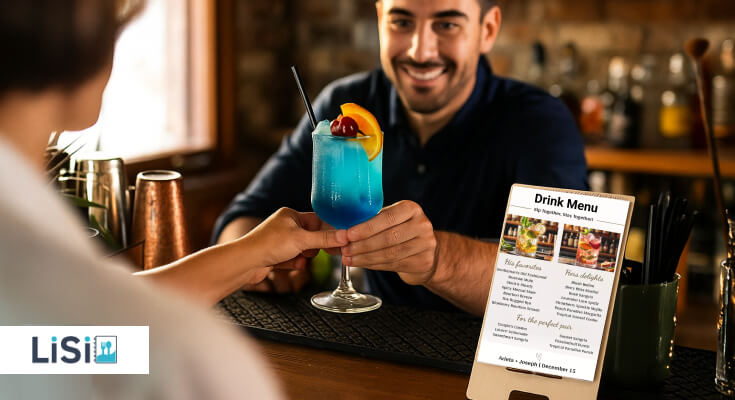
Are you thinking about how to organize and design a drink menu for better upselling? This guide is for you. Many establishments overlook the psychology and design principles that transform a simple beverage list into a profit-generating machine.
Moreover, studies show that well-designed menus can increase average order value by up to 20%. Additionally, the right menu organization and visual design influence customer behavior in ways that naturally lead to higher-value purchases. Therefore, understanding how to optimize your drink menu becomes crucial for maximizing profitability.
What is the Psychology Behind Drink Menu Design?
The Science of Customer Decision Making
When customers scan your drink menu, their brains process information in predictable patterns. Consequently, understanding these patterns helps you guide their choices toward higher-margin items. Research reveals that customers typically spend only 109 seconds reading a menu, making first impressions critical.
Furthermore, creative drink menu designs affect purchasing decisions. Studies demonstrate that drinks placed in the upper-right corner of a menu receive 41% more attention than those in other positions. Similarly, the center of the menu attracts significant visual focus, making it prime real estate for your most profitable drinks.
Cognitive Biases That Influence Drink Choices
Several psychological principles work in your favor when designing effective drink menus:
Anchoring Effect: Customers use the first price they see as a reference point for all subsequent prices. Therefore, strategically placing premium cocktails at the top creates a higher price anchor, making mid-range options appear more reasonable.
Choice Overload: Too many options actually decrease sales and customer satisfaction. Research indicates that menus with 7-10 drink categories perform better than those with extensive selections. Consequently, curating your offerings becomes more important than expanding them.
Social Proof: Highlighting popular items or staff recommendations leverages the tendency to follow others’ choices. Additionally, featuring awards or recognition creates credibility that encourages customers to try featured drinks.
What Are the Upselling Techniques Through Drink Menu Design and Structure?
A well-crafted drink menu can guide customers toward ordering more, spending more, and selecting high-margin options. This strategy is called upselling, and it can be built right into your menu design and structure.
Let’s explore how you can you can organize and design a drink menu for better upselling.
1. Organize Drinks into Clear, Logical Categories
Organizing your drink menu into clear and easy-to-understand categories is one of the simplest and most effective upselling techniques. When the menu is structured well, customers can quickly find what they’re in the mood for—whether it’s a hot coffee, a fresh juice, or a cool milkshake. This improves the overall experience and encourages them to explore more options.
Instead of listing all drinks in one long section, divide them into groups like:
- Hot Beverages – tea, coffee, hot chocolate
- Cold Drinks – iced tea, cold coffee, lemonade
- Fresh Juices – orange, watermelon, seasonal blends
- Smoothies & Milkshakes – fruit-based or chocolatey treats
- Specialty or Signature Drinks – premium or house-made items
- Add-Ons or Customizations – protein shots, whipped cream, flavor syrups
When people can see the variety, they’re more likely to order something extra or try something new. Also, placing high-margin categories (like smoothies or specialty coffees) at the top or center of the menu makes them stand out more.
2. Use Descriptive Language to Create Desire
The way you describe drinks can greatly impact what customers choose. Simple names won’t grab attention, but writing good menu descriptions can tempt people into ordering more exciting—and often more expensive—options.
Example: Chilled cold brew over ice, lightly sweetened with vanilla and topped with frothy cream.
Use words like refreshing, velvety, handcrafted, locally sourced, or made-to-order to add value and make drinks feel special. Customers are more likely to pick signature or premium drinks because they sound worth the price.
3. Highlight High-Profit or Signature Drinks
Make your bestsellers and high-margin items visually stand out. You can draw attention to them using layout, icons, or design elements.
How to highlight:
- Use a box, border, or background color
- Add labels like “Customer Favorite”, “Barista’s Choice”, or “Best Seller”
- Place them at the top of their section or in the center of the page (a visual hotspot)
When attention is drawn to specific items, customers are more likely to choose them, even at a higher price.
4. Include Upsell Prompts and Add-On Suggestions
Offer extras or upgrades right where the customer is reading. These prompts are small but effective for increasing order value.
Examples:
- “Add whipped cream for $1.”
- “Upgrade to large for $1.50 more.”
- “Pair with a muffin for $2.50 extra.”
Include these prompts as small text right below the drink name or price, or group them in a mini “Upgrade Your Drink” section.
Customers are more likely to spend extra when they see a simple, low-cost upgrade presented at the right moment.
5. Use Size Options to Frame Pricing
Offering different size options for drinks is a smart way to encourage customers to spend a little more without much effort. This technique, known as price framing, works by showing the value difference between sizes. For example, present prices vertically:
- Small – $4.25
- Medium – $4.95
- Large – $5.50
Highlight the medium size as a value option or add “most popular” beside it. This approach gives customers a sense of control while guiding them toward a higher-priced option that feels like a better deal, leading to higher sales and increased profits for your restaurant or café. Learn here about the menu pricing strategy that helps you boost revenue through upselling.
6. Bundle Drinks with Food or Dessert
Bundling drinks with food or dessert is an effective upselling strategy that adds value for the customer while increasing overall sales. Instead of ordering items separately, customers are more likely to choose a combo when it’s presented as a convenient, cost-saving option.
For example, offering a coffee and croissant combo for $5.99 instead of $7 when purchased individually feels like a deal. You can also create themed bundles like “Morning Starter” (coffee + breakfast sandwich) or “Sweet Treat” (milkshake + brownie). Not only does bundling make ordering easier, but it also encourages guests to purchase more than they initially planned.
7. Use Eye-Catching Visuals
Adding visuals like photos or small icons to your drink menu can grab attention and make items look more tempting. A great photo of a colorful smoothie or a frothy coffee can instantly make someone want to order it. However, it’s important not to overdo it.
Using too many images can make the menu look messy or cheap. Instead, include just a few high-quality pictures of your best-selling or most profitable drinks. You can also use small, clear icons—like a coffee cup ☕ or ice cube ❄️—to show whether a drink is hot or cold.
8. Price Anchoring for Premium Options
Price anchoring is a smart way to encourage customers to spend a little more by showing them a high-priced option first. When people see a very expensive drink at the top of the list, the next item—though still priced high—feels more affordable in comparison.
For example, if your first item is a deluxe smoothie for $9, and the next is a similar one for $6.50, customers are more likely to choose the $6.50 option because it seems like a better deal. This trick works well when you place your premium or largest-size drinks near the top of each section.
9. Include Premium Add-Ons or Alcoholic Variants
Offering premium add-ons or alcoholic versions of drinks is a great way to increase sales and give customers more exciting choices. For example, you can let customers add a flavor shot, protein boost, or whipped cream to their drink for a small extra cost. If your business serves alcohol, you can also offer spiked versions of juices or cocktails, like adding rum to a pineapple cooler or vodka to a fresh orange juice.
These upgrades should be listed under the main drink or in a small “Customize Your Drink” section. When customers see they can personalize or enhance their order with just a little more money, they’re often happy to do it.
However, your menu design matters a lot for the maximum impact. Here are some drink menu design ideas that help you consider every aspect of the design. And also explore our menu templates that are easier to customize, and help you design a menu for your bar, cafe, and restaurant.
What are the Essential Design Elements That Drive Upselling for Drinks?
1. Visual Hierarchy and Typography
Typography plays a crucial role in guiding customer attention and creating perceived value. Therefore, use font sizes and weights strategically to emphasize high-margin items. Additionally, maintain consistent styling that reflects your brand personality while ensuring readability.
Key Typography Guidelines:
- Use larger fonts for category headers and featured items
- Maintain consistent spacing between items
- Choose fonts that reflect your establishment’s atmosphere
- Ensure adequate contrast between text and background
- Avoid overly decorative fonts that reduce readability
Moreover, consider using different font weights to create emphasis without disrupting the overall design harmony. Bold text should highlight only the most important elements to prevent visual clutter. Find out more about which fonts and colors suit menu design, and how to select them.
2. Color Psychology in Menu Design
Colors evoke emotional responses that influence purchasing decisions. Furthermore, different colors create associations that can enhance or detract from perceived value. Understanding color psychology helps you choose palettes that support your upselling goals.
Color Associations for Beverages:
- Red: Creates urgency and appetite stimulation
- Gold/Yellow: Suggests premium quality and luxury
- Green: Implies freshness and natural ingredients
- Blue: Conveys trust and reliability
- Purple: Associated with sophistication and premium positioning
Additionally, limit your color palette to 2-3 primary colors to maintain visual coherence. Too many colors create confusion and reduce the impact of strategic highlighting. If you want to know more about menu design psychology to make it stand out, you must check out this guide.
3. Photography and Visual Elements
High-quality drink photography can increase sales by up to 30%. However, not every item needs a photo. Instead, focus on signature cocktails and premium offerings that benefit from visual appeal. Moreover, ensure all images maintain consistent lighting and styling that matches your brand aesthetic.
Furthermore, consider including essential elements in the menu design, like borders, icons, or decorative flourishes, to enhance visual interest without overwhelming the content. These elements should complement your overall design theme while drawing attention to key items.
What are the Upselling Techniques Through Drink Menu Structure?
A well-structured menu can guide customer choices, highlight high-margin items, and increase average spending without pressure. Below are the key upselling techniques you can use by simply organizing your menu the right way:
1. The Decoy Effect in Practice
The decoy effect involves introducing a third option that makes your preferred choice appear more attractive. For example, if you offer a standard cocktail for $12 and a premium version for $18, adding a “deluxe” option at $16 makes the premium seem like a better value.
Consequently, this technique works particularly well with wine selections and specialty cocktails. Additionally, presenting options in groups of three gives customers a clear good-better-best progression that naturally guides them toward higher-value choices.
2. Bundling and Pairing Suggestions
Strategic bundling increases average order value while providing customers with convenient options. Therefore, create thoughtful pairings that enhance the dining experience while boosting sales. Additionally, position these bundles prominently to encourage uptake.
Effective Bundling Strategies:
- Appetizer and cocktail combinations
- Wine flight offerings with small plates
- Dessert and digestif pairings
- Happy hour packages with multiple drinks
- Celebration packages for special occasions
Moreover, ensure bundled pricing offers genuine value to build customer trust and encourage repeat visits. Customers quickly recognize when bundles merely inflate prices without providing benefits.
3. Limited-Time Offers and Seasonal Promotions
Scarcity creates urgency that drives immediate action. Therefore, incorporate limited-time offers and seasonal specials that encourage customers to try higher-margin items. Additionally, rotate these offerings regularly to maintain customer interest and return visits.
Furthermore, seasonal ingredients provide natural opportunities for premium pricing while justifying higher costs through perceived freshness and exclusivity. Consequently, develop a calendar of seasonal promotions that align with ingredient availability and customer expectations. If you decide to increase orders during seasonal times, you must have seasonal menu planning to create a menu for your bar.
What Mistakes to Avoid While Designing a Drink Menu?
1. Overloading the Menu with Too Many Choices
Offering too many drink options on your menu might seem like a good idea, but it often has the opposite effect. When customers see a long, crowded list of beverages, it can become confusing and overwhelming.
Here’s why overloading your menu can hurt your sales:
- Confuses customers – Too many similar options make it hard to decide.
- Slows down ordering – Guests take longer to choose, especially in busy settings.
- Hides bestsellers – Signature or profitable drinks may get lost in the clutter.
- Reduces upselling chances – Customers stick to basic options instead of exploring.
Tip: Keep your menu focused. Limit each drink category (like hot beverages or smoothies) to 4–6 well-curated items.
2. No Clear Structure or Categories
A drink menu without a clear structure or categories can confuse customers and hurt sales. When all drinks are listed randomly or in one long list, guests may struggle to find what they want or overlook items entirely. Here’s how poor structure affects the customer experience:
- Slows down decision-making – Guests waste time searching for familiar drinks.
- Overlooks key items – Profitable or unique drinks may be missed entirely.
- Reduces upselling opportunities – Without clear sections, upgrades or bundles don’t stand out.
3. Ignoring Seasonal or Limited-Time Items
If your seasonal drinks are just added randomly without a section, customers might miss them. Create a small, eye-catching area on the menu for seasonal drinks, like “Winter Warmers” or “Summer Sips”. These drinks often have higher margins and attract more attention when clearly separated.
4. Cluttered or Unbalanced Design
A cluttered or unbalanced drink menu can be overwhelming and unprofessional, making it hard for customers to focus on what you actually want them to order. Using too many fonts, colors, images, or uneven spacing creates visual noise and makes your menu difficult to read.
Here’s how a cluttered design can hurt your sales:
- Confuses the eye – Customers don’t know where to look first.
- Distracts from key items – High-profit drinks get lost in the mess.
- Makes your brand look inconsistent – Too many styles or colors can feel chaotic.
5. Not Showing Size or Pricing Clearly
When drink sizes or prices aren’t clearly shown on your menu, it can lead to confusion, hesitation, or frustration for customers. If guests don’t know what portion they’re getting or how much they’ll be charged, they might avoid ordering altogether or feel surprised when they see the bill.
Here’s how unclear sizing and pricing can hurt your sales:
- Creates confusion – Guests can’t compare the value between sizes.
- Delays in ordering – Customers need to ask the staff for basic details.
- Prevents upselling – No visible large-size option means fewer upgrades.
6. Forgetting About Upselling Opportunities
If your menu doesn’t offer upgrades or add-ons, you’re missing easy chances to increase sales.
Here’s how you can fix it: Add short prompts like “Add whipped cream for $1” or “Upgrade to a large for just $0.75 more”. Place these suggestions right below the main item or in a separate “Customize Your Drink” section.
The list doesn’t end here; we’ve covered all mistakes while designing a drink menu that people often make, and how you should avoid them.
Frequently Asked Questions
1. What is the best layout for a drink menu to increase sales?
The most effective drink menu layout uses a strategic placement approach called the “golden triangle.” Place your most profitable drinks in the upper-right corner, center, and upper-left areas where customers naturally look first. Additionally, organize your menu in logical categories that flow from lighter drinks to stronger ones. Keep each category to 5-7 items to avoid overwhelming customers.
2. How many drink options should I include on my menu?
Research shows that 7-10 drink categories work best for most establishments. Too many choices actually hurt sales because customers get overwhelmed and stick to familiar options. Therefore, focus on quality over quantity. Include 3-5 signature cocktails, 4-6 classic drinks, a wine selection, beer options, and non-alcoholic beverages.
3. What colors should I use on my drink menu to encourage upselling?
Colors have a powerful impact on customer behavior. Red creates urgency and stimulates appetite, making it great for limited-time offers. Gold and yellow suggest luxury and premium quality, perfect for expensive cocktails. Green implies freshness and natural ingredients, ideal for craft cocktails with fresh herbs.
4. How do I price my drinks to maximize profits?
Use the “decoy effect” by offering three price levels for similar drinks. For example, if you have a standard cocktail at $12 and want to sell a premium version at $18, add a mid-tier option at $16. This makes the premium drink seem like a better value. Additionally, avoid ending prices in 9 (like $12.99) as this suggests discount pricing.
5. Where should I place my most expensive drinks on the menu?
Position your most expensive drinks in the upper-right corner or center of the menu, as these areas get the most attention. Additionally, give premium items extra space and consider using subtle highlighting like borders or different fonts. However, avoid making expensive items look too promotional, as this can reduce their perceived value.
6. What mistakes should I avoid when designing my drink menu?
Avoid cramming too much information onto your menu – this overwhelms customers and hurts sales. Don’t use fonts that are too small or decorative to read easily. Additionally, avoid placing all expensive items together in one section, as this creates a “luxury ghetto” that customers skip. Furthermore, don’t neglect staff training – even the best menu design fails without knowledgeable servers.
Conclusion
This was all about how to organize and design a drink menu for better upselling. Creating an effective drink menu that drives upselling requires careful attention to psychology, design, and strategic implementation. Furthermore, successful menu optimization combines understanding customer behavior with practical design principles that guide purchasing decisions naturally.
Additionally, remember that menu design is an ongoing process that requires regular evaluation and refinement. Therefore, commit to continuous improvement based on data analysis and customer feedback. Moreover, stay current with industry trends and emerging technologies that might enhance your upselling effectiveness.