
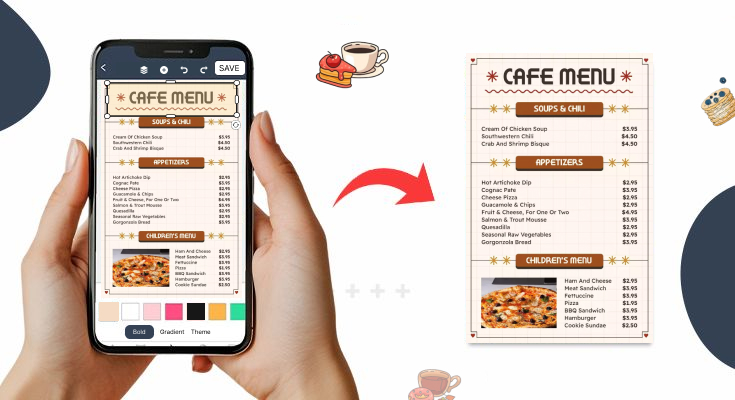
Are you a cafe owner thinking about how to make a cafe menu? Creating a menu that converts browsers into buyers becomes crucial for your cafe’s success.
According to recent industry studies, well-designed cafe menus can increase average order value by up to 40%. Furthermore, strategic menu engineering helps cafes boost their profit margins significantly. In this guide, you’ll learn the process of designing a cafe menu that not only looks great but also helps customers order faster and spend more.
What is the Importance of Cafe Menu Design?
Research from Cornell University found that highlighting specific items or using boxes and bold fonts can make those dishes up to 30% more likely to be ordered.
Perfect cafe menu designs are very important because they directly influence what customers choose to order and how much they spend.
- It leaves long-lasting Impressions on the user’s mind
- Directly affects your sales growth
- Customers spend more time reading it
- Better inventory management through strategic item promotion
- Increased social media sharing potential
In short, a clear, attractive menu not only boosts sales but also keeps customers happy and coming back.
How to Create a Cafe Menu that Attract more Customers?
Creating a successful cafe menu involves several interconnected steps. Furthermore, each step builds upon the previous one to create a cohesive dining experience.
Let’s explore this process systematically.
Step 1: Define Your Menu Strategy and Goals
Before designing anything, establish clear objectives for your menu. Additionally, consider your target audience and their preferences. Most importantly, align your menu with your overall business strategy.
Start by answering these fundamental questions:
- What type of dining experience do you want to create?
- Who is your target customer demographic?
- What price range fits your market positioning?
- Which items generate the highest profit margins?
- How does your menu reflect your brand identity?
Subsequently, use these answers to guide all menu decisions. This strategic foundation ensures consistency across all menu elements.
Step 2: Conduct Market Research and Competitor Analysis
Understanding your competitive landscape helps you differentiate your offerings. Moreover, market research reveals customer preferences and pricing expectations. Therefore, invest time in a thorough analysis before finalizing your menu items.
Visit competing cafes in your area and analyze their menus. Additionally, note their pricing strategies, popular items, and presentation styles. However, avoid copying competitors directly. Instead, identify gaps in the market that your cafe can fill.
Consider these research methods:
- Mystery shopping at competitor locations
- Online review analysis for popular items
- Social media monitoring for trending preferences
- Customer surveys about desired offerings
- Local market demographic studies
Step 3: Plan Your Menu Categories and Item Selection
Organizing your menu into logical categories helps customers navigate easily. Furthermore, strategic categorization can influence ordering patterns. Therefore, design a menu layout and structure carefully.
Most successful cafe menus include these core categories:
- Beverages: Coffee, tea, specialty drinks, cold beverages
- Food Items: Breakfast, lunch, snacks, pastries
- Seasonal Specials: Limited-time offerings and promotions
- Dietary Options: Vegan, gluten-free, healthy alternatives
Additionally, limit options within each category to avoid overwhelming customers. Research suggests that too many choices can lead to decision paralysis. Consequently, offer 5-7 items per category for optimal results.
Step 4: Develop Strategic Pricing for Your Cafe Menu
Pricing strategy directly impacts profitability and customer perception. Moreover, psychological pricing techniques can influence purchasing behavior. Therefore, develop a comprehensive pricing approach that balances profit with customer value.
Cost-Plus Pricing Method
Calculate your food costs and multiply by 3-4 to determine selling prices. This method ensures adequate profit margins while covering overhead expenses. Additionally, adjust prices based on local market conditions and competitor pricing.
Psychological Pricing Techniques
Implement these proven psychological pricing strategies:
- Charm Pricing: Use $4.95 instead of $5.00 to appear more affordable
- Price Anchoring: Place expensive items near moderately priced options
- Bundle Pricing: Offer combo meals at perceived value prices
- Decoy Pricing: Include high-priced items to make others seem reasonable
Furthermore, avoid using dollar signs on your menu, as they remind customers of spending money. Instead, simply list prices as numbers without currency symbols.
Bonus: If you want to make this process faster and efficient, use editable menu designs and templates that you can take as inspiration to organize menu layouts and structure.
Step 5: Crafting Compelling Café Menu Descriptions
Menu descriptions significantly impact customer ordering decisions. Moreover, well-crafted descriptions can justify higher prices and increase perceived value. Therefore, invest time in writing compelling item descriptions.
Sensory Language and Emotional Triggers:
Use descriptive language that engages multiple senses. Additionally, incorporate emotional triggers that create desire. Most importantly, paint a picture that makes customers crave your offerings.
Effective menu description techniques include:
- Sensory Words: Crispy, creamy, sizzling, aromatic, rich
- Origin Stories: Locally sourced, grandmother’s recipe, imported ingredients
- Preparation Methods: Hand-crafted, slow-roasted, freshly baked
- Texture Descriptions: Velvety smooth, perfectly tender, satisfyingly crunchy
- Emotional Appeals: Comfort food, indulgent treat, guilty pleasure
However, keep descriptions concise while being descriptive. Long descriptions can overwhelm customers and slow down ordering.
Avoiding Common Description Mistakes:
Many cafes make critical errors in menu descriptions. Furthermore, these mistakes can reduce sales and customer satisfaction. Therefore, avoid these common pitfalls:
- Generic Descriptions: Avoid bland, uninspiring language
- Excessive Length: Keep descriptions to 1-2 lines maximum
- Technical Jargon: Use language customers understand
- Negative Words: Avoid terms like “diet,” “low-fat,” or “reduced.”
- Missing Key Information: Include important details like allergens
Additionally, proofread all descriptions carefully for spelling and grammar errors, as mistakes damage professional credibility.
Step 6: Choose the Menu Format
Choosing the right menu format is an important decision for your restaurant or food service business. It determines how your customers will interact with the menu and how easily they can find what they want to order. The menu format should be clear, easy to read, and fit your restaurant’s style and brand. It also needs to make the ordering process smooth for customers.
There are different types of menu formats, and each has its advantages depending on your business type and customer needs:
1. Printed Menus
- Best for dine-in
- Laminate for durability
- Use thick paper for a premium feel
2. Chalkboard Menus
- Ideal for small cafés
- Easy to update daily specials
3. QR Code or Digital Menus
- Customers scan with their phone
- Eco-friendly and easy to update
Step 7: Test and Optimize the Menu
After creating your café menu, it’s important to test it and make improvements based on real customer experiences. This helps you find out what works well and what needs to change. Testing and optimizing your menu ensures that it’s easy to understand, enjoyable for customers, and profitable for your business.
Here’s how to test and optimize your café menu:
- Start with a Soft Launch: Try your new menu with a small group of people—friends, loyal customers, or staff—and ask for honest feedback on taste, pricing, and layout.
- Watch What Sells: Track which items are popular and which ones are rarely ordered. Keep the top-selling items and consider removing or improving the ones that don’t do well.
- Ask for Customer Feedback: Talk to customers or use feedback cards and online reviews to find out what they like and what could be better. Pay attention to comments on food taste, portion size, and how easy the menu is to read.
Step 8: Keep the Menu Updating
Keeping your café menu updated is essential to staying fresh and relevant. Customer tastes change, seasons shift, and food trends evolve, so regularly updating your menu ensures that you meet these changes while keeping your offerings exciting.
Here’s how to keep your café menu updated:
- Seasonal Ingredients: Change your menu items according to what’s in season. For example, during summer, offer refreshing cold drinks or fruit-based desserts, and in winter, feature warm soups or hot drinks.
- Incorporate Food Trends: Stay on top of new food and drink trends. If plant-based or gluten-free items are popular, consider adding options that cater to these growing preferences.
- Remove Low-Selling Items: If some items aren’t selling well or getting poor reviews, consider taking them off the menu. This keeps your offerings focused on what customers actually enjoy.
- Test New Dishes: Regularly introduce new dishes or drinks to keep things interesting. Limited-time specials can create excitement and encourage repeat visits from your customers.
Tip: If you find it difficult to create a menu that follows all these steps, simply use an online menu builder that removes all blocks and helps you design a menu for your cafe quickly.
What are the Advanced Cafe Menu Design Principles That Drive Sales?
Effective cafe menu design goes beyond aesthetics to influence customer behavior. Moreover, strategic design elements can guide customers toward high-profit items. Therefore, understanding these principles becomes essential for menu success.
Visual Hierarchy and Layout Strategy:
Create a clear visual hierarchy that guides customer attention. Additionally, use design elements to highlight profitable items. Most importantly, ensure easy readability and navigation.
Implement these visual hierarchy techniques:
- Size and Scale: Make important items larger and more prominent
- Color Contrast: Use contrasting colors to highlight featured items
- White Space: Provide adequate spacing for easy reading
- Typography: Use different fonts and weights to create emphasis
- Borders and Boxes: Frame special items to draw attention
Furthermore, position your most profitable items in the menu’s “golden triangle” – the upper right portion where eyes naturally gravitate.
So you must check these effective cafe menu design ideas that follow all these visual hierarchy and layout strategies.
Color Psychology in Menu Design:
Colors significantly impact appetite and purchasing decisions. Moreover, different colors evoke specific emotional responses. Therefore, choose your color palette strategically to enhance the dining experience.
Consider these color associations:
- Red: Stimulates appetite and creates urgency
- Orange: Encourages impulse purchases and excitement
- Yellow: Promotes happiness and optimism
- Green: Suggests freshness, health, and natural ingredients
- Blue: Suppresses appetite but conveys trust and reliability
- Brown: Evokes warmth and comfort food associations
Typography and Readability Optimization:
Font choices significantly impact menu readability and brand perception. Moreover, typography hierarchy helps organize information effectively. Therefore, select fonts that align with your brand personality while maintaining excellent readability.
Follow these typography best practices:
- Primary Font: Choose a highly readable font for menu items and descriptions
- Accent Font: Use a decorative font sparingly for headings and emphasis
- Font Size: Ensure a minimum 12-point font for easy reading
- Line Spacing: Provide adequate spacing between lines for clarity
- Contrast: Maintain high contrast between text and background colors
Furthermore, avoid using more than two different fonts to maintain visual consistency and professionalism. Additionally, maintain consistency in your color and typography in menu design. This creates a cohesive brand experience and professional appearance.
What are the Common Mistakes to Avoid while Designing a Cafe Menu?
Designing a café menu might seem simple, but it’s a delicate balance of creativity, functionality, and business strategy. Small mistakes in the design can confuse customers, lead to missed sales, or hurt your café’s overall brand.
1. Overloading with Too Many Items
Including too many options on your menu can overwhelm customers and make decision-making difficult. While variety is good, having a long, cluttered menu can make it hard for people to focus on your best dishes or drinks.
How to Avoid It:
- Limit your menu to a focused selection of your most popular or unique offerings.
- Consider grouping items into categories (coffees, pastries, sandwiches) to make the menu easier to navigate.
2. Poor Menu Layout or Design
A menu that’s hard to read or poorly laid out can frustrate customers. If the design is too busy or complicated, customers may not even notice the items you want them to try most. A cluttered or mismatched design also hurts your café’s overall look and feel.
How to Avoid It:
- Use a clean, simple layout with readable fonts and appropriate spacing.
- Stick to a color scheme that matches your café’s branding.
Organize your items logically so customers can easily find what they’re looking for.
3. Lack of Clear Descriptions
A menu without clear descriptions can lead to confusion, especially when it comes to unfamiliar dishes or drinks. Customers may avoid ordering something if they don’t understand what it is, or they might get disappointed if the dish doesn’t match their expectations.
How to Avoid It:
- Include short, descriptive lines for each item that explain the key ingredients or features.
- Highlight any special diets (vegan, gluten-free, etc.) and give details where needed, like spicy level or portion size.
4. Ignoring Pricing Strategy
Unclear or inconsistent pricing can confuse customers and make them feel uncertain about what to order. Overpricing or underpricing certain items can also hurt your café’s profitability.
How to Avoid It:
- Keep prices consistent and logical, ensuring that high-end items are priced appropriately and low-cost options are clearly affordable.
- Avoid placing prices too far away from the items or using fonts that make them hard to read.
5. Not Accounting for Allergens or Dietary Preferences
In today’s world, people have many dietary restrictions or preferences, such as vegan, gluten-free, or nut allergies. If your menu doesn’t address these needs, you may lose customers or even face legal issues.
How to Avoid It:
- Clearly mark any allergens or dietary restrictions next to items that contain them.
- Offer a variety of options for different diets, like plant-based or dairy-free alternatives.
6. Not Updating the Menu Regularly
A menu that’s never updated can feel stale. As food trends change, new ingredients become available, or seasonal items pop up, you risk losing customers if your menu doesn’t evolve with these changes.
How to Avoid It:
- Regularly update your menu to feature seasonal items, new food trends, or customer favorites.
- Consider introducing limited-time offers or rotating items to keep the menu fresh and exciting.
7. Forgetting to Reflect the Brand’s Personality
Your café’s menu should reflect its personality and brand. Whether it’s a cozy, casual space or a trendy, modern café, the design and language of your menu should match the vibe you want to convey.
How to Avoid It:
- Choose colors, fonts, and language that align with your café’s atmosphere.
- Ensure the menu design feels cohesive with the rest of your cafe’s décor and branding.
What are Digital vs. Printed Cafe Menu Considerations?
Modern cafes often need both digital and physical menu options. Additionally, each format has unique advantages and design requirements. Therefore, consider both formats when planning your menu strategy.
Physical Menu Benefits and Design Tips:
Physical menus create a tangible brand experience. Moreover, they don’t require technology or internet connectivity. Therefore, many customers still prefer traditional menu formats.
Physical menu advantages include:
- Tactile Experience: Customers can touch and feel the menu quality
- No Technical Issues: Always accessible regardless of technology problems
- Brand Reinforcement: Physical materials reinforce brand identity
- Conversation Starter: Unique menu designs can generate discussion
- Durability: Well-made menus last longer and maintain their appearance
However, consider material choices carefully. Laminated menus are durable but may appear cheap. Conversely, high-quality paper creates a premium perception but requires frequent replacement.
Digital Menu Advantages and Implementation:
Crafting a digital menu for a food business offers flexibility and cost-effectiveness. Furthermore, they enable easy updates and real-time changes. Therefore, many cafes are transitioning to digital-first menu strategies.
Digital menu benefits include:
- Easy Updates: Change prices and items instantly without reprinting
- Cost Savings: Eliminate printing and replacement costs
- Interactive Features: Include photos, videos, and detailed descriptions
- Analytics: Track customer interactions and popular items
- Accessibility: Integrate with ordering systems and mobile apps
Additionally, QR code menu designs became popular during the pandemic and continue growing in acceptance. They provide contactless ordering while maintaining convenience.
Moreover, we’ve also covered a detailed guide on printed vs digital menu format, and what works best for your business. You must check out.
People Also Ask:
1. What’s the first step in creating a café menu?
The first step in creating a café menu is defining your café’s concept. Think about your target audience, the type of food and drinks you want to serve, and the atmosphere you want to create. Are you focusing on coffee and pastries, or do you want a full menu with meals? This will help guide your menu items and design.
2. How do I price the items on my café menu?
Pricing should reflect the cost of ingredients, preparation time, and market rates. You want to ensure you’re making a profit but also keeping prices reasonable for your target customers. Consider local competition, your overhead costs, and how much your customers are willing to pay for the quality you provide.
3. How do I organize the menu for easy navigation?
A clean, logical layout is key to an easy-to-read menu. Group similar items together—like hot drinks, cold drinks, pastries, or sandwiches. Use headings and sections to guide customers. Avoid overwhelming them with too many items in one section, and try to keep the most popular items at the top or in the center.
4. Should I offer dietary options like vegan or gluten-free items?
Yes, offering dietary options like vegan, gluten-free, or dairy-free items is a great idea. It helps cater to a wider range of customers and shows that you’re inclusive of various dietary needs. Clearly label these options on the menu so customers can easily find what they can eat.
5. How do I test my café menu before launching it?
Testing your menu before launching it is essential to get feedback. Start by doing a soft opening or inviting a group of friends, family, or loyal customers to try the menu. Ask them about the taste, presentation, portion size, and ease of choosing items. You can also track which items sell best to see what needs improvement.
6. How do I make my café menu design match my café’s brand?
Your menu design should reflect your café’s atmosphere, whether it’s modern, cozy, or rustic. Choose colors, fonts, and design elements that match the vibe of your café. For example, a minimalist café might use clean lines and a simple color palette, while a vintage café could use retro fonts and warm colors. Consistency between the menu design and the overall décor will help create a cohesive customer experience.
Conclusion
Now you’ve learned how to make a cafe menu and which format works best to increase order value, but remember, creating an effective cafe menu requires strategic thinking, creative design, and continuous optimization.
Start implementing these strategies today, beginning with the most impactful changes for your specific situation. Additionally, track results carefully to measure improvement and identify areas for further optimization. With dedication and strategic thinking, your cafe menu can become a powerful driver of business success.