
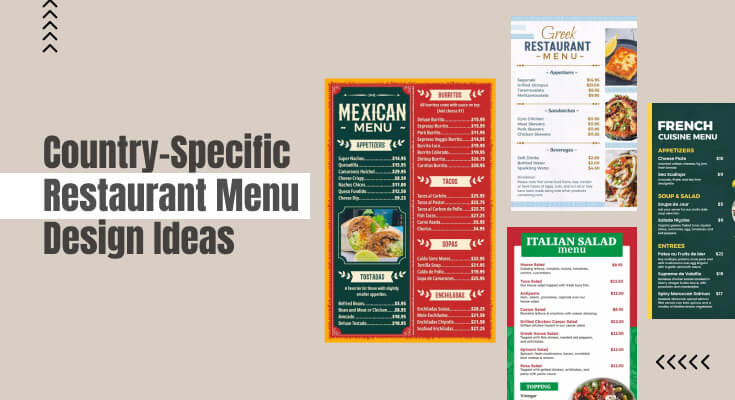
In this comprehensive guide, we’ll explore over 10 country-specific restaurant menu design ideas and templates that can transform your restaurant’s visual identity and boost customer engagement.
Whether you’re running a cozy Italian trattoria, a lively Mexican cantina, or a sleek Japanese sushi bar, your menu design should visually represent the food, culture, and emotions behind your cuisine.
Let’s dive in.
What is the Importance of Country-Specific Restaurant Menu Design?
Country-wise restaurant menu design themes serve as powerful cultural ambassadors for your establishment. Furthermore, these designs create authentic dining experiences that transport customers to different parts of the world. Additionally, culturally appropriate menu designs can increase customer trust, justify premium pricing, and differentiate your restaurant from competitors.
The Cultural Impact of International Menu Design
Restaurant menu design themes from different countries influence customer perceptions through:
- Cultural authenticity – Building trust and credibility with customers
- Visual storytelling – Communicating heritage and culinary traditions
- Emotional connections – Creating memorable dining experiences
- Brand differentiation – Standing out in competitive markets
- Premium positioning – Justifying authentic cuisine pricing
Moreover, authentic country-specific menu designs often lead to increased customer satisfaction and positive word-of-mouth marketing. Consequently, restaurants that embrace cultural design elements typically see higher customer retention rates and stronger brand loyalty.
What are the Best Country-Specific Restaurant Menu Design Ideas?
You can use these themes as direct inspiration or combine elements to create a hybrid. We also include key menu design tips or ideas, color palettes, typography suggestions, and menu layout design ideas to help you build a visually appealing and functional menu.
Let’s dive into the best country-wise restaurant menu design ideas you can implement today.
1. Italian Restaurant Menu Design
Italian menu designs celebrate the country’s rich culinary heritage through:

Traditional Elements:
- Warm color palettes featuring deep reds, forest greens, and cream
- Classic typography with elegant serif fonts
- Vintage illustrations of Italian landscapes and landmarks
- Textured backgrounds resembling aged parchment
- Regional maps highlighting ingredient origins
Modern Italian Approaches:
- Minimalist layouts with sophisticated typography
- High-quality photography of fresh ingredients
- Clean lines with strategic use of Italian flag colors
- Contemporary interpretations of classical elements
- Premium paper stocks and printing techniques
Italian restaurant menu designs work exceptionally well for establishments ranging from casual trattorias to upscale ristorantes. Additionally, these designs emphasize family traditions and regional specialties that resonate with customers seeking authentic experiences.
2. French Restaurant Menu Design
French menu design themes embody elegance and culinary sophistication:

Classic French Elements:
- Sophisticated color schemes in blacks, whites, and golds
- Ornate typography with decorative flourishes
- Art Nouveau-inspired design elements
- Premium materials and luxury finishes
- Detailed descriptions emphasizing technique and ingredients
Provincial French Styles:
- Rustic textures and hand-drawn illustrations
- Warm, countryside color palettes
- Casual typography with French script influences
- Vintage photography of French markets and vineyards
- Regional specialties and local ingredient highlights
French restaurant menu design particularly appeals to customers seeking refined dining experiences. Furthermore, these designs effectively communicate quality and culinary expertise, supporting premium pricing strategies.
3. Spanish Restaurant Menu Design
Spanish menu design themes capture the country’s vibrant culture and diverse regions:

Andalusian Influences:
- Bold, warm color palettes with oranges and deep blues
- Moorish patterns and decorative tilework inspirations
- Flamenco-inspired typography and flowing scripts
- Photography of Spanish markets and traditional ingredients
- Regional wine pairing information and sherry selections
Basque Country Styles:
- Clean, modern layouts reflecting contemporary Spanish design
- Sophisticated color schemes with natural tones
- Emphasis on fresh seafood and pintxos presentation
- Minimalist typography with Basque cultural elements
- Artisanal ingredient sourcing and preparation methods
Spanish restaurant menu designs effectively communicate regional diversity and culinary passion. Moreover, these designs can adapt to various restaurant concepts, from casual tapas bars to fine dining establishments.
4. Japanese Restaurant Menu Design Themes
Japanese menu design themes emphasize simplicity, balance, and natural beauty:
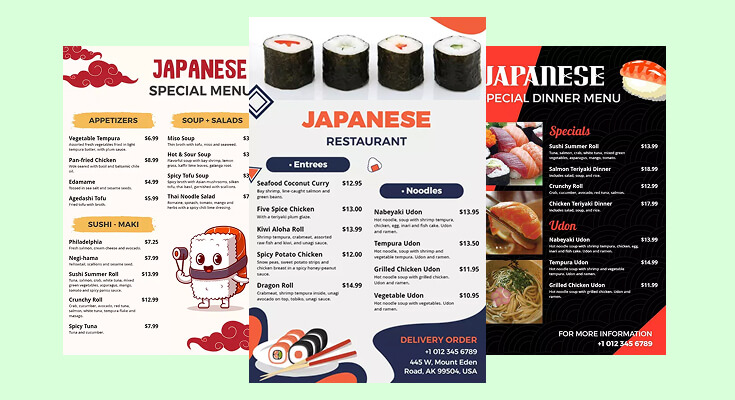
Traditional Elements:
- Minimalist layouts with extensive white space
- Subtle color palettes inspired by nature
- Calligraphy-influenced typography and brush strokes
- Natural textures like bamboo and stone
- Seasonal imagery and ingredient photography
Contemporary Japanese Styles:
- Ultra-modern layouts with geometric precision
- Monochromatic color schemes with accent colors
- Clean, sans-serif typography with Japanese influences
- High-quality sushi and ingredient photography
- Technology integration and QR code implementations
Japanese restaurant menu design themes particularly excel at conveying quality, freshness, and attention to detail. Furthermore, these designs align perfectly with the Japanese philosophy of presenting food as a form of art.
5. Chinese Restaurant Menu Design Themes
Chinese menu design themes celebrate the country’s rich cultural heritage:
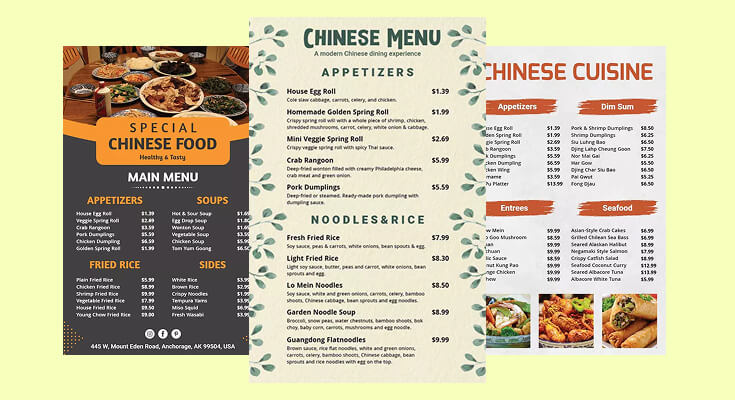
Traditional Elements:
- Auspicious color combinations of red and gold
- Classical Chinese calligraphy and symbolic elements
- Decorative borders with traditional patterns
- Imagery of Chinese landscapes and cultural symbols
- Regional cuisine categorization and family-style presentation
Modern Chinese Approaches:
- Contemporary layouts balancing tradition with innovation
- Sophisticated color palettes with metallic accents
- Modern typography incorporating Chinese design principles
- High-end photography of authentic dishes
- Tea pairing recommendations and cultural education
Chinese restaurant menu design themes effectively communicate authenticity while appealing to diverse customer bases. Moreover, these designs can adapt to various dining formats, from casual family restaurants to upscale establishments.
6. Thai Restaurant Menu Design Themes
Thai menu design themes capture the country’s tropical beauty and cultural richness:

Traditional Elements:
- Vibrant color palettes reflecting Thai landscapes
- Ornate patterns inspired by temple architecture
- Thai script integration and cultural symbols
- Tropical imagery and fresh ingredient photography
- Spice level indicators and authentic dish descriptions
Contemporary Thai Styles:
- Clean layouts with strategic color use
- Modern typography with Thai cultural influences
- Photography emphasizing fresh herbs and vibrant dishes
- Sustainable messaging and local ingredient sourcing
- Health-conscious menu organization and dietary information
Thai restaurant menu design themes excel at communicating freshness, flavor complexity, and cultural authenticity. Additionally, these designs help customers navigate spice levels and dietary preferences effectively.
7. Indian Restaurant Menu Design Themes
Indian menu designs reflect the subcontinent’s diverse culinary traditions:

North Indian Styles:
- Rich, warm color palettes with deep reds and golds
- Ornate patterns inspired by Mughal architecture
- Elegant typography with Hindi script influences
- Photography of aromatic spices and traditional cooking methods
- Regional specialties and family recipe stories
South Indian Approaches:
- Vibrant color schemes reflecting tropical influences
- Traditional art forms and temple-inspired designs
- Emphasis on vegetarian options and Ayurvedic principles
- Fresh ingredient photography and preparation methods
- Cultural education and spice explanations
Indian restaurant menu design themes successfully communicate the complexity and richness of Indian cuisine. Furthermore, these designs help customers understand unfamiliar dishes and cooking techniques.
8. African Restaurant Menu Design Themes
African restaurant menu design themes celebrate Mediterranean culture and hospitality:

Traditional Elements:
- Warm color palettes with Mediterranean blues and earth tones
- Geometric patterns inspired by Islamic art
- Arabic calligraphy and cultural symbols
- Photography of fresh ingredients and mezze presentations
- Family-style dining emphasis and sharing plate descriptions
Modern Lebanese Styles:
- Clean, contemporary layouts with cultural touches
- Sophisticated typography balancing Arabic and English
- High-quality food photography emphasizing freshness
- Healthy dining messaging and nutritional information
- Wine and arak pairing suggestions
African restaurant menu design themes effectively communicate freshness, health benefits, and social dining experiences. Moreover, these designs appeal to customers seeking authentic Mediterranean flavors.
9. Mexican Restaurant Menu Design Themes
Mexican menu design themes celebrate the country’s vibrant culture and diverse regional cuisines:

Traditional Elements:
- Bold, festive color palettes with bright reds, greens, and yellows
- Hand-painted illustrations and folk art inspirations
- Playful typography mixing Spanish and English
- Photography of traditional cooking methods and ingredients
- Regional specialties and family recipe traditions
Contemporary Mexican Approaches:
- Modern layouts with strategic color use
- Sophisticated typography with Mexican design influences
- Artisanal ingredient photography and craft cocktail pairings
- Educational content about Mexican culinary regions
- Sustainable and organic messaging
Mexican restaurant menu designs create lively, welcoming atmospheres that encourage social dining. Moreover, these designs can adapt to various concepts, from casual taquerias to upscale Mexican restaurants.
10. Brazilian Restaurant Menu Design Themes
Brazilian menu design themes capture the country’s tropical energy and diverse regional cuisines:

Traditional Elements:
- Vibrant color palettes reflecting Brazilian landscapes
- Carnival-inspired patterns and festive elements
- Portuguese language integration and cultural symbols
- Photography of churrasco and traditional cooking methods
- Regional specialties and cultural celebrations
Contemporary Brazilian Approaches:
- Modern layouts with tropical color influences
- Clean typography with Brazilian design elements
- Fresh ingredient photography and healthy options
- Caipirinha and cocktail pairing suggestions
- Sustainable sourcing and rainforest conservation messaging
Brazilian restaurant menu design themes create energetic, festive dining atmospheres. Furthermore, these designs effectively communicate the diversity and richness of Brazilian regional cuisines.
11. American Restaurant Menu Design Themes
American menu design themes reflect the country’s diverse culinary landscape and cultural influences:

Classic American Elements:
- Patriotic color schemes with reds, whites, and blues
- Vintage Americana typography and nostalgic elements
- Photography of comfort foods and regional specialties
- State-by-state cuisine highlights and local sourcing
- Craft beer and bourbon pairing information
Regional American Styles:
- Southern comfort food themes with warm, homestyle elements
- Pacific Northwest designs emphasizing sustainability and local ingredients
- Southwest themes incorporating Mexican and Native American influences
- New England styles focus on seafood and seasonal ingredients
- Midwest themes celebrating farm-to-table and hearty comfort foods
Menu designs for American restaurants effectively communicate regional diversity and local pride. Moreover, these designs can adapt to various dining concepts while maintaining cultural authenticity.
12. Greek Menu Design Theme
Greek cuisine is deeply rooted in history and Mediterranean culture. It’s known for being fresh, simple, and full of flavor. Your menu should reflect the island lifestyle, blue-and-white Greek architecture, and traditional patterns. A Greek-themed design instantly transports your diners to a coastal taverna in Santorini or Mykonos.
A great Greek menu design doesn’t just look good—it sets the tone for the entire dining experience. It conveys freshness, tradition, and a relaxing vibe.

Traditional Elements:
- White and sky blue (to reflect Greek architecture and the Aegean Sea)
- Pair a classic serif font for dish names with a clean sans-serif for descriptions
- Emphasize seafood dishes like grilled octopus, calamari, or fresh fish
- Avoid overly modern or minimalistic layouts unless you run a Greek fusion restaurant
13. Turkish Menu Design Theme
Turkish cuisine is a rich blend of Central Asian, Middle Eastern, and Mediterranean influences. It’s vibrant, aromatic, and deeply traditional. A Turkish menu should reflect the warm hospitality, historic charm, and colorful culture of Turkey. The design must feel welcoming, elegant, and rooted in centuries-old food rituals.

Traditional Elements:
- Use elegant serif fonts or script-style fonts inspired by Ottoman calligraphy for headings
- Use framed sections or decorative borders around categories
- Adding deep royal blue, ruby red, and rich gold is traditional and symbolic
- Group dishes in traditional Turkish meal sections: Meze (starters), Ana Yemekler (main courses), Tatlılar (desserts), and Içecekler (drinks
How to Choose the Right Country-Specific Menu Design Theme?
Selecting the appropriate country-wise restaurant menu design theme requires careful consideration of several factors:
Authenticity and Cultural Respect
Your menu design theme should authentically represent the cuisine’s country of origin:
- Research cultural design traditions and symbolic meanings
- Avoid stereotypical or offensive representations
- Consult with cultural experts or community members
- Balance authenticity with local market preferences
- Respect intellectual property and traditional patterns
Target Audience Considerations
Consider your local customer demographics and preferences:
- Cultural familiarity and dining experiences
- Price sensitivity and value expectations
- Dietary restrictions and preferences
- Language preferences and bilingual needs
- Social media sharing and visual appeal
Practical Implementation Factors
Successful country-specific menu designs balance culture with functionality:
- Printing costs and material availability
- Menu update frequency and seasonal changes
- Staff training needs for cultural explanations
- Digital format compatibility and mobile optimization
- Multi-language support and translation accuracy
Browse our handy library of menu templates and designs, which include all types of menus to suit every restaurant style, cuisine, and country-specific theme.
What are the Best Practices for International Menu Designs?
Creating an international menu means serving dishes from diverse cultures, and your menu design should reflect that variety, respecting each culture’s unique identity. A good international menu is not just about listing global dishes, but also about making the experience easy, exciting, and familiar for everyone.
1. Group Dishes by Country or Region
When designing an international menu, it’s important to organize your dishes by their country or region of origin. This approach makes the menu easier to understand and navigate, particularly for guests seeking a specific type of cuisine. For example, separating Italian, Mexican, and Japanese items into their own sections helps customers quickly find what they’re craving.
2. Use Cultural Visual Elements
Use colors, symbols, and graphics that reflect each country, but don’t overdo it.
- For Italian dishes: Red and green accents, pasta icons
- For Japanese: Clean layout with sushi illustrations
- For Indian: Warm tones with spice patterns
3. Add Short Descriptions for Every Dish
When offering international cuisine, it’s essential to include short, clear descriptions for every dish. Many customers may not be familiar with the names or ingredients of foods from other cultures, so a brief explanation helps them make informed choices. For instance, instead of simply listing “Bibimbap,” you can write: “Bibimbap – A Korean rice bowl topped with vegetables, meat, fried egg, and spicy gochujang sauce.”
These short descriptions should highlight key ingredients, flavor profiles, and any unique preparation methods. They also help build excitement and curiosity, especially for guests who enjoy trying new things.
If you don’t know how to write a menu description that delights your customers, checking this guide may be helpful to you.
4. Use Clear Language and Avoid Jargon
When designing an international menu, it’s important to use clear, easy-to-understand language that everyone can follow. Avoid using technical culinary terms or local jargon that may confuse your guests. While authentic dish names can add charm and cultural flavor, they should always be paired with a short explanation in plain language.
For example, instead of just writing “Rogan Josh,” add a simple description like “a slow-cooked lamb curry with aromatic Indian spices.” This helps people who aren’t familiar with the cuisine feel more confident when ordering. If your menu includes too many unfamiliar or complicated words, it may frustrate or overwhelm customers.
5. Include Icons for Dietary Needs
Adding icons to show dietary information is a smart and user-friendly feature in international menu design. Since different cuisines often include ingredients that may not be familiar to everyone, using small, easy-to-understand icons helps customers quickly identify what suits their needs. For example, a leaf icon can show vegetarian dishes, a chili icon can indicate spiciness, and a peanut symbol can warn about allergens.
These visual cues save time for diners and reduce the need to ask questions, especially in busy restaurants. They also make your menu more inclusive for people with dietary restrictions or allergies.
6. Use a Consistent Layout Across All Sections
A consistent layout is essential for a clean, professional, and easy-to-read international menu. Even if you’re featuring dishes from different countries, the structure of the menu should remain uniform throughout. This means using the same font styles, spacing, alignment, and design format for all sections—whether it’s Italian, Thai, or Mexican food. For example, every section should have a clear heading, followed by dish names, short descriptions, and prices in the same order and style.
- Use the same font style, spacing, and structure throughout
- Keep prices and dish names aligned for easy reading
- Use matching headers or section titles to avoid confusion
7. Include Cultural Notes or Fun Facts
You can add a personal touch by telling a short story or cultural fact.
- Example: “Did you know falafel is one of the most popular street foods in the Middle East?”
- You can also mention the dish’s origin or the meaning behind the name.
Tip: These extras make the experience more engaging and memorable.
8. Make Your Menu Multilingual
If your restaurant serves international guests or is located in a tourist-friendly area, creating a multilingual menu is a smart and thoughtful choice. Not everyone speaks or reads the local language, so offering translations can make your menu more accessible and welcoming.
For example, you can list dish names and descriptions in English alongside the local language, or include commonly spoken alternatives like Spanish, French, or Mandarin, depending on your audience. This not only helps visitors understand what they’re ordering but also shows that your restaurant values and respects cultural diversity.
9. Adapt the Menu for Digital and Print
Restaurants need to provide menus that work well both in print and on digital platforms. By implementing or creating QR code menus for restaurants, customers can check the menus online and view them on their phones. That’s why your international menu should be designed to look great and function smoothly in both formats. For printed menus, focus on clear fonts, high-quality paper, and organized layouts that are easy to hold and read.
For digital versions, ensure the menu is mobile-friendly, loads quickly, and doesn’t require zooming or scrolling too much. Use clean formatting, readable text sizes, and optimized images that won’t slow down the page. Find out more about what menu format, printed or digital menu, works best for your restaurant.
10. Testing and Feedback Collection
Validate your country-specific menu design through:
- Focus groups with target cultural communities
- Customer feedback surveys and cultural accuracy assessments
- Sales performance analysis and dish popularity tracking
- Social media engagement and cultural appreciation metrics
- Ongoing refinement based on customer responses
Frequently Asked Questions
1. What makes a restaurant menu design theme country-specific?
A country-specific restaurant menu design theme incorporates authentic cultural elements that represent the cuisine’s origin. These elements include traditional color palettes, typography styles, patterns, and symbols that reflect the country’s heritage.
For example, Italian menu designs often use warm reds and greens with elegant serif fonts, while Japanese menus emphasize minimalism with clean lines and natural textures. The key is balancing cultural authenticity with readability and customer appeal.
2. How do I choose the right colors for different country-themed menus?
Color selection depends on the cultural significance and traditional associations of each country. Mediterranean countries like Italy and Greece work well with warm earth tones, deep blues, and terracotta colors that reflect their coastal landscapes.
Asian countries often use different approaches—Japanese designs favor subtle, natural colors like whites and soft grays, while Chinese menus traditionally incorporate red and gold for luck and prosperity. Mexican themes embrace vibrant colors like bright reds, greens, and yellows that celebrate their festive culture.
3. Can I mix design elements from different countries in one menu?
While it’s possible to mix elements, it requires careful consideration to avoid cultural confusion or insensitivity. This approach works best for fusion restaurants that genuinely combine cuisines from different countries. For example, a Korean-Mexican fusion restaurant might blend Korean minimalist design with Mexican vibrant colors. However, randomly mixing elements can appear inauthentic and confuse customers about your restaurant’s identity.
4. Should my menu design change based on my restaurant’s location and local customers?
Yes, successful country-themed menus balance cultural authenticity with local market preferences and expectations. Consider your local customers’ familiarity with the cuisine and cultural elements. In areas with large immigrant populations, you might include more authentic language and cultural references. In less diverse areas, you might need more educational content and accessible design elements.
5. How often should I update my country-themed menu design?
Country-themed menu designs typically don’t need frequent major overhauls since cultural elements are generally timeless. However, consider seasonal updates that reflect cultural celebrations or traditional festivals from the cuisine’s country of origin. For example, Chinese restaurants might update designs for Chinese New Year, or Mexican restaurants might create special Day of the Dead themes.
Conclusion
Choosing the right country-specific restaurant menu design ideas can dramatically enhance your establishment’s cultural authenticity and customer appeal. Whether you’re serving traditional Italian pasta, authentic Thai curries, or innovative Australian cuisine, the perfect design theme should respectfully represent the culture while meeting your local market needs.
Remember that effective country-specific menu designs go beyond visual aesthetics—they serve as cultural bridges that educate customers, build trust, and create memorable dining experiences.
Platforms like Lisi.menu can simplify this process by offering a wide range of customizable templates and tools tailored for all types of menu requirements.
By carefully researching cultural traditions, consulting with community experts, and implementing thoughtful design choices, you can create menu designs that honor culinary heritage while driving business success.