
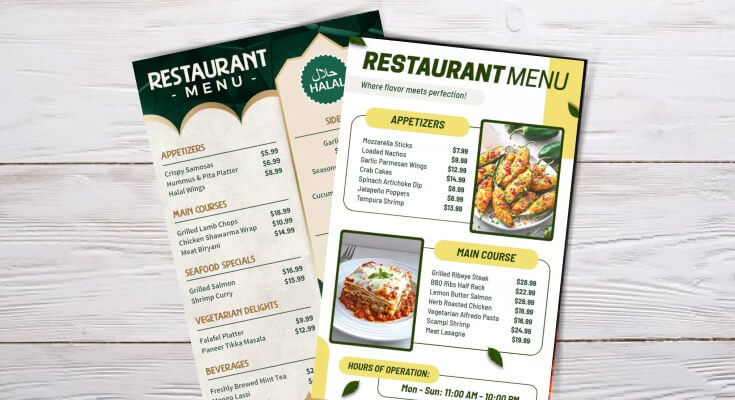
Restaurant owners constantly wonder what parts of the restaurant menu design can actually influence customer behavior and boost sales. Moreover, understanding the best parts of the menu design can transform an ordinary dining experience into a profitable venture that keeps customers returning.
Therefore, identifying these crucial design components becomes essential for any restaurant seeking competitive advantages in today’s crowded marketplace.
Research shows that strategic menu design can increase average order values by 15-25% when implemented correctly. This comprehensive guide explores the most effective components of restaurant menu design, revealing which elements consistently drive results across different restaurant types.
What is the Importance of a Good Restaurant Menu Design?
A good restaurant menu design is one of the most powerful tools for increasing sales and improving the customer experience. It not only lists your food but also guides customer choices, highlights your best dishes, and reflects your brand’s style. Studies show that a well-designed menu layout can boost restaurant profits by 10% to 15% simply by influencing how and what customers order.
According to Statista, 88% of customers judge the quality of a restaurant by its menu design, which means poor design can hurt your image. A good menu also includes helpful features like dietary icons, short descriptions, and combo suggestions to encourage larger orders and keep guests happy.
After looking at the data and statistics, it’s clear that the proven menu design ideas play a key role in designing a menu that not only increases the orders but also captures the brand’s identity.
What Parts Should Every Effective Restaurant Menu Include?
1. The Psychology-Driven Header Section
The header section represents one of the best parts of restaurant menu design because it sets the entire tone for the dining experience. Moreover, this crucial area establishes brand identity while creating emotional connections with customers before they even begin reading menu items.
Brand Identity Integration
Effective header design seamlessly incorporates restaurant branding elements that reinforce customer recognition and loyalty. Therefore, successful headers include logos, taglines, and visual elements that reflect the establishment’s personality and values.
Essential Header Elements:
- The restaurant logo is positioned prominently for brand recognition
- A tagline or mission statement that communicates restaurant values
- Contact information, including phone, website, and social media
- Visual elements that reflect the cuisine type and restaurant atmosphere
- Color schemes that align with the overall brand identity
Creating Emotional Connections
The best restaurant menu designs use headers to create immediate emotional responses that influence ordering decisions. Additionally, strategic use of imagery, colors, and messaging can evoke feelings of comfort, excitement, or sophistication depending on the target audience.
Emotional Triggers in Headers:
- Warm, inviting language that makes customers feel welcome
- High-quality photography showcasing signature dishes or ambiance
- Storytelling elements about the restaurant’s history or the chef’s background
- Cultural references that connect with specific customer demographics
- Seasonal elements that create relevance and freshness
Visual Hierarchy
Well-designed headers establish clear visual hierarchies that guide customers through the menu systematically. Furthermore, proper hierarchy prevents confusion while ensuring important information receives appropriate attention throughout the dining experience.
Also, ensure that you use the right menu size to match your content and dining experience—neither too cramped nor too large, so it’s easy to read, hold, and navigate without overwhelming the customer.
2. Strategic Menu Item Descriptions
Menu descriptions rank among the best parts of restaurant menu design because they directly influence customer purchase decisions. Moreover, compelling descriptions can transform ordinary dishes into must-have experiences that customers eagerly anticipate trying.
Sensory Language Implementation
The most effective menu descriptions engage multiple senses through carefully chosen descriptive language. Therefore, successful descriptions help customers imagine tastes, textures, and aromas before ordering, creating anticipation that leads to sales.
Sensory Description Techniques:
- Taste descriptors: “rich,” “tangy,” “smoky,” “crisp,” “buttery”
- Texture words: “tender,” “flaky,” “creamy,” “crunchy,” “silky”
- Cooking method emphasis: “slow-roasted,” “flame-grilled,” “hand-crafted”
- Origin storytelling: “locally sourced,” “family recipe,” “chef’s signature”
- Visual imagery: “golden-brown,” “vibrant,” “rustic,” “elegant presentation”
Ingredient Highlighting Strategies
Strategic ingredient highlighting represents another crucial component of effective menu descriptions. Additionally, emphasizing premium or unique ingredients justifies higher prices while appealing to quality-conscious customers.
Ingredient Emphasis Approaches:
- Premium ingredients are mentioned first in descriptions
- Origin specifications for special or local ingredients
- Preparation method details that add perceived value
- Seasonal availability notes that create urgency
- Allergen information is integrated naturally into descriptions
Length Optimization for Different Audiences
The best menu descriptions balance comprehensive information with readability constraints. Furthermore, different restaurant types require different description lengths to match customer expectations and decision-making patterns.
Description Length Guidelines:
- Fine dining: 2-3 detailed sentences with premium ingredient focus
- Casual dining: 1-2 sentences highlighting key features and benefits
- Fast-casual: Brief phrases emphasizing speed, quality, and value
- Ethnic restaurants: Cultural context and authenticity emphasis
- Family restaurants: Comfort and satisfaction messaging with portion details
3. Price Presentation Mastery
Price presentation stands out as one of the best parts of restaurant menu design because it directly impacts customer spending behavior. Moreover, strategic pricing display techniques can increase order values while maintaining customer comfort with their spending decisions.
Psychological Pricing Techniques
The most successful restaurants implement psychological pricing strategies that influence customer perceptions of value and quality. Therefore, understanding these techniques helps optimize menu design for maximum profitability without alienating price-sensitive customers.
Effective Pricing Psychology Methods:
- Anchor pricing: Positioning expensive items to make others seem reasonable
- Charm pricing: Using prices ending in 9 or 5 for perceived value
- Bundle pricing: Combining items to increase total order values
- Decoy pricing: Creating three-tiered options to highlight preferred choices
- Price bracketing: Offering multiple price points within each category
Visual Pricing Presentation
How prices appear visually on menus significantly affects customer reactions and ordering patterns. Additionally, subtle presentation changes can reduce price resistance while maintaining transparency and trust with customers.
Visual Pricing Best Practices:
- Remove dollar signs to minimize price focus during decision-making
- Use consistent decimal alignment for a professional appearance
- Avoid highlighting prices with bold fonts or contrasting colors
- Position prices naturally within item descriptions rather than separate columns
- Maintain readable font sizes that don’t strain customers’ eyes
Value Communication Strategies
The best restaurant menu designs communicate value through strategic presentation rather than low prices alone. Furthermore, effective value communication helps customers feel confident about their spending while encouraging higher-ticket item selection.
Value Communication Elements:
- Portion size indicators that justify pricing
- Quality descriptors that explain premium pricing
- Preparation time or complexity mentions
- Chef recommendations or popularity indicators
- Nutritional benefits for health-conscious customers
Keep in mind, your pricing strategy depends on the menu style, whether it’s a la carte or prix fixe menu. Choosing the right pricing approach helps balance customer expectations with your profit goals.
4. Visual Design Elements
Visual design components represent some of the best parts of restaurant menu design because they create immediate emotional responses and appetite stimulation. Moreover, strategic visual elements can guide customer attention while reinforcing brand identity and quality perceptions.
Color Psychology in Menu Design
Color choices profoundly impact customer mood, appetite, and spending behavior in restaurant environments. Therefore, understanding color psychology helps create menu designs that support business objectives while enhancing customer experiences.
Color Psychology Applications:
- Red: Stimulates appetite and creates urgency for limited-time offers
- Orange: Promotes comfort and encourages social dining experiences
- Green: Suggests freshness, health, and natural ingredients
- Brown: Conveys warmth, comfort, and traditional cooking methods
- Black: Creates sophistication and premium quality perceptions
Typography Selection and Hierarchy
Font choices significantly impact menu readability and brand perception across different customer demographics. Additionally, proper typography hierarchy guides customers through menu sections while maintaining visual appeal and professional presentation.
Typography Excellence Standards:
- Primary fonts should remain highly readable under restaurant lighting
- Heading fonts can be decorative, but must maintain clarity
- Body text requires a minimum 10-point size for accessibility
- Consistent font weights create a professional visual hierarchy
- Font choices should align with the restaurant concept and target audience
Discover more about the typography and color combinations for menu design, and decide the right combination for your menu.
White Space and Layout Balance
Strategic use of white space represents one of the most overlooked yet effective menu design elements. Furthermore, proper spacing prevents information overload while creating elegant presentations that reflect positively on food quality perceptions.
White Space Optimization Techniques:
- Adequate margins prevent cramped, overwhelming appearances
- Consistent spacing between menu sections improves navigation
- Strategic spacing around high-profit items draws attention
- Balanced text-to-space ratios enhance overall readability
- Visual breathing room creates sophisticated, premium impressions
The process is quite difficult, but you can make it easy by using a menu builder that helps you create a menu, even if you don’t have design skills.
5. Menu Engineering Integration
Menu engineering principles rank among the best parts of restaurant menu design because they combine customer psychology with profitability analysis. Moreover, data-driven design decisions help optimize menu performance while maintaining customer satisfaction and operational efficiency.
Profitability-Based Item Placement
Strategic placement of menu items based on profitability analysis represents a crucial component of successful menu design. Therefore, understanding which items generate the highest margins helps guide design decisions that maximize revenue per customer.
Item Placement Strategies:
- Star items (high profit, high popularity): Feature prominently in prime visual zones
- Plow horses (low profit, high popularity): Reposition or redesign for better margins
- Puzzles (high profit, low popularity): Enhance descriptions and visual presentation
- Dogs (low profit, low popularity): Remove or completely reimagine offerings
Customer Flow Optimization
The best menu designs guide customers through logical ordering sequences that maximize both satisfaction and profitability. Additionally, strategic flow design reduces decision-making time while encouraging add-on purchases and premium selections.
Flow Optimization Elements:
- Logical progression from appetizers through desserts
- Strategic positioning of high-margin items in prime reading zones
- Clear section divisions that prevent customer confusion
- Complementary item groupings that encourage multiple selections
- Beverage placement that supports food pairing opportunities
Performance Tracking Integration
Successful menu designs incorporate elements that facilitate performance tracking and optimization. Furthermore, trackable design features help identify which components drive results and which require adjustment or elimination.
Trackable Design Components:
- Clear item numbering systems for ordering efficiency
- Section organization that enables sales analysis by category
- Promotional callouts that can be tested and measured
- QR codes linking to digital tracking systems
- Layout elements that support A/B testing opportunities
6. Digital Integration: Modern Menu Design Excellence
Digital integration components represent increasingly important parts of modern restaurant menu design. Moreover, seamless technology incorporation enhances customer experiences while providing operational benefits and valuable data insights.
QR Code Implementation
QR codes have become essential elements of contemporary menu design, bridging physical and digital experiences effectively. Therefore, designing QR code menus helps restaurants provide enhanced information while reducing printing costs and update complexities.
QR Code Best Practices:
- Design codes that complement overall menu aesthetics
- Position codes prominently but not intrusively
- Provide clear usage instructions for all customer demographics
- Ensure reliable smartphone compatibility across all devices
- Maintain updated digital content behind linked experiences
Mobile Optimization Considerations
The best modern menu designs account for mobile viewing experiences, recognizing that many customers access menus through smartphones. Additionally, mobile-optimized designs ensure consistent experiences across all customer touchpoints and ordering methods.
Mobile Design Requirements:
- Responsive layouts that adapt to various screen sizes
- Touch-friendly navigation elements for easy interaction
- Readable text sizes that don’t require zooming
- Fast-loading images and content for optimal performance
- Simplified navigation that works on smaller screens
Interactive Feature Integration
Interactive menu elements provide enhanced customer experiences while gathering valuable preference data. Furthermore, interactive features can increase engagement while supporting customization options that appeal to diverse customer needs.
Interactive Possibilities:
- Dietary restriction filtering for personalized menu views
- Ingredient customization options for individual preferences
- Nutritional information is displayed for health-conscious diners
- Real-time availability updates for seasonal or daily specials
- Social sharing features for customer-generated marketing
7. Seasonal Adaptability
Seasonal adaptability features rank among the best parts of restaurant menu design because they maintain customer interest while accommodating changing ingredient availability and costs. Moreover, seasonal elements create opportunities for customer re-engagement and increased visit frequency.
Flexible Design Systems
The most successful menu designs incorporate flexible systems that accommodate seasonal changes without requiring complete redesigns. Therefore, modular design approaches enable cost-effective updates while maintaining brand consistency and visual appeal.
Flexible Design Components:
- Removable sections for seasonal specials and limited-time offers
- Consistent design templates that accept new content easily
- Color scheme variations that reflect seasonal themes appropriately
- Modular layouts that accommodate menu size fluctuations
- Digital integration that enables real-time seasonal updates
Ingredient Seasonality Communication
Effective seasonal menu design communicates ingredient freshness and quality through strategic presentation elements. Additionally, seasonal ingredient highlighting appeals to customers who value freshness, sustainability, and culinary expertise.
Seasonal Communication Strategies:
- Visual indicators for peak-season ingredient availability
- Descriptive language emphasizing freshness and local sourcing
- Limited-time messaging that creates ordering urgency
- Seasonal photography that reflects current ingredient quality
- Chef’s seasonal recommendations prominently featured
Holiday and Event Integration
Strategic holiday and special event integration provides opportunities for increased customer engagement and revenue generation. Furthermore, event-specific menu elements create memorable experiences that encourage customer loyalty and social sharing.
Event Integration Elements:
- Holiday-themed design elements that create festive atmospheres
- Special event menus with unique offerings and presentations
- Limited-time promotional callouts for seasonal celebrations
- Cultural event recognition that appeals to diverse customer bases
- Social media integration for event-related customer engagement
8. Measure the Performance of the Menu
Performance measurement capabilities represent essential parts of effective restaurant menu design because they enable continuous optimization. Moreover, trackable design elements help identify successful components while revealing areas requiring improvement or adjustment.
Sales Performance Analytics
The best menu designs incorporate elements that facilitate detailed sales analysis and performance tracking. Therefore, strategic design choices support data collection that guides future optimization decisions and revenue maximization strategies.
Analytics-Friendly Design Elements:
- Clear item identification systems for accurate sales tracking
- Section organization that enables category performance analysis
- Promotional element tracking for marketing effectiveness measurement
- Customer interaction point identification for behavioral analysis
- Digital integration that provides comprehensive usage data
Customer Behavior Tracking
Understanding customer menu interaction patterns helps optimize design elements for improved performance. Additionally, behavior tracking reveals which design components successfully guide customer decisions and which create confusion or hesitation.
Behavior Tracking Opportunities:
- Digital menu engagement time and interaction patterns
- Popular item identification through sales data analysis
- Customer feedback collection about menu usability and appeal
- Staff observations about customer menu interaction behaviors
- A/B testing results for different design element variations
9. Cost-Effectiveness
Cost-effectiveness considerations represent crucial parts of restaurant menu design because they balance design quality with budget constraints. Moreover, strategic cost management enables sustainable design improvements that generate positive returns on investment.
Budget-Friendly Design Solutions
Effective menu design doesn’t require enormous budgets when approached strategically and creatively. Therefore, understanding cost-effective solutions helps restaurants achieve professional results while maintaining financial sustainability.
Cost-Effective Design Strategies:
- Template customization instead of a completely custom design
- Digital-first design approaches that reduce printing costs
- In-house design capability development for ongoing updates
- Strategic printing choices that balance quality and cost
- Modular design systems that enable cost-effective updates
Print vs. Digital Cost Analysis
Understanding the cost implications of different menu formats, like printed or digital menu choices, helps restaurants make informed decisions about design investments. Additionally, strategic format selection optimizes both initial costs and ongoing maintenance expenses.
Format Cost Considerations:
- Initial design and setup costs for different menu formats and types
- Ongoing maintenance and update expenses
- Printing costs for various quantities and quality levels
- Digital platform fees and technology requirements
- Staff training costs for different menu system types
People Also Ask:
1. What is the most important part of restaurant menu design?
The most important part is how the menu guides the customer’s eyes. Strategic placement of items, like highlighting best-sellers or placing profitable dishes in the top right section, helps influence what customers order. A well-structured design makes the menu easy to scan and encourages more sales.
2. How do headings and categories help in menu design?
Clear headings and categories organize the menu and make it easier for customers to find what they want. When food is grouped under labels like “Starters,” “Main Course,” and “Desserts,” it feels familiar and helps diners make quicker decisions without feeling overwhelmed.
3. What should a restaurant menu include?
A restaurant menu should include all the essential elements that help customers understand their choices and enjoy a smooth ordering experience. At the core, it should list all the available food and beverage items, organized into clear sections such as Appetizers, Main Courses, Sides, Desserts, and Drinks.
Each item should have a name, short description, and price. Descriptions help explain ingredients, flavors, or cooking styles, especially for signature or unfamiliar dishes.
4. Should photos be part of a menu design?
Photos can be helpful when used sparingly and professionally. A high-quality image of a signature dish can tempt guests and increase orders. But too many photos can clutter the menu and look unprofessional. One or two great images are often enough to enhance the design.
5. What makes a restaurant menu perfect?
There are many factors you should consider to make your restaurant menu perfect, such as some design elements, brand identity, colors, list of food items, description, pricing, and more.
Conclusion
This was all about what are the best parts of restaurant menu design, and how they work together synergistically to create powerful business tools that drive customer satisfaction and profitability. Moreover, successful menu design requires balancing multiple priorities, including psychology, aesthetics, functionality, and business objectives.
Understanding these essential components enables restaurants to create menus that not only look professional but also generate measurable business results. Therefore, investing in strategic menu design optimization represents one of the most cost-effective ways to improve restaurant performance and customer experiences.
Most importantly, the best menu designs authentically represent restaurant identities while serving customer needs effectively. Additionally, continuous optimization based on performance data and customer feedback ensures menu designs remain competitive and effective over time.