
Planning to start a food truck business, but haven’t decided which types of food truck menu you should choose? Read on to get the answer.
Your creative food truck menu is the reason customers explore the items you serve and order. So, choosing the right format can either make you shine or get you out of the industry.
In this comprehensive guide, we’ll explore every type of food truck menu available today. Additionally, you’ll discover which menu style works best for your specific business goals and target audience.
Why Does Your Food Truck Menu Type Matter?
Choosing the wrong food truck menu type can sink your food truck business before it starts. However, selecting the right format can boost your profits by 40-60%. Therefore, understanding each menu type helps you make informed decisions that align with your:
1. Target Customer Preferences
Your menu should match the tastes and expectations of the people you’re serving. If your food truck is parked near a college, your customers might prefer affordable, quick bites like loaded fries or wraps. But if you’re in a business district, people might look for healthier lunch bowls or gourmet sandwiches. Understanding your target audience helps you design a food truck menu they’ll love, increasing both orders and repeat visits. A mismatch can leave your truck unnoticed, no matter how good your food is.
2. Available Cooking Equipment
The type of food you offer depends heavily on your cooking setup. A small truck with only a grill and fryer won’t be able to handle complex dishes that require ovens, steamers, or multiple prep stations. Choosing the right menu type based on your equipment ensures that you can prepare dishes quickly and consistently without overloading your kitchen. This helps avoid long wait times and reduces the chance of mistakes or breakdowns during busy hours.
3. Budget and Profit Margins
Some menu types are more expensive to make than others. For example, seafood or gourmet items have higher ingredient costs compared to tacos or burgers. You also need to consider portion sizes, waste, and pricing. A well-planned menu balances cost and pricing so that every item makes a profit. Sticking to simple, low-cost ingredients or menu styles — like rice bowls, wraps, or fried snacks — can help you maintain better profit margins while still satisfying customers.
4. Location and Operating Hours
Your menu should also match where and when you operate. If you serve at festivals or late-night events, crowd-pleasers like finger foods, fries, and handheld items work best. But if you’re at a farmer’s market or park in the mornings, breakfast burritos, smoothies, or coffee items may be more popular. Understanding your location and time slot helps you create a menu that meets real-time demand and increases sales during your busiest hours.
5. Staff Skill Levels
The complexity of your menu should match your team’s cooking skills and experience. If your staff is small or still learning, simpler menu items that require fewer steps and ingredients will be easier to prepare quickly. Complicated dishes may slow down service and lead to mistakes. A smart menu fits the abilities of your team, making sure everything is cooked well and served fast, which keeps customers happy and your truck running smoothly.
6. Food Prep and Service Speed
Speed is crucial in food truck service. A menu with too many complicated or slow-to-cook items can cause long lines and impatient customers. Menu types that focus on fast, easy-to-assemble foods — like sliders, tacos, or rice bowls — help your truck serve more people in less time. A fast menu not only improves customer satisfaction but also increases your sales volume during busy hours.
7. Storage and Ingredient Management
Food trucks have limited space for storage and refrigeration, so your menu should be designed with that in mind. Menu types that share ingredients across multiple dishes help reduce waste and simplify inventory. For example, using grilled chicken in wraps, salads, and rice bowls gives you variety without needing a huge range of ingredients. This makes your kitchen more efficient and helps avoid spoilage.
8. Brand Identity and Theme
Your menu type should clearly reflect your brand. Whether you want to create a dessert menu or a BBQ menu, your menu must match your offering and images. A focused and themed menu builds a strong identity, making it easier for customers to understand what your food truck is all about. It also improves marketing efforts, as people will associate your brand with a specific taste or experience.
What are the Main Types of Food Truck Menus by Structure?
1. Limited Menu Format
What is a Limited Menu? A limited menu features only 5-12 carefully selected items. Consequently, this approach allows food trucks to focus on perfecting fewer dishes while maintaining fast service.
Key Benefits:
- Faster service times (under 5 minutes per order)
- Lower food waste and inventory costs
- Easier staff training and quality control
- Higher profit margins per item
Best For:
- New food truck owners
- High-traffic locations with time-pressed customers
- Trucks with limited cooking equipment
Example Menu Items:
- 3 signature burgers + fries + 2 drinks
- 4 taco varieties + chips and salsa
- 5 sandwich options + sides
2. Extensive Menu Format
What is an Extensive Menu? An extensive menu offers 20+ items across multiple categories. However, this requires more complex operations and longer preparation times.
Key Benefits:
- Appeals to larger customer groups
- Allows for higher average order values
- Provides multiple profit centers
- Accommodates various dietary preferences
Challenges:
- Slower service during peak hours
- Higher inventory and waste costs
- More complex staff training requirements
- Greater equipment needs
Best For:
- Established food truck businesses
- Catering and private events
- Areas with longer customer dwell times
3. Specialty Cuisine Menus
Specialty menus focus on one specific cuisine type or cooking style. Therefore, customers know exactly what to expect when they see your truck.
Popular Specialty Menu Types:
- Mexican/Latin Food: Tacos, burritos, quesadillas, elote
- Asian Fusion: Ramen bowls, banh mi, Korean BBQ, sushi rolls
- American Comfort: Burgers, hot dogs, mac and cheese, BBQ
- Mediterranean: Gyros, falafel, hummus bowls, pita wraps
- Indian Street Food: Curry bowls, samosas, naan wraps
Advantages:
- Strong brand identity and recognition
- Customer loyalty and word-of-mouth marketing
- Expertise in specific cooking techniques
- Authentic ingredient sourcing
4. Fusion Menu Concepts
What is a Fusion Food Truck Menu? Fusion menus combine elements from different cuisines to create unique dishes. Moreover, this approach helps food trucks stand out in crowded markets.
Popular Fusion Combinations:
- Korean-Mexican: Kimchi tacos, bulgogi burritos
- Italian-American: Pizza burgers, pasta, hot dogs
- Asian-Southern: Ramen mac and cheese, teriyaki fried chicken
- Mediterranean-Mexican: Gyro quesadillas, hummus nachos
Benefits:
- Unique positioning in the market
- Appeals to adventurous eaters
- Social media-worthy dishes
- Higher perceived value and pricing
Considerations:
- Requires more complex ingredient sourcing
- Staff need training in multiple cuisines
- Risk of confusing traditional food lovers
5. Customizable Menus
These trucks offer a base concept that customers can customize, such as build-your-own bowls, sandwiches, or salads. This approach satisfies different dietary preferences while keeping preparation streamlined.
Pros:
- Accommodates dietary restrictions and preferences
- Higher customer satisfaction rates
- Premium pricing opportunities
- Encourages repeat visits for variety
Cons:
- Longer service times per order
- More complex inventory management
- Higher food costs due to variety
- Staff training complexity
6. Breakfast and Brunch Menus
Breakfast food trucks serve a dedicated morning market with less competition. Furthermore, breakfast items often have higher profit margins than lunch or dinner foods.
Popular Breakfast Menu Items:
- Breakfast burritos and wraps
- Pancakes and French toast
- Coffee and specialty drinks
- Egg sandwiches and bagels
- Fresh fruit and yogurt parfaits
Operating Considerations:
- Early morning start times (5-6 AM)
- Weekend brunch service opportunities
- Seasonal menu adjustments
- Coffee equipment requirements
If you’re running a restaurant and offering a two-course or fixed meal set, preparing for breakfast menu design is a must to make the order process efficient and reduce food waste.
7. Healthy and Dietary-Specific Menus
Health-conscious consumers represent a growing market segment willing to pay premium prices. Additionally, vegan-specific menus serve underserved populations.
Popular Healthy Menu Categories:
- Vegan/Plant-Based: Buddha bowls, veggie burgers, smoothies
- Keto-Friendly: Cauliflower wraps, zucchini noodles, fat bombs
- Gluten-Free: Rice bowls, lettuce wraps, alternative grain options
- Paleo: Meat and vegetable combinations, coconut-based treats
Marketing Advantages:
- Strong customer loyalty
- Word-of-mouth referrals
- Higher average order values
- Social media engagement
8. Seasonal Menu Concepts
Seasonal menus change offerings based on weather, holidays, or local events. Therefore, customers return regularly to try new items.
Seasonal Menu Examples:
- Spring: Fresh salads, lighter proteins, fruit-based desserts
- Summer: Cold soups, grilled items, frozen treats
- Fall: Pumpkin flavors, hearty soups, comfort foods
- Winter: Hot beverages, warming spices, holiday specials
Benefits:
- Ingredient cost savings during peak seasons
- Creates urgency and FOMO marketing
- Keeps the menu fresh and interesting
- Aligns with customer seasonal preferences
How Do You Choose the Right Food Truck Menu Type?
Follow the criteria below to decide which menu type will be more suitable for your food truck business.
1. Know the Difference Between Menu Types
Before choosing, it’s important to understand each menu type:
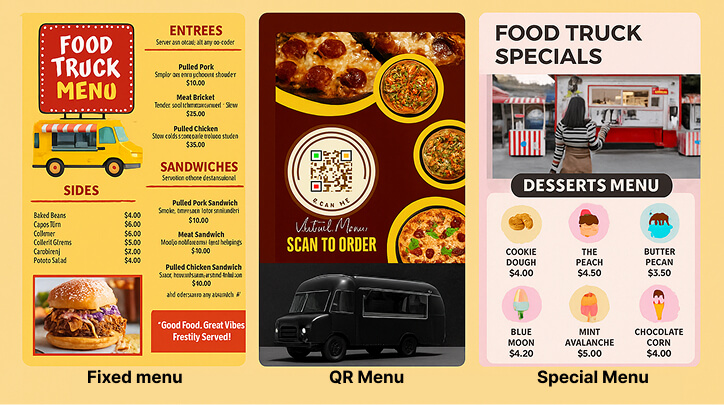
- Fixed Menu: Offers the same set of items every day. Easy to manage and perfect for signature dishes.
- Customizable Menu: Allows customers to build their own meals (like “choose your base, protein, toppings”). Great for flexibility and dietary needs.
- Rotating Menu: Changes daily, weekly, or monthly. Keeps your offerings fresh and exciting.
Seasonal Menu: Focuses on ingredients that are in season, giving your food a fresh and local touch. - Hybrid Menu: Combines two or more styles, like a fixed base with rotating specials.
Choosing the right one depends on your business style, customer base, and kitchen capacity.
2. Understand Your Operational Capacity
Before deciding on a menu type, you need to evaluate what your food truck can handle. Space is limited inside a truck, and so is cooking equipment, prep area, and refrigeration. If you go for a customizable or rotating menu, it often requires stocking a wider range of ingredients, more prep time, and extra effort from your staff to maintain speed and consistency.
3. Think About Your Target Audience
Your customer base should influence your menu style:
- A fixed menu works well if your food truck has a clear specialty, like burgers, dumplings, or grilled cheese. People come to you for that one thing done well.
- A customizable menu appeals to crowds with different tastes and dietary preferences — ideal for parks, festivals, or office locations.
- If your audience likes to try new things, a rotating or seasonal menu can build excitement and loyalty through variety.
Choosing a menu type that matches your customers’ habits leads to more orders and better satisfaction.
4. Speed and Simplicity
Speed and simplicity are key to success in the food industry. Customers often choose food trucks for a quick meal, so your menu should allow for fast preparation and easy ordering.
Therefore, in this scenario, a fixed menu helps you achieve this by keeping your offerings consistent and easy to execute, allowing your staff to prepare meals quickly without confusion.
5. Inventory and Cost Management
Managing inventory and controlling food costs is critical for food truck success, and your menu type directly affects this.
This is where digital and QR code menus for restaurants give you a smart advantage. With a digital menu, you can instantly update or remove items based on what’s available — no need to reprint signs or explain sold-out items to customers. If an ingredient runs out midday, you can adjust the menu in real time to avoid disappointed customers.
6. Align With Your Brand Identity
Your menu type should reflect the personality and promise of your food truck brand. Whether you’re serving gourmet grilled cheese, Asian fusion bowls, or vegan street food, the way you structure your menu helps reinforce your image. For example, a fixed menu works well for a food truck that focuses on doing a few signature items well, like a burger truck known for one iconic burger style.
A customizable menu fits brands that promote freedom, creativity, or health-conscious choices, such as build-your-own wraps or salads.
7. Start Simple, Evolve Over Time
If you’re just starting your food truck, go with a fixed menu first. It helps you control prep, train staff, and build a loyal customer base around your best dishes. Once you’re confident and know what works, you can experiment with customizations, rotations, or specials. This approach avoids overwhelm and keeps your operations stable.
Are There Specific Templates for Different Food Truck Menu Types?
Yes, there are specific menu templates designed to match different types of food truck menus, and choosing the right one can make your menu easier to read, faster to order from, and more aligned with your brand.
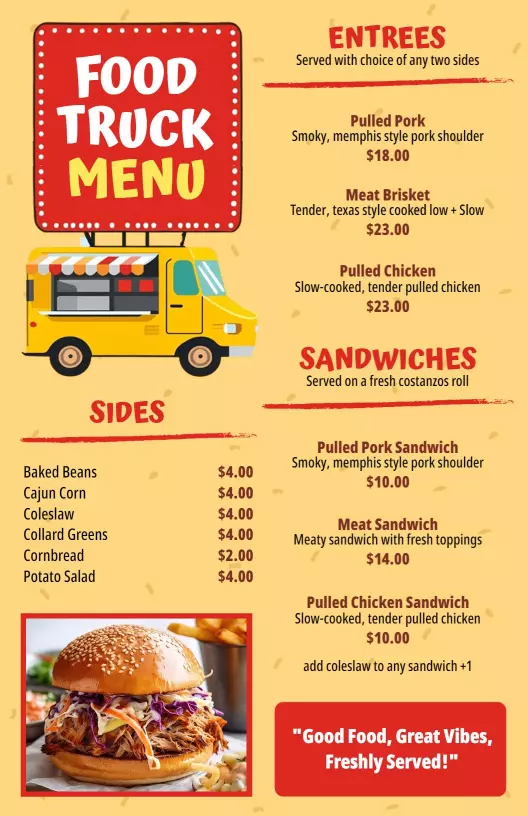
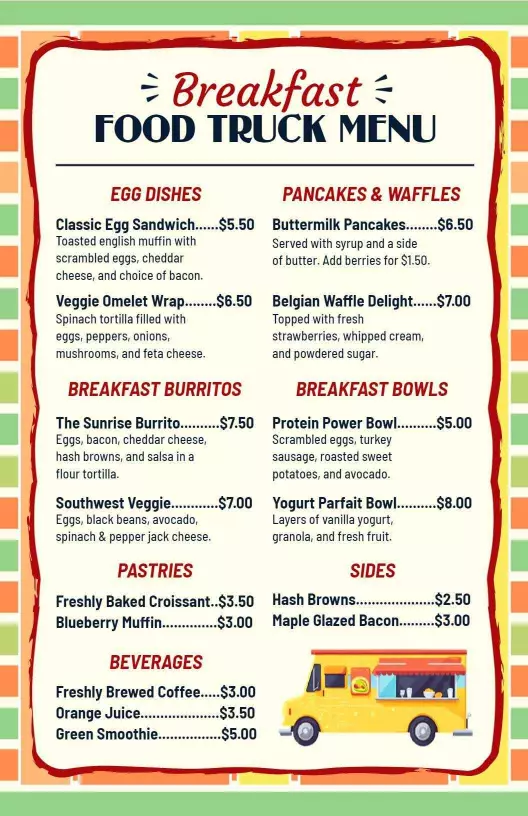
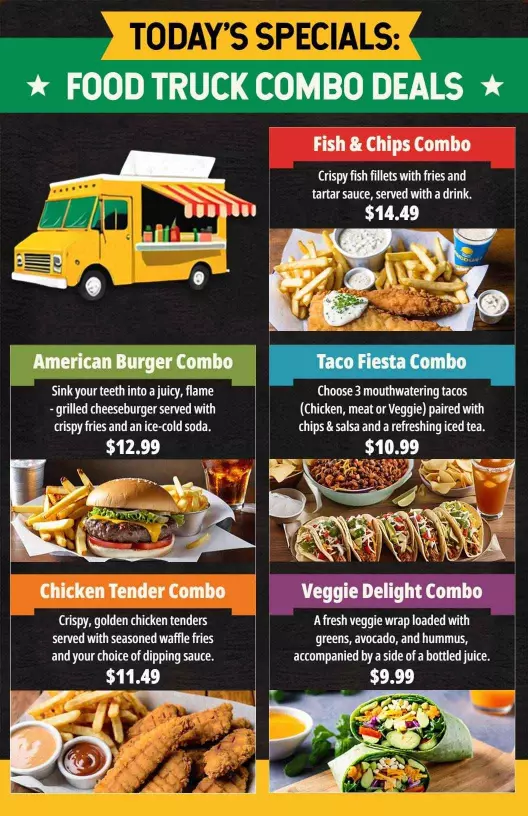
There are many online menu maker tools available that provide thousands of menu templates. Just find your desired template, edit, and customize with ease.
What are the Latest Food Truck Menu Trends for 2025?
Hybrid Menu Approaches
Modern food trucks increasingly combine multiple menu types:
- Core + Seasonal: Maintain signature items while rotating specials
- Healthy + Indulgent: Offer both nutritious and comfort food options
- Traditional + Fusion: Classic dishes with creative twists
Technology Integration
Digital menu trends transforming food trucks:
- QR Code Menus: Contactless ordering and payment
- App-Based Customization: Pre-ordering and personalization
- Social Media Integration: Instagram-worthy presentations
- Dynamic Pricing: Adjusting prices based on demand and time
Frequently Asked Questions
1. Can I Mix Different Menu Types in One Food Truck?
Yes, you absolutely can mix different menu types in one food truck — and in many cases, it’s actually a smart strategy. Combining menu styles gives you both consistency and variety. For example, you can have a fixed core menu featuring your best-selling or signature items that customers can rely on every day. Alongside that, you might offer rotating specials, seasonal dishes, or customizable combos to keep your menu fresh and exciting.
2. Which Food Truck Menu Type is Best for Beginners?
A fixed menu is usually best for beginners. It’s easier to manage, requires fewer ingredients, and helps new owners focus on perfecting a few great dishes. Once the truck is running smoothly, they can add specials or rotate items.
3. Is a Digital or QR Menu Suitable for All Types of Food Truck Menus?
Yes, a digital or QR menu is suitable — and often beneficial — for all types of food truck menus, whether you use a fixed menu, customizable options, rotating specials, or seasonal dishes. One of the biggest advantages of digital menus is flexibility. You can update items, prices, descriptions, and availability in real-time without the need to reprint physical boards or signs. This is especially useful for rotating or seasonal menus, where items change frequently.
4. What is a Limited Menu and Why Use It?
A limited menu is a simple, focused list of just a few food items, usually between 3 to 6 main dishes. Instead of offering a wide variety, the food truck sticks to a small number of carefully chosen items that can be prepared quickly, consistently, and with high quality. This type of menu is especially useful for new food trucks, small operations, or busy events where speed and efficiency matter most.
5. Are There Templates Specifically for Taco Truck Menus?
Yes, there are many taco truck menu ideas and templates designed. These templates are tailored to highlight popular taco combinations, pricing options, and add-ons like salsas, sides, and drinks. A well-designed taco truck menu template typically includes:
- Clear sections for different types of tacos (like beef, chicken, veggie, or seafood)
- Combo options (e.g., 3 tacos + drink)
- Customization choices, such as tortilla type, spice level, and toppings
- Add-on sections for extras like guacamole, chips, or sauces
- Bright, festive visuals that match the taco truck’s fun, street-food vibe
Conclusion
Selecting the right food truck menu type ultimately depends on your unique situation. However, successful food truck owners often start with a limited specialty menu, then gradually expand based on customer demand and operational capacity.
Remember these key factors when making your decision, like starting simple and focusing on quality over quantity, knowing your target customers and their preferences, planning for growth and menu evolution, and monitoring competitors and market trends regularly.