
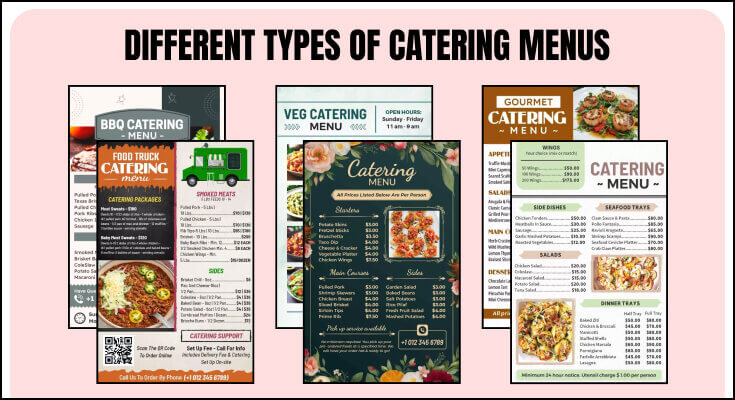
Planning an event can feel overwhelming, especially when you’re trying to choose the perfect catering menu. Whether you’re organizing a wedding, corporate meeting, or birthday party, here are different types of catering menus that make all the difference in creating a memorable experience for your guests.
Moreover, delightful catering menu designs are the reason that helps people quickly understand their options, make confident food choices, and enjoy a more satisfying and organized dining experience at your event.
In this comprehensive guide, we’ll explore all the different types of catering menus, their benefits, and how to choose the best option for your specific needs.
What is the Importance of Choosing the Right Catering Menu for an Event?
Choosing the right catering menu type significantly impacts your event’s success. Therefore, understanding your options helps you:
1. Sets the Right Tone for the Event
The type of food and drinks you serve helps create the mood and atmosphere. A formal dinner may call for a multi-course plated menu, while a casual birthday might work better with a buffet or finger foods. Choosing dishes that match the style and theme of the event helps everything feel more coordinated.
Example:
- Elegant menu with wine pairings for a corporate gala.
- Street food-style snacks for a fun, outdoor party.
2. Leaves a Strong and Positive Impression
The food you serve plays a big role in how guests remember your event. A well-planned catering menu that looks good, tastes great, and suits the occasion leaves a lasting positive impression. When guests enjoy the variety, flavors, and presentation of the food, they’re more likely to speak positively about the experience.
Here’s why it matters:
- Good food equals happy guests — it creates a warm, welcoming atmosphere.
- People often talk about the food — it becomes a key memory from the event.
Choosing the right menu shows thoughtfulness and helps your event stand out for all the right reasons.
3. Ensures Guest Satisfaction and Comfort
Everyone has different food preferences, allergies, or dietary needs. The right catering menu offers enough variety to make sure all guests feel included. When people see vegetarian, vegan, gluten-free, or allergy-friendly options, they feel cared for.
Tip: Include clear menu labels and give guests the chance to note dietary restrictions in advance.
4. Keeps the Event Flowing Smoothly
The type of catering you choose also affects the timing and movement of your event. For example:
- A sit-down meal allows for speeches or planned activities between courses.
- A buffet or food station encourages mingling and gives guests freedom to eat when they want.
- Passed hors d’oeuvres are great for cocktail-style events where space or time is limited.
Choosing the right format ensures the food fits into the event schedule without delays or confusion.
5. Helps with Budget Planning
Food is usually one of the biggest costs in any event. Picking the right menu ensures you stay within your budget while still offering quality. A good caterer can guide you in selecting meals that taste great, please the crowd, and make the most of your spending.
For example, choosing a pasta bar with salad and bread might be more affordable and filling than plated entrees.
6. Matches the Guest List Size and Setting
The number of people and the location (indoor, outdoor, small hall, open lawn) affect the best type of menu to offer. Some foods travel better than others. Hot dishes need proper equipment to stay warm. Cold dishes may need refrigeration.
The right catering menu will:
- Suit your venue conditions
- Be practical for the number of guests
- Avoid wasting or running short
7. Highlights the Event’s Purpose
If your event celebrates a specific culture, milestone, or theme, the menu can reflect that meaning. For example, serving traditional dishes at a cultural wedding or offering a signature cocktail at a brand launch creates a memorable, themed experience.
Examples:
- Indian street food for a cultural fest
- Brunch bites for a baby shower
- Fancy canapés for a fashion event
One thing you also need to keep in mind is that a catering menu is a type of prix fixe menu where they offer a set number of courses at a predetermined price per person. Read more about a la carte vs prix fixe menu style to know more about a set menu.
What are the Types of Catering Menus with Examples?
Choosing the right catering menu can make or break your event. Whether you’re planning a wedding, corporate gathering, or birthday party, understanding different types of catering menus helps you make the best choice for your guests.
Here are 8 popular types of catering menus with real examples. Moreover, you can explore more such free menu templates, and customize according to your even needs.
1. Wedding Catering Menu
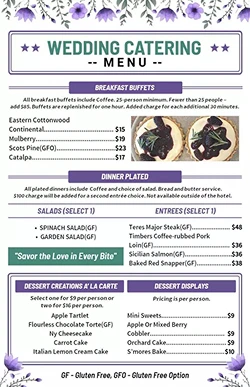
Wedding catering creates memorable dining experiences for one of life’s most important celebrations. Therefore, these menus focus on elegance, quality, and variety to please all guests.
Key Features of Wedding Catering
Wedding catering menus typically include:
- Multiple course options
- Elegant presentation
- Dietary accommodation options
- Premium ingredients
- Professional service
Popular Wedding Catering Examples
Classic Wedding Menu:
- Appetizers: Shrimp cocktail, cheese, and charcuterie boards
- Main courses: Grilled salmon, beef tenderloin, chicken marsala
- Sides: Roasted vegetables, garlic mashed potatoes
- Desserts: Wedding cake, chocolate mousse cups
Modern Wedding Menu:
- Appetizers: Avocado toast bites, mini tacos
- Main courses: Herb-crusted lamb, vegetarian lasagna
- Sides: Quinoa salad, grilled asparagus
- Desserts: Dessert bar with various options
When to Choose Wedding Catering?
Wedding catering works best for:
- Formal ceremonies and receptions
- Large guest lists (50+ people)
- Multi-course dining experiences
- Special dietary requirements
2. Restaurant Catering Menu
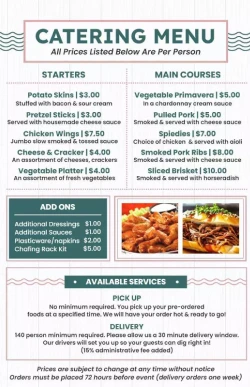
Restaurant catering brings your favorite restaurant’s dishes directly to your event. Furthermore, this option offers familiar flavors and professional quality without the restaurant setting.
Key Features of Restaurant Catering
Restaurant catering menus offer:
- Signature dishes from popular restaurants
- Consistent quality and taste
- Professional packaging and presentation
- Flexible portion sizes
- Familiar food options
Popular Restaurant Catering Examples
Italian Restaurant Catering:
- Pasta stations with marinara and alfredo sauces
- Caesar salad and garlic bread
- Chicken parmesan and meatballs
- Tiramisu and cannoli
Mexican Restaurant Catering:
- Taco and burrito bars
- Chips with guacamole and salsa
- Chicken fajitas and beef carnitas
- Churros and flan
Asian Restaurant Catering:
- Sushi platters and spring rolls
- Fried rice and lo mein noodles
- Sweet and sour chicken
- Fortune cookies and mochi
3. Food Truck Catering Menu
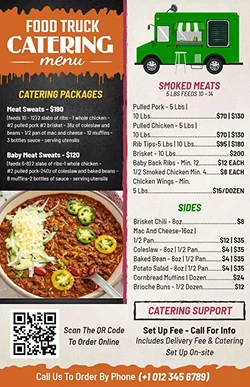
Food truck catering brings trendy, street-style food to your event. Additionally, this fun option creates an interactive dining experience that guests love. Apart from that, if you’re also looking for food truck menu templates, you can explore ready-made layouts that highlight your offerings, pricing, and food visuals in a clear, eye-catching way—perfect for attracting customers and boosting sales.
Key Features of Food Truck Catering
Food truck catering menus feature:
- Fresh, made-to-order items
- Unique and creative dishes
- Interactive cooking experience
- Casual, fun atmosphere
- Instagram-worthy presentation
Popular Food Truck Catering Examples
Gourmet Burger Truck:
- Custom burgers with premium toppings
- Hand-cut fries and onion rings
- Milkshakes and craft sodas
- Vegetarian and vegan options
Taco Truck:
- Fresh corn and flour tortillas
- Grilled chicken, beef, and pork options
- Fresh salsas and toppings bar
- Mexican street corn
4. BBQ and Outdoor Catering Menu
BBQ and outdoor catering specializes in grilled foods and picnic-style meals. Moreover, these menus create a relaxed, comfortable atmosphere perfect for outdoor celebrations.
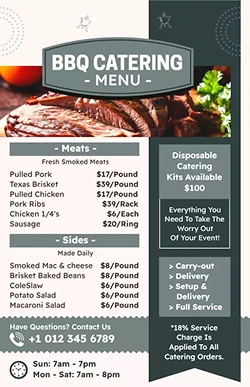
Key Features of BBQ and Outdoor Catering
BBQ catering menus include:
- Grilled and smoked meats
- Classic picnic sides
- Casual, family-style service
- Hearty portions
- Outdoor-friendly packaging
Popular BBQ and Outdoor Catering Examples
Traditional BBQ Menu:
- Smoked brisket and pulled pork
- Grilled chicken and ribs
- Coleslaw and potato salad
- Baked beans and cornbread
- Peach cobbler and brownies
Outdoor Picnic Menu:
- Grilled burgers and hot dogs
- Potato chips and watermelon
- Lemonade and iced tea
- Corn on the cob
- Apple pie and cookies
When to Choose BBQ and Outdoor Catering
BBQ catering works best for:
- Outdoor weddings and receptions
- Company picnics
- Family reunions
- Summer celebrations
5. Holiday or Festival Catering
Holiday and festival catering celebrates special occasions with themed menus. Therefore, these options incorporate traditional foods and seasonal flavors.

Key Features of Holiday Catering
Holiday catering menus feature:
- Seasonal ingredients and flavors
- Traditional holiday dishes
- Festive presentation
- Cultural or religious considerations
- Special occasion atmosphere
Popular Holiday Catering Examples
Thanksgiving Catering:
- Roasted turkey with stuffing
- Mashed potatoes and gravy
- Green bean casserole
- Cranberry sauce and dinner rolls
- Pumpkin and pecan pie
Christmas Catering:
- Honey-glazed ham
- Roasted vegetables
- Scalloped potatoes
- Christmas cookies and cake
- Hot chocolate and eggnog
When to Choose Holiday Catering
Holiday catering is ideal for:
- Seasonal celebrations
- Religious gatherings
- Cultural events
- Traditional family celebrations
6. Plated Catering Menu
Plated dinner catering provides elegant, restaurant-style service where each guest receives individually prepared meals. Furthermore, this formal service creates sophisticated dining experiences.

Key Features of Plated Dinner Catering
Plated dinner menus offer:
- Individual portion control
- Elegant presentation
- Professional table service
- Multiple course options
- Consistent quality
Popular Plated Dinner Catering Examples
Formal Dinner Menu:
- First course: Mixed green salad with vinaigrette
- Second course: Butternut squash soup
- Main course: Filet mignon with roasted potatoes
- Dessert: Chocolate lava cake
When to Choose Plated Dinner Catering
Plated dinner catering works well for:
- Formal events and galas
- Award ceremonies
- Corporate dinners
- Upscale celebrations
7. Buffet Catering Menu
Buffet catering allows guests to serve themselves from a variety of dishes. Additionally, this self-service style offers flexibility and variety for different tastes and appetites.

Key Features of Buffet Catering
Buffet catering menus provide:
- Multiple dish options
- Self-service flexibility
- Cost-effective pricing
- Variety for different preferences
- Casual, social atmosphere
Popular Buffet Catering Examples
International Buffet:
- Italian station with pasta and pizza
- Mexican station with tacos and burritos
- Asian station with stir-fry and rice
- An American station with burgers and fries
- Dessert station with various sweets
When to Choose Buffet Catering
Buffet catering is perfect for:
- Large groups and conferences
- Casual events and parties
- Budget-conscious celebrations
- Events with diverse food preferences
8. Social Event Catering Menu
Social event catering covers casual gatherings and parties. Moreover, these menus focus on fun, shareable foods that encourage mingling and conversation.
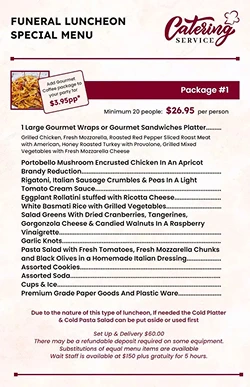
Key Features of Social Event Catering
Social event catering includes:
- Finger foods and appetizers
- Shareable plates and platters
- Interactive food stations
- Casual presentation
- Easy-to-eat options
Popular Social Event Catering Examples
Cocktail Party Menu:
- Cheese and charcuterie boards
- Stuffed mushrooms and shrimp cocktail
- Mini quiches and sliders
- Chocolate-covered strawberries
- Wine and cocktail service
Birthday Party Menu:
- Pizza and sandwiches
- Vegetable and fruit platters
- Chips and dips
- Birthday cake and cupcakes
- Juice boxes and sodas
When to Choose Social Event Catering
Social event catering works best for:
- Birthday parties and celebrations
- Networking events
- Game day gatherings
- Casual office parties
However, to design a perfect menu, you also need creative catering menu design ideas that delight guests and make their experience memorable. Also, there are many online menu maker tools available that help you find the right menu template for catering, customize it, and create a menu in minutes.
How to Choose the Right Catering Menu Type?
Selecting the perfect catering menu type requires careful consideration of multiple factors. Therefore, follow these steps to make the best choice:
1. Understand the Type of Event
The kind of event you’re planning will guide most of your decisions.
- Formal events (like weddings, award nights, and business galas) usually go well with plated or sit-down meals.
- Casual or outdoor events (like birthdays, picnics, or community meetups) often work better with buffets, BBQs, or food trucks.
- Office meetings or workshops may need boxed lunches or light snack menus.
2. Consider the Number of Guests
Your guest list size affects the menu style and service format.
- Large groups are easier to manage with buffet setups, food stations, or drop-off catering.
- Smaller, intimate groups are better suited for plated meals or family-style dining, where guests are served directly at the table.
More guests usually mean more food variety and quicker service methods.
3. Know Your Venue and Space
The physical location of your event matters more than you think. Some menu types require more space, equipment, or facilities.
- Outdoor venues are perfect for BBQs, live concerts, or food trucks.
- Indoor venues with kitchen access support plated service or buffets.
- Limited space venues may be better with passed hors d’oeuvres or pre-packed meals.
Also, check if the venue has restrictions on outside catering or open flames for grills.
4. Think About Your Budget
Your budget plays a big role in choosing the catering style.
- Plated meals and live stations tend to cost more due to staffing and setup needs.
- Buffets and drop-off catering are usually more cost-effective, especially for larger groups.
- Boxed meals help reduce waste and extra staff, saving money for smaller events.
Tip: Always ask caterers for per-person pricing and what’s included (staff, plates, drinks, service time).
5. Choose a Menu Style That Fits the Flow of the Event
Your menu should not interrupt the event but flow with it. For example:
- A sit-down meal is perfect when you have speeches or programs scheduled.
- A buffet works better when guests eat at different times or during breaks.
- Finger food or live counters are ideal when people are standing, networking, or dancing.
Tip: Match the menu style with the timing of your event activities.
6. Match the Time of Day
The time of your event affects what kind of menu works best.
- Morning events: Go for light breakfast items like pastries, sandwiches, juice, and coffee.
- Afternoon events: Lunch buffets, salad bars, or boxed meals work well.
- Evening events: Opt for full-course dinners, cocktail bites, or BBQ setups.
This helps you plan portions and style correctly.
Recommended: we’ve covered a detailed guide on how to make a catering menu that you must check out.
What are the Mistakes to Avoid When Choosing Catering Menu Types?
Choosing the right catering menu can make your event memorable for all the right reasons. However, many people make simple mistakes that can turn their special day into a disaster. Moreover, these mistakes often cost extra money and leave guests unhappy.
1. Not Matching the Menu Type to the Event Style
One of the biggest mistakes is choosing a catering format that doesn’t fit the tone or nature of the event.
- Formal events need organized, elegant options like plated dinners or classy buffets.
- Casual events are better with BBQs, finger foods, or food trucks.
What you can do is choose a menu style that matches the formality and flow of your event.
2. Ignoring the Venue Limitations
Every venue has its own rules, layout, and facilities. Some places don’t have kitchens or allow outside food vendors.
Booking food stations or live counters without checking if the venue supports cooking equipment or open flames. So always check with the venue first, then choose a menu style that suits the space and safety rules.
3. Not Considering Guest Preferences and Dietary Needs
Guests often have different food preferences—some may be vegetarian, vegan, gluten-free, or allergic to certain ingredients. Offering only meat dishes at a party with vegetarians or serving food with allergens without labeling.
The solution is to offer variety. Always include vegetarian and allergy-friendly options, and label food clearly.
4. Choosing Menu Type Without Considering Time of Day
Certain menu types don’t match every time of day. For example, a heavy buffet might feel overwhelming at a morning event. Offering a full dinner spread at a 10 a.m. meeting. The solution is to match your menu to the timing.
- Morning: Light breakfast or brunch items.
- Afternoon: Lunch boxes or buffet.
- Evening: Full plated meal, cocktails, or BBQ.
5. Going Over Budget
Catering is one of the biggest expenses in any event. Not comparing options or adding too many dishes can quickly go over budget.
Picking a plated 4-course meal when your budget is tight. Therefore, be clear on your budget. Buffets, drop-off catering, or food trucks can be great, cost-effective alternatives without compromising on taste.
Moreover, there are many mistakes you should avoid while designing a menu, not just a catering, but restaurants, cafes, and food trucks.
People Also Ask:
1. What are the main types of catering menus?
The main types include plated (sit-down) menus, buffet menus, food stations, boxed meals, cocktail menus, BBQ/outdoor catering, and themed or festival catering. Each menu style suits a different event size, style, and budget.
2. What is a plated (sit-down) menu?
A plated menu is a formal style of catering where each guest is served individual courses at their table. It usually includes a starter, main course, and dessert. This type of service is ideal for weddings, corporate dinners, or formal parties.
3. How does buffet catering work?
In buffet catering, guests serve themselves from a spread of dishes arranged on long tables. This style offers more food variety and flexibility. It’s perfect for casual gatherings or large groups with different food preferences.
4. Can I mix different catering menu types in one event?
Yes! You can combine styles—for example, offer a plated meal with a live dessert station, or mix a buffet with passed appetizers. Just make sure it matches your event flow, space, and budget.
5. What kind of menu works for corporate events?
For corporate meetings or training, boxed meals, buffets, or light snacks are ideal. If it’s a formal dinner or launch event, a plated menu or cocktail setup works better.
6. How do I choose the right catering menu for my event?
Think about your event type, guest preferences, venue space, time of day, and budget. For example, choose lighter options for a morning event, or live food stations for an interactive evening party. Talk to your caterer—they can guide you based on your needs.
Conclusion
Understanding the different types of catering menus empowers you to make informed decisions for your events. From buffet-style service to specialized dietary options, each menu type serves specific purposes and creates unique experiences.
Moreover, the key to successful catering lies in matching your menu type to your event’s specific needs, budget, and guest preferences. Therefore, take time to consider all factors: event type, guest count, dietary restrictions, venue limitations, and budget constraints.
Furthermore, remember that great catering involves more than just food – it creates memorable experiences that bring people together. Whether you choose a casual buffet, elegant plated service, or creative fusion cuisine, the right catering menu type will enhance your event and leave lasting impressions on your guests.