

Picture this: customers come to your restaurant, see the menu and food items, but they still hesitate to order. Why? Because your menu fails at describing the dishes you serve.
For instance, you may serve the best steak in the city, but if the menu just says “Sirloin Steak – served with potatoes and garlic butter,” it’s not doing you any favors.
The first thing customers read in your menu is the food description. Writing compelling menu descriptions isn’t just about listing ingredients — it’s about storytelling, showing the specialty of your restaurant, and triggering customers’ appetites.
Whether revamping your restaurant menu or launching a new food concept, these proven tips and menu templates mentioned here will help you tap into the psychology of menu writing and transform simple words into irresistible flavor experiences. In this guide, you’ll learn how to write menu descriptions and the best words to describe food that boost takeout sales.
7 Tips for writing appetizing menu descriptions
1. Focus on customer experience, not ingredients
Crafting a restaurant menu description isn’t about mentioning ingredients, portion size, and price; it’s about connecting and engaging with customers’ senses. The most effective sensory descriptions create a complete experience where customers can practically taste and see the dish through your words alone.
Remember, you’re writing for those who are actually interested in reading, so each word you mention in the menu should serve the intent and reflect your brand identity.
2. Use sensory words to describe the taste of food
Names and words change, but the flavor of food never does. Use sensory words to describe the taste of food that not only makes the reader eager to order but also evokes their feelings of hunger, desire, and craving.
Studies show that well-crafted menu descriptions can increase sales by up to 27% compared to plain, functional listings. Ensure that instead of using straightforward words, you’re using enough sensory words that readers can imagine how food looks and smells even before eating the first bite.
For instance, if you’re running a cafe shop, addressing coffee and other offerings with words like “Freshly-roasted”, “bittersweet”, and “deeply aromatic” can make your menu irresistible and create curiosity in customers’ minds.
Consider the list of these powerful words to describe food in the menu:
- To describe appearance: Appetizing, Yummy, Delicious, Fresh, Rustic, Robust, Coated, and Vibrant
- Smell or taste: Sweet, Spicy, Sour, Fruity, Aromatic, Savory, and Mouth-watering
- For Texture: Buttery, Creamy, Chewy, Crunchy, Fluffy, Juicy, Sicky, and Smooth
- To describe preparation: Baked, Caramelized, Fried, Roasted, Smoked, and Whipped
3. Tell a story about the dish with descriptive words
It’s not just about serving the food on the table, but it’s about providing a good dining experience to the customers. Therefore, use descriptive words and adjectives to present your dish that feels engaging and respectable. You can incorporate the process of how you cook dishes, their creators, history, culture, and more.
A short and even interesting story can add extra charm to your restaurant menu.
4. Keep it clear, concise, and tempting
Remember, no one is going to read a long essay about your food, so keep the description clear, straight to the point, and easier to digest. Don’t be too fancy, just write in simple language and words that highlight the best parts of the dish—taste, texture, and freshness that make the reader try the dish once. Show your personality through your menu, making you stand out and adding to the sense of authenticity.
5. Emphasize item positioning and categorizing
Listing and reading hundreds of items in the menu can be overwhelming, but properly categorizing and labeling your menu items can make it easier for your diners to navigate and find what they are looking for. Make sure that they can easily find the dishes that match their preferences and dietary needs.
Grouping dishes into clear sections like “Starters,” “Mains,” “Vegan Options,” or “Chef’s Specials” helps guide their choices and creates a smooth, stress-free experience.
Listing popular or high-margin items in the top spots or center of a section can also draw more attention. Smart categorizing makes your menu more user-friendly and shows that you care about variety and dietary needs, and helps guests enjoy their visit at first glance.
6. The length, color, and size of descriptions matter
As we said earlier, customers like to read short sentences first, so avoid long blocks of text, and balance the space between the words. In the menu description, highlight key words with color or bold text to draw attention, like “spicy,” “grilled,” or “fresh.”
Too much text can overwhelm, while clear and well-sized descriptions make it easier for customers to choose. A clean, balanced layout helps the food stand out and keeps the menu looking professional.
7. Proofread twice before finalizing your menu
Always check your menu and food descriptions for spelling, grammar, and accuracy before printing or posting them. Mistakes can confuse customers or make your business look unprofessional. As long as your menu seems perfect and matches the theme of your restaurant, it could make a lasting impression on guests.
Examples and templates of menus for description ideas
If you’re trapped between menu designing and descriptions, we’ve got you covered! Look at some examples and a library of menu templates to get inspiration for designing or writing descriptions to craft a great menu for your restaurant.
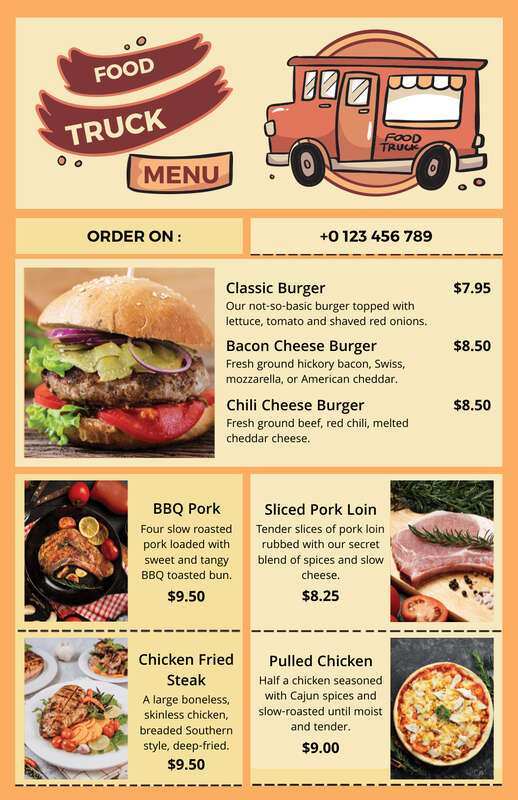
Example 1: If you’re running a food truck business, this is the perfect menu template to get inspiration for designing and food descriptions.
Example 2: Didn’t find anything to write about your pizzeria items? Take this template as a reference to craft and describe your food item that makes readers hungry.

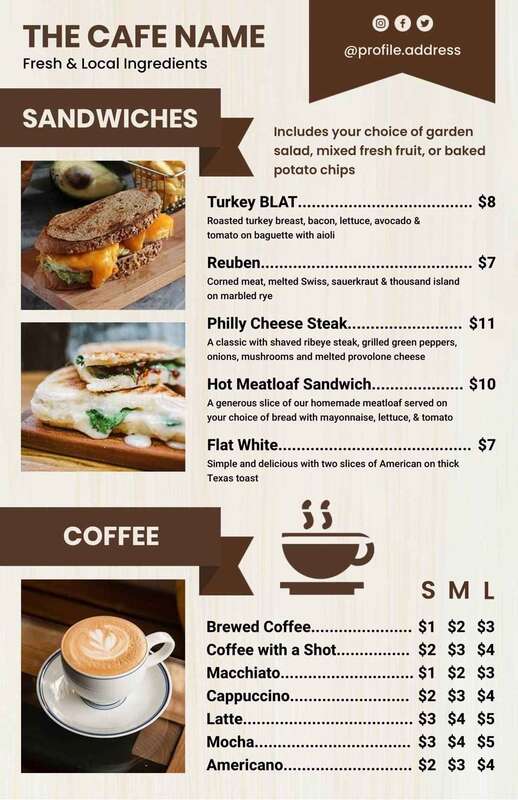
Example 3: This menu template is ideal for cafe owners. Follow the wording technique shown in the template to create a perfect menu for your cafe.
Benefits of writing good menu descriptions
How will customers engage with your restaurant’s offerings and discover the food on your menu? From designing to writing, your menu plays a key role in your restaurant.
Here are some benefits of writing a good menu description and why you shouldn’t ignore it.
A clear understanding of items: A good menu description contains all the details about items like ingredients, pricing, taste, and appearance, which makes it clear for customers what they’ll get on the table, reduces confusion, and improves efficiency.
Enhanced customer experience: A well-written menus help customers know exactly what they’re ordering, and makes them feel more confident in their choice. Even transparency about dietary info and taste can improve the dining experience and affect customer satisfaction.
Increase takeout sales: Well-crafted menu descriptions and tasty wording help people imagine the flavors, trigger cravings, and significantly boost your restaurant’s sales
Mistakes to avoid while writing menu descriptions
Remember, you have less than 2 minutes to introduce all menu items, so any single mistake can make guests confused while deciding what to order. Below are some mistakes that you should avoid while writing beautiful menu descriptions.
1. Poor formatting
Using too many text blocks can make the reading experience boring. Consider strategic spacing, font variations, and possibly icons to improve readability and highlight key information.
2. Including excessive details
Listing every ingredient, dietary information, and step in the cooking process overwhelms the reader. Ensure that you’re incorporating essential details, and highlight the key points in the menu.
3. Don’t be over creative
The customer comes to your restaurant to eat, not read your menu. So you don’t need to be over creative to please their needs.
Conclusion
Writing enticing menu descriptions doesn’t have to be awkward or stressful. By understanding your audience and their interest, you can tailor your menu descriptions. With the use of an online menu maker, you can also make the process easier and more efficient. At the end of the day, the goal is to create a stress-free and enjoyable menu. So follow all the steps described here, try to avoid mistakes, and keep it looking professional to your audience.
Recommended reading: We have also covered a detailed guide on how to make a menu that you might like to read.