
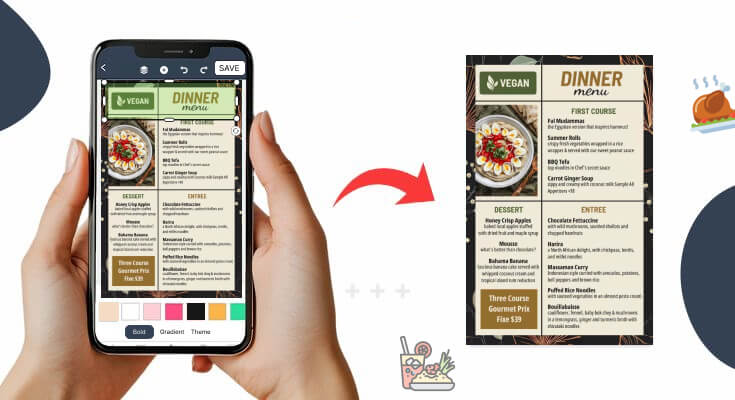
As a restaurant owner, struggling with the process of how to make a dinner menu? Sometimes, it feels overwhelming, especially when you want to impress your guests or simply enjoy a well-planned meal with your family. However, with the right approach and some thoughtful planning, you can master the art of menu creation.
Whether you’re hosting a dinner party, planning weekly meals, or organizing a special celebration, this comprehensive guide will show you exactly how to make a dinner menu that delights everyone at your table.
Why Is an Effective Dinner Menu Design Important?
The design of your dinner menu significantly impacts your success, regardless of whether you’re operating a commercial kitchen or hosting private events. First and foremost, menu design affects customer perception of your food quality and value. Additionally, strategic design influences ordering patterns and can increase average order values by up to 30%.
Moreover, choosing a creative dinner menu designs can create memorable dining experiences that encourage repeat customers. Furthermore, well-designed menus reduce decision fatigue, helping guests choose quickly and confidently. Consequently, this improved experience leads to higher customer satisfaction and positive reviews.
Beyond customer experience, effective dinner menu design also streamlines kitchen operations. Therefore, when you design your menu strategically, you can optimize ingredient usage, reduce waste, and improve cooking efficiency. Most importantly, thoughtful menu design aligns your food offerings with your brand identity and target market.
How Do You Structure Your Dinner Menu for Maximum Impact?
Here’s a simple step-by-step guide to help you create a dinner menu that looks great and works well.
1. Know the Purpose of the Menu
Start by asking: What is this menu for? Is it for a family dinner, a formal event, a casual café, or a catering order? Knowing the occasion will help you decide what kind of dishes to include.
For example:
- A formal dinner may need a starter, main course, dessert, and wine.
- A home dinner party can be more flexible and based on your guests’ tastes.
- A restaurant menu needs to appeal to many customers with different food preferences
2. Decide on the Meal Format
Now, choose how the meal will be served. Here are common formats:
- A la carte: Guests choose each item separately (great for restaurants)
- Prix Fixe: One or more fixed meals with a starter, main, and dessert
- Buffet: Multiple dishes served self-service style
- Family-style: Large portions are placed on the table for sharing
The format helps you plan the number of dishes you need.
If you don’t know more about a la carte vs prix fixe menu style, here you can find more details about them.
3. Organize Menu Categories Logically
The organization of your dinner menu categories directly affects customer experience and sales performance. Therefore, arrange sections in the order customers typically make decisions:
Traditional Dinner Menu Structure:
- Appetizers and Small Plates: Start with lighter options that stimulate the appetite
- Soups and Salads: Provide fresh, healthy choices for health-conscious diners
- Main Courses: Feature your signature dishes and protein options prominently
- Sides and Accompaniments: Offer complementary items that increase order values
- Desserts: End with sweet options that complete the dining experience
- Beverages: Include wine, cocktails, and non-alcoholic options
Moreover, consider alternative structures that might better serve your concept:
Modern Menu Organization Approaches:
- By cooking method: Grilled, roasted, braised, raw preparations
- By dietary preference: Plant-based, gluten-free, keto-friendly sections
- By ingredient focus: Seafood-forward, vegetable-centric, meat-heavy options
- By portion size: Small plates, sharing dishes, full entrees
4. Optimizing Item Placement for Sales
Furthermore, the strategic placement of items in the menu significantly impacts ordering patterns. Therefore, position your most profitable dishes in high-visibility locations:
Prime Real Estate Locations:
- Top right corner: First place where most customers look
- The top third of each section gets maximum attention
- Beginning and end of lists: Benefits from primacy and recency effects
- Boxed or highlighted items: Stand out visually from other options
Additionally, avoid placing your most profitable items at the bottom of long lists. Instead, limit each section to 7-10 items maximum, ensuring your best offerings receive proper attention.
5. Write Clear and Tasty Descriptions
Writing clear and tasty descriptions is a key part of creating a successful dinner menu. These descriptions help your guests understand what each dish is, imagine how it tastes, and feel excited to try it. A good description isn’t just a list of ingredients—it tells a short story that appeals to the senses. It should be simple, easy to read, and tempting. You don’t need fancy or complex words—just focus on flavor, texture, and key ingredients.
Here are some tips for writing good menu descriptions:
- Keep it short and simple: Aim for 1–2 lines. Avoid long or complicated sentences.
- Use sensory words: Words like “crispy,” “creamy,” “spicy,” or “tender” help people imagine the taste and texture.
- Mention main ingredients: List key items so guests know what’s in the dish (especially useful for allergies).
- Highlight flavors or cooking styles: Include how the dish is cooked (grilled, roasted, slow-cooked) and its flavor (sweet, tangy, smoky).
6. Price It Right (If Needed)
Setting the right prices for your dinner menu is very important, especially if you’re running a restaurant, catering service, or food business. Pricing not only affects your profit but also shapes how customers see the value of your food. If prices are too high, you may lose customers; if they’re too low, you might not cover your costs. The key is to find a balance between affordability for your guests and profitability for you.
Tips for pricing your dinner menu:
- Calculate your food cost: Add the cost of all ingredients used in each dish.
- Include labor and overhead: Don’t forget costs like staff wages, rent, utilities, packaging, and equipment.
- Add a profit margin: Usually, 2,5–35% above your total cost is a healthy margin for most dishes.
- Use round numbers: Prices like $12 feel cleaner and more professional than $11.99.
7. Include Dietary Labels or Special Notes
Adding dietary labels or special notes to your dinner menu is essential in today’s dining world. Many guests have specific dietary needs or preferences, such as being vegetarian, vegan, gluten-free, nut-free, or lactose intolerant.
Clearly labeling your dishes helps these guests feel safe, respected, and confident when choosing what to eat. It also shows that you care about their health and comfort. These labels can be simple icons like 🌱 for vegetarian, 🌿 for vegan, 🌾 for gluten-free, or 🌶️ for spicy items. You can also include short notes like “contains nuts” or “dairy-free option available” under relevant dishes.
8. Test and Update Your Menu
Once your menu is ready, try it out! Cook the dishes, serve them, and see how people respond. Ask for feedback:
- Did they like the taste?
- Were the portions right?
- Did they find it easy to choose?
Based on what you learn, update your menu over time. Add new items, remove unpopular ones, and improve based on the season or guest needs.
These are some tips for dinner menu creation, but if you’re looking for a way to create a menu easily, check out this extension library of menu designs that help you find the desired pre-made template and create a menu for your restaurant in minutes.
What Design Elements Make a Dinner Menu More Appealing?
Typography and Font Selection
Typography plays a crucial role in dinner menu design, affecting both readability and brand perception. Therefore, choose fonts that align with your restaurant’s personality while maintaining excellent legibility:
Font Selection Guidelines:
- Serif fonts: Convey tradition, elegance, and fine dining sophistication
- Sans-serif fonts: Suggest modernity, cleanliness, and casual approachability
- Script fonts: Add personality, but use sparingly for accent elements only
- Custom typography: Creates a unique brand identity but requires professional design
Moreover, establish a clear typographic hierarchy using different font sizes and weights:
Typography Hierarchy Best Practices:
- Headlines: 18-24 point for section headers
- Dish names: 12-16 point, bold or semi-bold weight
- Descriptions: 10-12 point, regular weight
- Prices: 10-12 point, often in different colors or styles
Color Psychology in Menu Design
Additionally, color choices significantly influence customer perceptions and ordering behavior. Therefore, select colors that enhance appetite while reflecting your brand identity:
Appetite-Stimulating Colors:
- Warm reds: Increase urgency and appetite stimulation
- Rich oranges: Suggest comfort food and casual dining
- Deep greens: Imply freshness and healthy ingredients
- Golden yellows: Associated with happiness and warmth
- Elegant browns: Convey earthiness and natural ingredients
However, avoid colors that suppress appetite or create negative associations:
Colors to Use Cautiously:
- Blue: Naturally suppresses appetite in most people
- Purple: Can seem artificial or unappetizing
- Bright pinks: May appear unprofessional or childish
- Gray tones: Can make food seem bland or uninspiring
In case if you aren’t sure about good typography and color combination for menu design, you must check out this guide.
Visual Elements and Photography
Furthermore, incorporating visual elements can enhance your dinner menu’s appeal when used strategically. However, remember that poor-quality images can harm rather than help your menu’s effectiveness:
When to Include Food Photography:
- High-quality professional photos only
- Signature dishes that define your restaurant
- Complex presentations that benefit from visual explanation
- Special dietary items that might need clarification
Alternative Visual Elements:
- Elegant borders and dividers: Organize content without overwhelming
- Icons for dietary restrictions: Quickly communicate important information
- Subtle background patterns: Add texture without distracting from content
Strategic white space: Prevents a cramped appearance and improves readability
What Are the Essential Components of a Complete Dinner Menu?
The Classic Three-Course Structure
Traditionally, a complete dinner menu includes three main components. However, you can adapt this structure based on your needs and preferences.
Appetizers or Starters: First, appetizers set the tone for your entire meal. Therefore, choose options that complement your main course without overwhelming your guests’ appetites. Popular choices include:
- Light salads with seasonal vegetables
- Soup courses that match your theme
- Small plates or tapas-style offerings
- Cheese and charcuterie boards
- Fresh bread with flavored oils or butters
Main Course Selection: Next, your main course serves as the centerpiece of your dinner menu. Consequently, this dish should reflect your theme while satisfying your guests’ hunger and preferences. Consider these protein options:
- Grilled or roasted meats and poultry
- Fresh fish and seafood preparations
- Vegetarian proteins like beans, lentils, or tofu
- Pasta dishes with rich, flavorful sauces
- Casseroles and one-pot meals for easier serving
Side Dishes and Accompaniments: Furthermore, well-chosen side dishes enhance your main course while adding variety and nutrition. Therefore, aim for complementary flavors and contrasting textures:
- Seasonal vegetable preparations
- Grain-based sides like rice, quinoa, or couscous
- Potato dishes in various preparations
- Fresh salads with interesting dressings
- Bread or rolls that match your theme
Desserts and Sweet Endings: Finally, desserts provide a satisfying conclusion to your dinner menu. However, choose desserts that complement rather than compete with your main courses:
- Light fruit-based desserts after heavy meals
- Rich chocolate desserts after lighter main courses
- Seasonal desserts using fresh, local ingredients
- Make-ahead options that reduce last-minute stress
What Layout and Design Strategies Maximize the Dinner Menu Effectiveness?
Creating Scannable Menu Layouts
Since customers spend limited time reading menus, creating easily scannable layouts is essential. Therefore, use white space, alignment, and grouping to guide the eye naturally:
Scannable Design Elements:
- Consistent spacing: Equal margins and padding throughout
- Clear section breaks: Visual separation between menu categories
- Aligned prices: Usually right-aligned for easy comparison
- Logical grouping: Related items placed together visually
Moreover, avoid cramming too much information into small spaces. Instead, prioritize readability over trying to fit everything on one page. Look at some menu layout templates that will help you organize the menu items very well.
Using White Space Effectively
Additionally, strategic use of white space improves menu readability and creates an upscale appearance. Therefore, don’t feel compelled to fill every inch of your menu with text or images:
White Space Benefits:
- Reduces visual clutter: Helps customers focus on important information
- Creates an elegant appearance: Associated with higher-end establishments
- Improves readability: Makes text easier to scan and comprehend
- Highlights featured items: Draws attention to the surrounding content
Furthermore, white space allows your menu to “breathe,” creating a more pleasant reading experience that encourages thorough consideration of options.
Implementing Strategic Menu Engineering
Menu engineering involves analyzing the profitability and popularity of menu items to optimize placement and pricing. Therefore, categorize your dishes into four groups:
Menu Engineering Categories:
- Stars: High profit, high popularity (promote heavily)
- Plowhorses: Low profit, high popularity (consider repricing or repositioning)
- Puzzles: High profit, low popularity (improve descriptions or placement)
- Dogs: Low profit, low popularity (consider removing or redesigning)
Subsequently, use this analysis to inform your menu design decisions, giving prime placement to profitable items while addressing underperforming dishes. Is this difficult for you? There are many online menu builder apps available that help you create and design a restaurant menu that follows all these principles and streamline the design process.
How Do You Test and Refine Your Dinner Menu Design?
1. Gathering Customer Feedback and Data
Successful menu design requires ongoing testing and refinement based on actual customer behavior. Therefore, implement systems to gather both qualitative feedback and quantitative data:
Feedback Collection Methods:
- Direct customer surveys: Ask about menu readability and appeal
- Sales data analysis: Track which items perform best and worst
- Server feedback: Gather insights about customer questions and confusion
- Online review monitoring: Look for menu-related comments and suggestions
- Focus group testing: Test new designs before full implementation
Furthermore, use this feedback to make data-driven improvements rather than relying solely on personal preferences or assumptions.
2. A/B Testing
Moreover, systematic testing of different menu versions provides valuable insights into customer preferences. Therefore, consider testing various elements:
Elements to Test:
- Different description lengths: Compare brief versus detailed descriptions
- Price presentation formats: Test various pricing display methods
- Layout variations: Compare different organizational structures
- Visual element effectiveness: Test with and without images or icons
- Color scheme impacts: Compare different color approaches
Additionally, implement changes gradually to isolate the impact of specific modifications on sales performance.
3. Continuous Menu Updation
Finally, remember that effective menu design is an ongoing process rather than a one-time project. Therefore, plan regular menu reviews and updates:
Regular Review Schedule:
- Monthly performance analysis: Review sales data and customer feedback
- Quarterly design updates: Make minor adjustments based on performance data
- Seasonal menu refreshes: Update offerings and design elements seasonally
- Annual comprehensive review: Evaluate overall menu strategy and major changes
- Trend monitoring: Stay current with industry design and dining trends
What are Common Dinner Menu Design Mistakes to Avoid?
Overcomplicated Layouts and Information Overload
Many restaurant owners try to include too much information in their menu design, creating overwhelming experiences for customers. Instead, focus on a clear, concise presentation that highlights your best offerings:
Common Overcomplication Issues:
- Too many font styles: Limit yourself to 2-3 complementary fonts maximum
- Excessive color usage: Stick to a cohesive color palette throughout
- Cramped spacing: Allow adequate white space for comfortable reading
- Information overload: Include only essential details in descriptions
- Complex organization: Keep category structure simple and logical
Neglecting Brand Consistency
Additionally, many establishments fail to align their menu design with their overall brand identity. Therefore, ensure your menu reinforces rather than contradicts your restaurant’s personality:
Brand Consistency Elements:
- Visual identity alignment: Match colors, fonts, and imagery to brand guidelines
- Tone of voice consistency: Use language that reflects your establishment’s personality
- Quality level matching: Design sophistication should match your service level
- Target audience alignment: Design choices should appeal to your ideal customers
- Competitive positioning: Differentiate your design from local competitors
Ignoring Practical Operational Needs
Furthermore, beautiful menu designs that don’t support efficient operations create ongoing problems. Therefore, consider practical requirements during the design process:
Operational Design Considerations:
- Update flexibility: Design systems that accommodate menu changes easily
- Durability requirements: Choose materials appropriate for your service style
- Staff training needs: Ensure servers can easily explain the menu organization
- Kitchen workflow support: Organize items to support efficient food preparation
- Cost management: Balance design quality with budget constraints
People Also Ask:
1. What’s the first step in making a dinner menu?
The first step is to understand the purpose of your menu. Ask yourself: Is it for a restaurant, home dinner, special event, or catering service? Then think about your guests—what kind of food they enjoy, any dietary restrictions, and the overall tone of the meal (formal or casual). This helps you plan the right dishes and menu structure.
2. How many courses should I include in my dinner menu?
The number of courses depends on your occasion and audience. For casual family dinners, 2-3 courses work perfectly: a main dish with sides, plus dessert if desired. However, for dinner parties or special occasions, 3-4 courses create a more memorable experience. Additionally, consider your preparation time and serving logistics. More courses require careful timing coordination.
3. How do I balance flavors throughout my dinner menu?
Balancing flavors across your menu prevents palate fatigue and creates a satisfying dining experience. First, vary your flavor profiles between courses. For example, if your main course is rich and heavy, balance it with lighter appetizers and fresh salads.
Moreover, consider texture contrasts alongside flavor balance. Combine creamy elements with crunchy components, and smooth dishes with textured accompaniments.
4. How do I organize the dinner menu layout?
Organize the menu in clear, easy-to-read sections like Appetizers, Mains, Sides, Desserts, and Beverages. Use bold headings, spacing, and simple fonts. Keep your design clean and avoid clutter. If you’re involved in designing a digital menu, make sure it looks good on mobile screens too.
5. What is a good format for a dinner menu?
You can use formats like a printed menu or a digital menu, depending on the event or restaurant type. Digital menu gives flexibility, while printed menus are better for formal dinners or catering, where you want smooth service.
6. What types of dinner menu templates should I use for different occasions?
The type of dinner menu template you choose depends entirely on your specific occasion and audience. For casual family dinners, simple templates work best – think clean layouts with basic categories like “Main Course,” “Sides,” and “Dessert.” These templates focus on functionality rather than fancy design elements. However, for dinner parties or special events, you’ll want more elegant templates that include sections for appetizers, multiple courses, and beverage pairings.
Conclusion
Designing an effective dinner menu requires balancing artistic creativity with strategic business thinking. Throughout this comprehensive guide, we’ve explored the essential elements that make menus both beautiful and profitable. Moreover, successful menu design considers customer psychology, operational efficiency, and brand positioning simultaneously.
Whether you’re opening a new restaurant, refreshing an existing menu, or expanding into catering services, these principles will guide you toward creating compelling dinner menus that captivate customers and drive success.