
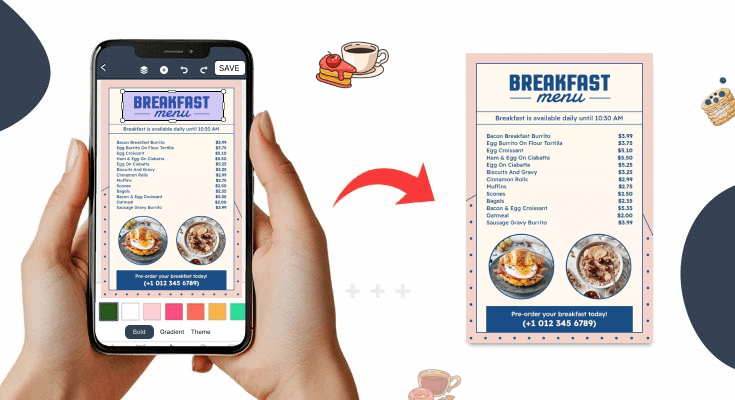
Creating a breakfast menu that drives sales and keeps customers coming back requires more than just listing popular morning dishes. In fact, restaurant owners who master breakfast menu design often see 25-40% higher profit margins than lunch and dinner service. Moreover, breakfast customers tend to be more loyal and visit more frequently than customers during other meal periods.
This comprehensive guide will walk you through every aspect of breakfast menu design, from understanding customer psychology to optimizing your layout for maximum profitability.
What Role Does Menu Design Play in a Great Breakfast Experience?
Breakfast represents a unique opportunity in the restaurant industry. Unlike lunch or dinner, breakfast customers often make quick decisions and have specific time constraints. Consequently, your menu design becomes even more critical in guiding their choices and providing a great breakfast experience.
Furthermore, breakfast menus face distinct challenges that other meal periods don’t encounter. For instance, customers expect faster service, predictable flavors, and reasonable prices.
Additionally, many breakfast guests are regulars who know exactly what they want, while others are decision-fatigued before their first cup of coffee.
Therefore, great ideas for menu design must balance several competing priorities:
Customer Experience Factors:
- Quick decision-making support
- Clear pricing and descriptions
- Familiar comfort foods alongside unique offerings
- Options for different dietary preferences
- Easy-to-scan layout for rushed customers
Operational Efficiency Elements:
- Seasonal flexibility for ingredient availability
- Items that share common ingredients
- Dishes with manageable prep times
- Menu size that doesn’t overwhelm kitchen staff
- Strategic placement of high-margin items
What are the Best Practices to Design a Breakfast Menu?
Before diving into menu creation, successful restaurant owners conduct thorough research and planning. This preparation phase often determines whether your breakfast menu becomes a profit center or an operational headache.
1. Understanding Your Target Customer Base
First and foremost, identify who will be eating at your establishment during breakfast hours. Different customer segments have vastly different needs and preferences. For example, business commuters prioritize speed and portability, while families with children look for variety and value.
Primary Breakfast Customer Segments:
- Rush Hour Professionals: Need grab-and-go options, coffee quality matters most, willing to pay a premium for convenience
- Leisure Weekend Diners: Want experience and comfort, price-sensitive, longer dining times acceptable
- Families with Children: Require kid-friendly options, value portions, and need quick service despite larger groups
- Health-Conscious Customers: Seek fresh ingredients, dietary accommodations, willing to pay more for quality
- Seniors and Retirees: Prefer traditional options, smaller portions, early dining times, and price-conscious
2. Analyzing Your Competition’s Breakfast Strategy
Next, study what other breakfast establishments in your area offer. However, don’t simply copy what appears successful. Instead, look for gaps in the market that your restaurant can fill uniquely.
Competitive Analysis Framework:
- Size of the menu and variety offered by competitors
- Price points across different item categories
- Unique dishes that differentiate each establishment
- Service style and speed expectations
- Atmosphere and dining experience provided
3. Choose the Right Menu Style
Breakfast menus can be à la carte, buffet, fixed-price, or combo-based. Decide which style fits your restaurant’s theme and operations.
- A la carte menu style: Each item is priced separately. Great for variety.
- Set menus or combos: Convenient for quick service.
- Buffet-style: Good for hotels or brunch spots with a large customer base.
Your menu style affects layout, pricing, and even kitchen prep.
4. Menu Layout and Visual Design
Once you know what to include, focus on how to present it. A clean, well-organized, and visually appealing menu can make a big difference.
Tips:
- Use readable fonts and proper spacing.
- Highlight specials or top items with icons or boxes.
- Use images only if they’re high-quality and professionally shot.
- Stick to a consistent color scheme that matches your restaurant’s vibe.
A well-designed menu not only informs but also influences what customers choose.
5. Balance Between Classic and Unique Dishes
Include popular breakfast staples like eggs, toast, and coffee, but also add a few unique or signature items to stand out from competitors. Too many common dishes may seem boring, while only serving trendy food might confuse traditional eaters.
A smart mix of:
- Bestsellers (like omelets or pancakes),
- Healthy options (like oatmeal or fruit bowls),
- And a signature twist (like a breakfast taco or fusion dish)
Balancing classic and unique dishes can help attract a wider range of customers.
6. Determining Your Kitchen’s Breakfast Capabilities
Additionally, assess your kitchen’s ability to execute breakfast service efficiently. Breakfast operations often require different equipment, prep schedules, and staff skills compared to lunch and dinner service.
Kitchen Readiness Checklist:
- Adequate refrigeration for breakfast ingredients
- Proper equipment for egg preparation and pancakes
- Staff trained in breakfast cooking techniques
- Prep space for morning-specific ingredients
- Storage capacity for breakfast-only supplies
7. Test and Get Feedback
Before finalizing your menu, test new items, get feedback from staff and regular customers, and see what works. Make small adjustments over time based on performance, sales, and customer response.
Your menu should grow with your business. Keep it flexible and open to improvement.
How to Structure Your Breakfast Menu Categories?
Once you understand your foundation, organizing your menu into logical categories becomes crucial for customer navigation and kitchen efficiency. The way you structure these categories can significantly impact ordering patterns and operational flow.
Strategic Category Organization
Most successful breakfast menus follow a logical flow that matches customer thought processes. However, the specific categories you choose should reflect your restaurant’s concept and customer base.
Recommended Category Structure:
- Coffee and Beverages First: Since most breakfast customers prioritize their coffee order, placing beverages prominently helps staff take complete orders efficiently. Moreover, highlighting specialty coffee drinks can increase average order size significantly.
- Classic Breakfast Mains: This section should include your most popular and traditional offerings. Items like scrambled eggs, pancakes, and bacon combinations belong here because customers expect to find these staples easily.
- Healthy and Special Dietary Options: Today’s breakfast customers increasingly seek healthier alternatives. Therefore, dedicating a section to lighter options, vegetarian dishes, and dietary accommodations shows you understand modern dining preferences.
- Sweet Treats and Indulgences: French toast, specialty pancakes, and sweet breakfast items deserve their own category. These higher-margin items often appeal to weekend customers and special occasion diners.
- Quick Grab-and-Go Items: For locations serving rushed commuters, a separate section for portable breakfast options can significantly increase morning rush efficiency.
- Optimal Menu Size for Breakfast Service: Research shows that breakfast menus perform best with 20-30 total items across all categories. This range provides sufficient variety without overwhelming customers or kitchen staff during busy morning periods.
Category Distribution Guidelines:
- Beverages: 8-12 options, including coffee specialties
- Egg-based dishes: 6-8 options
- Pancakes and French toast: 4-5 variations
- Healthy options: 4-6 choices
- Sides and additions: 6-8 items
How do I Create a Breakfast Menu for Different Food Businesses?
Different food businesses require specific menu design approaches to meet guest expectations.
1. Breakfast Waffle Menu
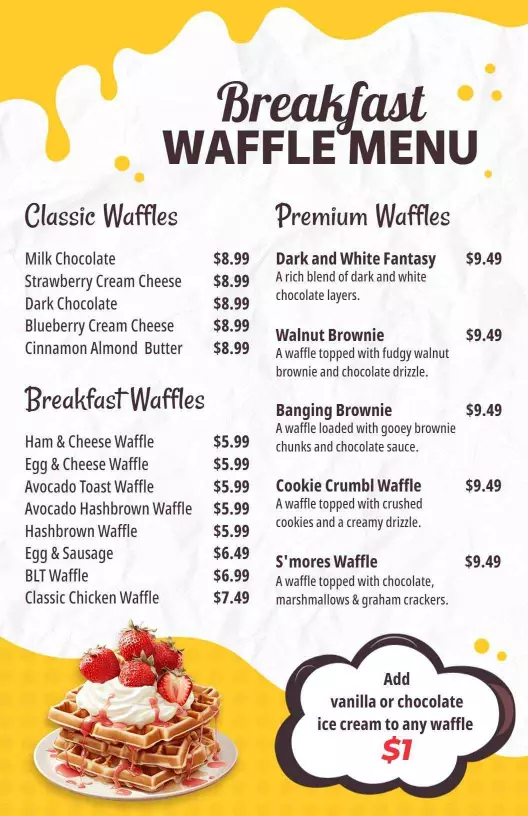
If you’re offering waffles, this menu example is perfect for you. It is visually bright and appealing, featuring a yellow and white theme with a fun, drippy syrup design at the top. The menu is neatly divided into three main sections:
At the bottom, there’s an add-on element that can boost your order value. The design is clean, easy to read, and uses clear sectioning and pricing to guide customer choices effectively.
2. Breakfast Food Truck Menu
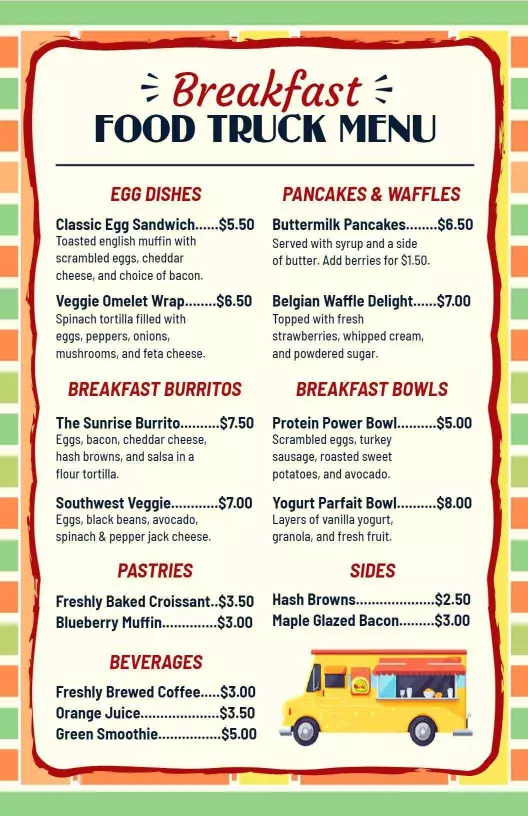
If you’re planning to create a food truck menu that matches your brand identity, there are many types of food truck menus available that you can create.
This menu features a vibrant and colorful design that grabs attention and offers a well-balanced variety of morning favorites. The menu is smartly divided into categories including Egg Dishes, Pancakes & Waffles, Breakfast Burritos, Breakfast Bowls, Pastries, Sides, and Beverages—making it easy for customers to browse and decide quickly.
3. Breakfast Pancake Menu
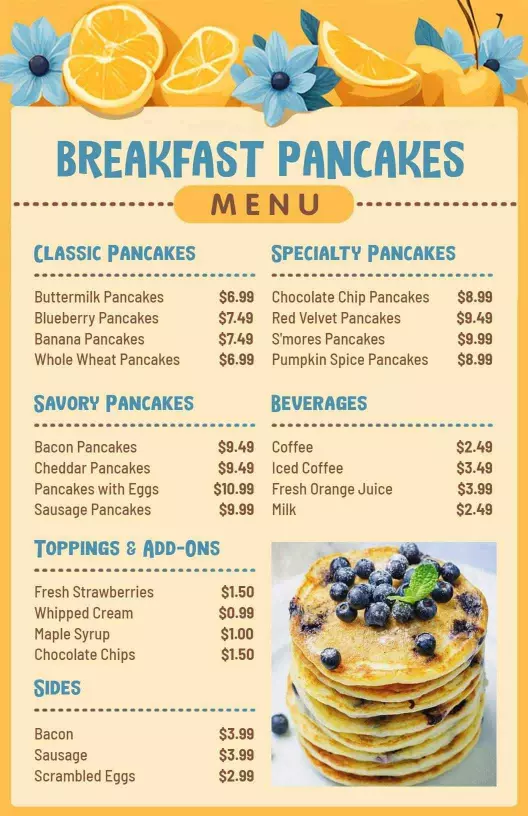
This Breakfast Pancakes Menu is bright and cheerful, featuring a citrus-themed design with vibrant colors that set a sunny, morning mood. The menu is thoughtfully organized into categories. Customization is easy with a variety of toppings like fresh strawberries and maple syrup, while add-on sides like scrambled eggs and sausage help build a complete meal.
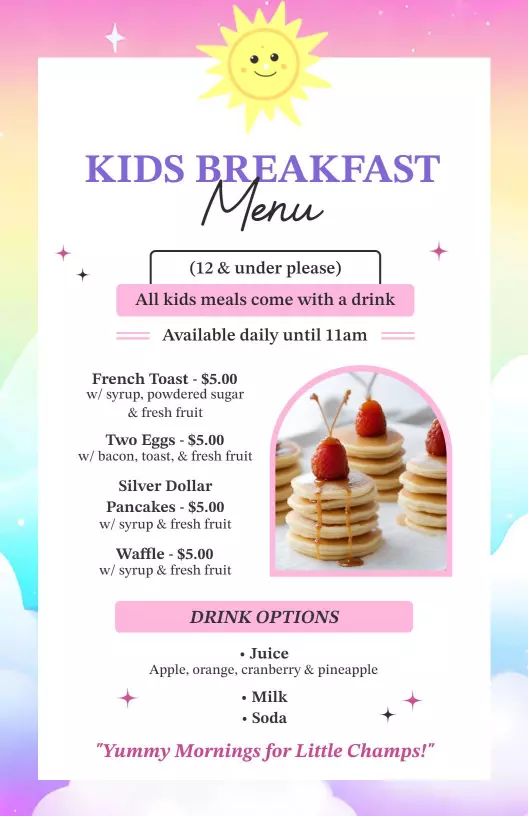
4. Kids’ Breakfast Menu
This Kids’ Breakfast Menu is bright, playful, and perfectly designed to appeal to both children and parents. With a pastel rainbow background, a cheerful smiling sun, and star accents, the menu creates a warm and inviting morning vibe. This menu is simple yet thoughtfully structured to ensure children have a fun and nutritious start to their day.
What Breakfast Items Should You Include in the Menu to Maximize Profits?
Selecting the right mix of breakfast items requires balancing customer appeal with kitchen efficiency and profit margins. Successful breakfast menus feature items that share common ingredients while offering perceived variety to customers.
1. High-Profit Breakfast Staples
Certain breakfast items consistently deliver strong profit margins while requiring minimal specialized ingredients or techniques. These should form the backbone of your breakfast menu.
Egg-Based High Performers:
- Scrambled eggs with various add-ins (cheese, vegetables, meats)
- Omelets with customizable fillings
- Breakfast sandwiches on house-made bread
- Eggs Benedict variations using different proteins
Pancake and Waffle Variations:
- Basic pancakes with flavored syrups
- Specialty pancakes with fresh fruit or nuts
- Belgian waffles with seasonal toppings
- French toast made from day-old bread
2. Strategic Ingredient Overlap
Furthermore, designing your menu around shared ingredients reduces food costs, minimizes waste, and simplifies inventory management. This approach also speeds up kitchen operations during busy breakfast rushes.
Smart Ingredient Sharing Examples:
- Eggs: Used in scrambled eggs, omelets, French toast batter, and breakfast sandwiches.
- Bread: Serves as toast, French toast base, and sandwich foundation
- Potatoes: Prepared as hash browns, home fries, and breakfast bowls.
- Cheese: Featured in omelets, sandwiches, and as a side option
Seasonal Fruits: Incorporated into pancakes, as garnishes, and in healthy bowls
3. Premium Up-sell Opportunities
Additionally, include items that allow customers to customize their orders with premium add-ons. These modifications often carry high profit margins while making customers feel they’re getting personalized service.
Profitable Add-On Options:
- Premium meats (bacon, sausage, Canadian bacon)
- Avocado and specialty vegetables
- Artisanal cheeses and gourmet ingredients
- Fresh fruit and berry additions
- Specialty breads and gluten-free alternatives
How to Price Your Breakfast Menu Items Strategically?
Breakfast pricing requires a different approach than other meal periods because customers have specific expectations about morning meal costs. However, strategic pricing can significantly improve your profit margins without deterring customers.
Understanding Breakfast Price Psychology
Breakfast customers generally expect lower prices than lunch or dinner, but they’re often willing to pay premiums for convenience, quality ingredients, or unique preparations. Therefore, your pricing strategy should reflect these expectations while maximizing profitability.
Breakfast Price Anchoring Strategies:
- Create Price Tiers Within Categories: Offer good, better, and best options within each menu section. For example, basic scrambled eggs at a lower price point, loaded scrambled eggs in the middle, and a gourmet omelet as the premium option.
- Bundle Pricing for Value Perception: Breakfast combos that include main dish, side, and beverage often have higher perceived value than individual items, even when priced slightly higher than the component sum.
- Strategic Premium Positioning: Include one or two high-priced signature items to make other menu items appear more reasonably priced by comparison.
- Calculating Breakfast Food Costs: Moreover, accurate food costing becomes especially important for breakfast items because of generally lower price points and customer price sensitivity.
Breakfast-Specific Costing Considerations:
- Egg prices fluctuate significantly and impact multiple menu items
- Seasonal fruit costs can vary dramatically throughout the year
- Coffee costs should include all brewing-related expenses
- Labor costs for breakfast prep often differ from other meal periods
- Waste factors may be higher for fresh ingredients used primarily at breakfast
Target Food Cost Percentages by Category:
- Egg dishes: 25-30% food cost
- Pancakes and French toast: 20-25% food cost
- Coffee and beverages: 15-20% food cost
- Premium items with meat: 30-35% food cost
What Technology Tools Can Improve Your Breakfast Menu Design?
Modern technology offers numerous tools to enhance breakfast menu design, from creation software to performance analytics platforms. However, choosing the right tools requires understanding your specific needs and operational constraints.
Menu Design and Creation Software
One of the most effective ways to improve your breakfast menu is by using a professional menu creator and software to streamline the process. These tools are built to help restaurant owners, chefs, and designers create attractive, organized, and easy-to-read menus without needing graphic design skills.
Menu design software is a digital tool that allows you to:
- Choose from the library of menu templates
- Customize layout, fonts, and colors
- Add your dishes, prices, and images
- Export the menu in formats like PDF or PNG for printing or digital use
Recommended Design Tool Categories:
Professional Design Platforms
- Online menu creation tools for design ideas, editing, and printing
- Use Lisi.menu for user-friendly templates and quick customization
- Other tools for restaurant-specific features
Digital Menu Management Systems
- Platforms that sync printed and digital menu versions
- Tools that enable quick price and item updates across multiple locations
- Systems that integrate with POS for real-time availability updates
Analytics and Performance Tracking Tools
Furthermore, data analytics tools help optimize menu performance by providing insights that would be impossible to gather manually.
Essential Analytics Categories:
POS Integration Analytics Modern point-of-sale systems can provide detailed item-level performance data, including sales trends, profit margins, and customer preferences.
Customer Feedback Platforms
- Online review monitoring tools
- Digital feedback collection systems
- Social media monitoring for menu-related comments
Inventory and Cost Management
- Food cost tracking software that accounts for ingredient price fluctuations
- Waste tracking systems to identify menu items with excessive prep losses
- Supplier integration tools for real-time ingredient cost updates
How to Test and Optimize Your Breakfast Menu?
Creating your initial breakfast menu represents just the beginning of an ongoing optimization process. Successful restaurant owners continuously refine their menus based on actual performance data and customer feedback.
Gathering Meaningful Performance Data
Effective menu optimization requires tracking multiple metrics beyond simple sales numbers. Therefore, establish systems to capture comprehensive performance data from day one.
Here are essential breakfast menu metrics:
Item-Level Performance Tracking
- Sales volume by menu item and period
- Profit margins for individual dishes
- Preparation time and kitchen efficiency impact
- Customer reorder rates for specific items
- Seasonal performance variations
Customer Behavior Analytics
- Average order value by customer segment
- Most common item combinations and add-ons
- Time spent deciding vs. ordering speed
- Dietary accommodation request frequency
- Peak ordering times and capacity constraints
A/B Testing Breakfast Menu Elements
Moreover, systematic testing of menu changes provides objective data for optimization decisions. However, breakfast service presents unique testing challenges that require careful planning.
Effective Breakfast Menu Testing Strategies:
Limited Time Offerings (LTOs): Test new items as specials before adding them permanently to your menu. This approach minimizes risk while providing real performance data.
Description Variations: Test different menu descriptions for the same item to identify language that drives higher sales or allows premium pricing. You can also create multilingual menus to make it easier for customers to understand the menu in their native language.
Pricing Experiments: Carefully test price adjustments on selected items to find optimal price points that maximize both volume and profitability.
Layout and Design Changes: Test menu layout variations during different service periods to identify designs that improve ordering speed and average ticket size.
Seasonal Menu Adaptation Strategies
Additionally, breakfast menus benefit from seasonal adjustments that keep offerings fresh while accommodating ingredient availability and customer preferences.
Seasonal Optimization Approaches:
- Ingredient-Driven Seasonal Changes Build seasonal variations around peak-quality, cost-effective ingredients rather than forcing expensive out-of-season items.
- Weather-Responsive Menu Adjustments: Hot weather often increases demand for lighter breakfast options, while cold weather drives comfort food preferences.
- Holiday and Special Event Adaptations: Create limited-time breakfast offerings that capitalize on holiday themes or local events without overwhelming regular operations.
People Also Ask
1. How do I organize the layout of my breakfast menu?
Organize your menu in sections so it’s easy to read. Group similar items together, such as “Classics,” “Healthy Options,” or “Kids Meals.” Use headings, spacing, and clear fonts. Place your most popular or profitable items at the top or center of the page where the eye naturally goes first.
2. What’s the best way to price items on a breakfast menu?
Your prices should reflect the cost of ingredients, prep time, and portion size while still staying affordable for your target customers. Use round numbers or pricing just below a whole number (e.g., $6.99) to make items seem more budget-friendly. Also, offer value combos or add-ons to boost average order size.
3. How do I make my breakfast menu look attractive?
Use a clean and colorful design that matches your restaurant’s theme. Pick easy-to-read fonts, consistent colors, and just a few graphic elements like icons or borders. Make use of whitespace to avoid clutter. A visually pleasing menu not only looks professional but also improves the customer’s ordering experience.
4. Should I include nutritional information?
If your audience is health-conscious, adding nutritional info like calories or special labels (gluten-free, vegan, low-carb) can be very helpful. Even if you don’t include full breakdowns, mentioning key ingredients or dietary tags makes your menu more inclusive and transparent.
5. Is it necessary to design separate menus for kids or special diets?
It’s not mandatory, but it can be a big plus. A separate kids’ menu makes ordering easier for families and often includes smaller portions at lower prices. Similarly, offering a section for vegetarian, vegan, or gluten-free dishes can attract more customers and show you care about their dietary needs.
Conclusion
This was all about how to design a breakfast menu. Remember, it requires much more than selecting popular morning foods and attractive visual design. The most profitable breakfast establishments understand that menu design is fundamentally about psychology, guiding customer decision-making while optimizing operational efficiency.
The breakfast market continues to offer significant opportunities for restaurants that understand customer psychology and operational excellence. By applying these evidence-based strategies systematically, your breakfast menu can become a competitive advantage that drives consistent profitability and customer loyalty for years to come.