
A well-crafted classic kebab menu template enhances the dining experience by combining tradition with modern design. This template features a warm, inviting background that highlights your menu items while maintaining a clean and professional layout.
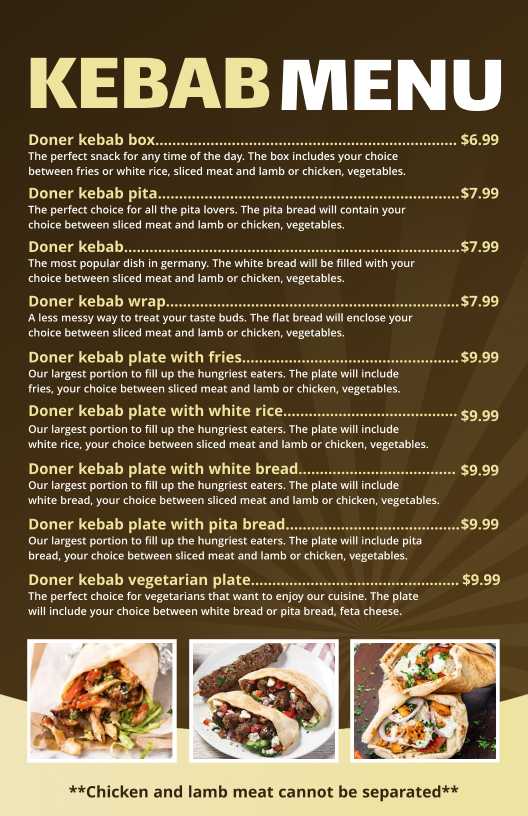
The classic kebab menu template incorporates earthy tones and subtle textures, creating a cozy and authentic feel. Moreover, elegant serif fonts add a touch of tradition while clear headings and well-spaced sections ensure readability. Overall, this structured yet welcoming layout is perfect for restaurants looking to present their kebab selection with style and warmth.
Why Does a Well-Structured Layout Matter in a Classic Kebab Menu Template?
The structure of a menu plays a crucial role in shaping the dining experience, guiding customers toward informed choices while enhancing visual appeal. A classic kebab menu template should feature a creative menu design with organization and clarity, ensuring that every dish is easy to locate and understand.
A well-structured menu layout benefits both customers and restaurant operations by:
- Enhancing Readability – A logical arrangement of dishes prevents confusion and makes it easier for customers to scan through available options.
- Improving Decision-Making – Clear sectioning, bold headings, and concise descriptions help diners choose faster, reducing order time.
- Highlighting Key Offerings – Signature kebabs and bestsellers can be strategically placed to attract attention and drive sales.
- Maintaining Visual Balance – Adequate spacing between menu elements ensures that information is presented neatly without appearing cluttered.
An effective menu layout should seamlessly guide customers’ eyes from one section to another while maintaining a natural flow of information, making their dining experience smoother and more enjoyable.
What Are the Design Elements of a Classic Kebab Menu Template?
The design elements of a classic kebab menu template should reflect authenticity while also ensuring functionality. Moreover, these visual and structural components influence how customers perceive the restaurant, making the menu more inviting and accessible.
Here are the key design elements that contribute to a well-crafted kebab menu:
1. Warm and Earthy Color Palette
The use of warm tones, such as deep browns, rich golds, and subtle beige shades, not only evokes a sense of tradition and comfort but also enhances the overall dining experience. Additionally, these colors:
- Reflect the warmth of grilled kebabs and Middle Eastern or Mediterranean culinary heritage.
- Set the perfect ambiance to elevate the dining experience.
- Help differentiate menu sections by using contrasting hues to draw attention.
2. Traditional Yet Readable Typography
Typography plays a significant role in reinforcing a classic theme while ensuring that the menu remains easy to read. Ideal font choices include:
- Serif fonts – Bring elegance and a classic charm to the design..
- Bold, clean typography for dish names – Ensures readability at a glance.
- Italic or script fonts for special items – Introduce a decorative, authentic feel without compromising clarity.
3. High-Quality Food Imagery
Well-placed images of kebabs, wraps, and platters enhance visual appeal and encourage selections. These images should:
- Be professionally shot to capture the textures and colors of the dishes.
- Be placed strategically next to corresponding menu items to guide customer choices.
- Avoid excessive use to maintain a balanced and uncluttered look.
4. Subtle Background Patterns
Minimalist textures or cultural patterns subtly integrated into the background not only add depth and richness to the menu but also enhance its visual appeal without overpowering the text. For example, these could include:
- Geometric or mosaic-inspired patterns.
- Faint grill or fire-themed accents reinforce the cooking method.
- Soft parchment or textured paper effects for a rustic touch.
Overall, together, these elements ensure that the menu remains visually appealing while also staying true to the essence of a classic kebab menu template.
How Does This Classic Kebab Menu Template Highlight the Richness of Kebab Varieties?
A classic kebab menu template should highlight a variety of kebabs, showcasing different flavors, textures, and cooking styles. Furthermore, a well-structured BBQ menu design ensures that grilled and skewered options stand out, thereby making the selection more appealing and easy to navigate.
Key design features that highlight variety:
- Categorized Sections for Easy Navigation
- Dividing menu items into sections such as “Grilled Kebabs,” “Wraps & Rolls,” “Platter Meals,” and “Vegetarian Options” makes selection easier.
- Helps customers quickly identify dishes that match their preferences.
- Descriptive Dish Names and Details
- Each kebab is named to reflect its ingredients and cooking style, such as “Tandoori Chicken Kebab” or “Lamb Seekh Kebab.”
- Concise descriptions highlight flavors and preparation methods, e.g., “Juicy lamb skewers marinated in aromatic spices and slow-grilled.”
- Strategic Placement of Signature Dishes
- House specialties and bestselling kebabs can be placed at the top or highlighted with icons to draw attention.
- Chef’s recommendations or limited-time dishes can be presented in a separate section to entice customers to try something new.
By presenting a clear distinction between classic favorites and unique offerings, the menu successfully caters to a wide range of customer preferences.
How Can Colors and Fonts Make the Classic Kebab Menu Template More Inviting?
Color psychology and typography significantly impact how customers perceive a menu. Moreover, the right combination of colors and fonts can enhance readability while also creating a warm atmosphere and ultimately reinforcing the cultural authenticity of the restaurant.
The Impact of Colors in a Kebab Menu:
- Warm Earthy Tones (Brown, Gold, Beige) – Convey richness, tradition, and warmth, making the menu feel authentic and comforting.
- Deep Reds and Oranges – Stimulate appetite and create a sense of excitement.
- Subtle Contrast in Background and Text – Ensures readability without causing visual strain.
The Role of Fonts in Enhancing Readability:
- Serif Fonts for Traditional Appeal – Evokes a sense of heritage and authenticity.
- Bold, Legible Typography for Dish Names – Ensures key menu items are instantly recognizable.
- Consistent Font Hierarchy – Helps differentiate headings, subheadings, and descriptions, creating a seamless reading experience.
By carefully selecting colors and fonts, a classic kebab menu template can become more than just a functional menu—it transforms into a storytelling element that enhances the dining experience.
Conclusion
A classic kebab menu template offers a welcoming, visually appealing experience with warm colors, a structured layout, and easy-to-read fonts, ensuring smooth navigation while highlighting kebab varieties. Thoughtful design enhances readability and reflects the cuisine’s authenticity, making the menu functional and inviting.