The noodles menu template is designed to capture attention with its vibrant colors and striking contrasts. This engaging layout not only highlights the variety of noodle dishes but also enhances the overall dining experience for customers.
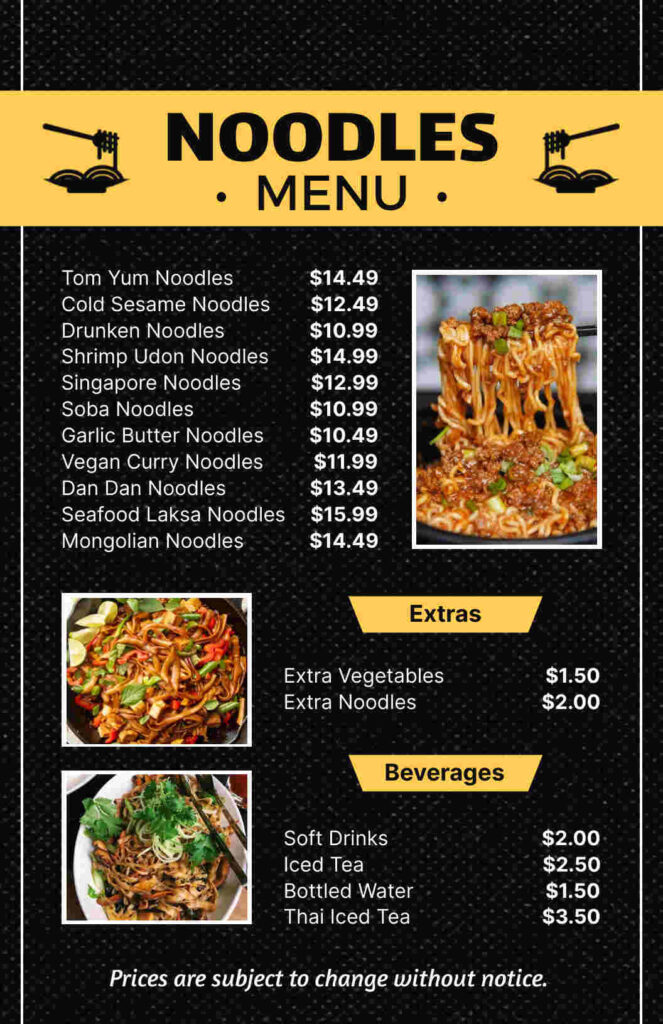
The modern noodles menu template showcases an array of beautifully presented noodle dishes. The template employs a harmonious blend of colors that draws the eye. Each section is clearly defined, using contrasting fonts that ensure readability while maintaining a modern aesthetic. From enticing images of classic recipes to well-organized beverage options, this menu template effectively showcases the culinary delights available.
Beyond color and contrast, the design integrates icons and section dividers to improve usability. Whether highlighting specialty noodles or customization options, these printable menu templates ensure clarity. A well-balanced layout with intuitive categories makes ordering simple, enhancing the overall dining experience.
Why Does an Effective Noodles Menu Template Matter?
The menu exists beyond being a food item inventory because it functions as an effective marketing instrument that shapes customer purchasing decisions. The carefully designed noodles menu template creates a menu that makes dishes easy to read and navigate while presenting the complete noodle offerings to customers. The planned application of color, together with contrast, makes important information more visible while it directs customers to special offers, chef recommendations, and popular dishes.
Enhancing Readability with Contrast
The design principle of contrast functions as a basic element that makes text seen clearly against the background, therefore enhancing the readability of menu items. The strong contrast of a noodles menu template improves visual organization so that important elements become more noticeable to customers. A clear presentation occurs when menu texts use light or dark alternative combinations against backgrounds. The fusion of contrasting colors such as black and gold together with red and white establishes an immediately noticeable effect for customer eye capture.
- Example: A dark background paired with either white or gold text will produce an elegant menu design with excellent visibility.
- Tip: Users should avoid text and background combinations that present unclear reading, such as light gray text on white backgrounds, since these combinations become challenging to read during low-light conditions.
How to Design a Modern Noodles Menu Template?
Creating a modern noodles menu template requires a balance of aesthetics, readability, and strategic design. Incorporating a blank menu design as a starting point allows for flexibility in layout and customization. Here are the key steps to ensure a functional and visually appealing menu:
1. Bold Typography for Clarity
A modern noodles menu template should use stylish yet readable fonts that align with the restaurant’s theme. Clear typography ensures that customers can quickly identify dish names, descriptions, and prices without confusion. Sans-serif fonts like Montserrat and Lato offer a clean and contemporary look, while script fonts can add an element of elegance when used sparingly.
2. High-Quality Food Photography
Viewers tend to be drawn more strongly to noodle menu templates if they include attractive images of noodle aliments. Halde dishes require premium pictures positioned according to their prominence so customers can better see their options. The strategic placement of attractive ramen and bold stir-fried noodles pictures in the menu helps draw clients who subsequently order premium bowls.
3. Intuitive Layout and Organization
A tidy and orderly design of the menu controls how customers experience their dining experience. The arrangement of noodle menu dishes on a modern template should either organize them according to different noodle varieties (ramen, udon, pad Thai, and others) or cooking techniques (stir-fry, soup-based, or dry preparation). Sectioned menus with heading labels and visual indicators help customers traverse the document to find suitable choices.
4. Utilizing White Space for a Clean Look
White spaces are essential elements in menu design because they make the layout more uncluttered and increase readability. The presentation of numerous items on a crowded menu forces customers to struggle when choosing their meals. When white space distribution is strategic on a noodles menu template, it both creates an elegant visual appeal and directs attention to essential dishes.
5. Incorporating Cultural Aesthetics
Traditional elements embedded within a menu design strengthen authenticity in dishes that derive from specific cultural backgrounds. Traditional minimal Japanese ramen menus display their text in calligraphic fonts and maintain minimalist black-and-white design schemes, and Thai noodle menus use vibrant patterns alongside golden decorative elements. Through cultural elements, the restaurant communicates its brand message and establishes a deep dining environment for customers.
What are the Key Elements of a Functional Noodles Menu Template?
1. Font Pairing and Readability
Font combinations that match each other will greatly impact the visual presentation of a noodles menu template. The combination of strong headline fonts with soft text fonts creates both clarity and attractive visual design in a menu.
- Example: When representing specialty dishes, keep their labels in traditional Asian-style fonts to strengthen authenticity yet maintain readability through clean sans-serif font text for the main sections.
- Tip: Make decorative fonts reserved for heading sections and special sections since overuse will create visual chaos in your menu design.
2. Proper Spacing and Layout Techniques
The effective distribution of space functions as an essential tool to reduce visual overstimulation. The proper distance between menu entries creates both a neat visual presentation and an easy reading experience. When using a structured grid format, menus become easier to read, and all components achieve better alignment.
- Example: The menu has two sections entitled ‘Classic Ramen’ and ‘Spicy Stir-Fried Noodles’ with sufficient white space to avoid visual clutter.
- Tip: For easier navigation through your text, establish at least 1.5 line spacing together with prominent headings to separate different parts.
3. Sustainable and Eco-Friendly Printing
Printed menus adopt sustainable printing methods together with environmentally friendly materials as a strategic approach to attract contemporary consumers. Restaurants should select recyclable paper together with soy-based inks as well as biodegradable laminations for their menu materials.
- Example: The combination of environmentally friendly menu covers with minimal ink designs results in a stylish and eco-friendly menu presentation.
- Tip: The best paper choice for environmental conservation is recycled paper combined with soy-based inks.
4. Digital Menu Adaptation
Modern noodle menu templates need adaptation for digital use, including devices through QR codes. The digital dining experience becomes more convenient for customers when they use features such as clickable sections together with animated transitions alongside meal customization interactivity.
- Example: The system features a QR code that directs users to an alluring digital menu with high-resolution images together with customizable options.
- Tip: Users can maintain a seamless experience with responsive designs and readable text minimized for mobile screens.
How Contrast Enhances a Noodles Menu Template?
1. Highlighting Specials and Promotions
Dining establishments that use contrast properly make their special promotions, new dishes, and seasonal varieties easily noticeable. The “Chef’s Special” section is noticeable on the menu because it contains bright colors paired with bold typography. Different colors together with symbols serve to separate the vegetarian and non-vegetarian sections on a menu.
2. Improving Menu Scannability
Customers usually focus on a quick scan of their menus instead of studying all contents thoroughly. A noodles menu template achieves better scannability when it applies contrast by employing bold headings combined with highlighted text and separate color fields. The structured layout enables customers to find their chosen dishes swiftly, even when many options exist.
3. Creating a Visually Balanced Design
The combination of visual elements in a menu should be balanced to create an attractive and calm appearance rather than chaotic confusion. The use of textured overlays with gradients creates background depth, which adds dimension instead of deflecting attention from key menu elements. A perfect goal exists to combine design attractiveness with easy-to-use functionality.
What are the Tips for Making a Noodles Menu Template More Engaging?
Creating a visually engaging and functional noodles menu template requires a balance of aesthetics, readability, and strategic design. From typography choices to pricing strategies, every detail plays a role in attracting customers and enhancing their dining experience. Here are some key tips to make your menu more engaging:
1. Using Descriptive Dish Names
A menu’s appeal increases when restaurant owners replace plain food names with creative titles that describe the dishes while remaining appetizing. The use of names like “Spicy Dragon Ramen” and “Golden Thai Curry Noodles” creates immediate interest because they are attention-grabbing.
2. Including Brief Dish Descriptions
Each restaurant offers benefits from an attractive dish description, which enables customers to decide what to order. The dining experience benefits from mentioning what ingredients make a dish and the level of spiciness and special preparation steps.
3. Adding Pricing Strategies
Profitable consumption decisions from customers can be steered through mental pricing strategies that leave currency indications out while presenting prices at almost-round amounts such as $9.99 rather than $10.
Conclusion
The efficient implementation of noodles menu templates alongside strategic color selection and contrast uses leads to a substantial influence on both customer interaction and restaurant image building. A visual menu with bold type, exceptional imagery, and strategic contrast helps restaurants create menus that people find attractive and easy to navigate. A menu design with careful planning leads to improved dining satisfaction while keeping customers loyal to the restaurant and making them more likely to increase their shopping with the company.